
Last Updated: November 21, 2026
Quick Summary
Good engagement ring craftsmanship means consistent symmetry, closed joints and a setting that grips the stone without gripping it too hard. Check the hallmark, prong tips, seat contact and band thickness, and ask what the band thickness is before and after finishing.
- Run a fingernail across every seam where metal meets metal; a well-finished joint is smooth.
- Prong tips should be rounded and snug, with no gap you can slide a fingernail under.
- If a ring fails two or more checklist points, walk away or ask for the work to be redone.
- Plan on an annual check where a jeweller tightens prongs and assesses band wear.
- Ask how many sizes the ring can be resized and what the warranty covers.
Table of Contents
- Why Engagement Ring Craftsmanship Decides How the Ring Lasts
- How to Tell If an Engagement Ring Is Well Made
- Engagement Ring Setting Quality: What to Check Up Close
- Your Engagement Ring Quality Checklist
- Craftsmanship Defects by Setting Type
- Engagement Ring Durability and Maintenance Over the Years
- What Craftsmanship Looks Like at Each Price Tier
- Questions to Ask a Jeweller Before You Commit
- Frequently Asked Questions
Why Engagement Ring Craftsmanship Decides How the Ring Lasts
Engagement ring craftsmanship is the sum of every structural and finishing decision a jeweller makes: how the metal is formed, how the setting grips the stone, and how cleanly each joint is closed.
A ring is not static. Metal flexes every time a hand closes, and a shank thins with polishing over time.
That is why the question of what to look for in engagement ring craftsmanship matters more than the carat weight on the certificate.
How to Tell If an Engagement Ring Is Well Made
A well-made ring shows three things at once: consistent symmetry, closed joints and a setting that grips the stone without gripping it too hard. If any one of those is missing, the ring has a weak point regardless of how good the diamond looks.
Start with symmetry. Look at the ring face-on and check that the shoulders taper evenly and the band sits level on a flat surface.
Then check the joints. Run a fingernail across every seam where metal meets metal, particularly where the setting meets the band. A well-finished joint is smooth enough that your nail glides over it.
Structural Quality Versus Visible Finish
Visible finish is what a photograph captures: mirror polish, crisp edges, a bright surface. Structural quality is what holds the ring together, and the two do not always arrive together.
A ring can be beautifully polished and still be structurally weak. Heavy polishing can hide problems by rounding over a badly closed joint or thinning a prong tip until it looks neat.
Ask what the band thickness is before and after finishing.
Inspecting in Person Versus From Online Photos
In person, you can feel a joint and see how light moves across a curve. Online, you are relying on the seller's angles and lighting, which flatter a ring considerably.
When buying remotely, request three specific images: a macro shot of the prong tips, a side profile of the setting where it meets the band, and a straight-on shot of the ring standing upright on a flat surface. Those reveal prong condition, joint quality and shank evenness. Ask for a video under neutral light and confirm the returns policy before paying.
Engagement Ring Setting Quality: What to Check Up Close
Engagement ring setting quality comes down to how the metal contacts the stone, and different settings concentrate stress in different places.
Prong and Claw Settings
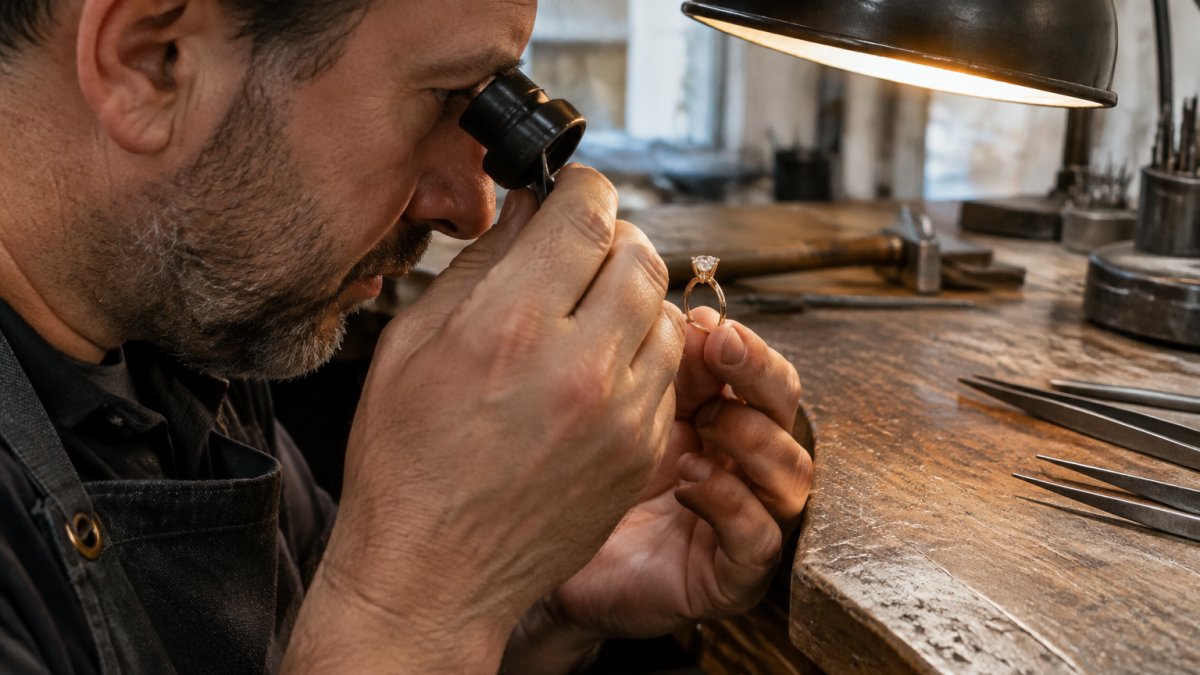
Prong tips should be rounded and sit snugly against the stone's crown, with no gap you can slide a fingernail under. All claws should be the same length and thickness, and the stone should sit level.
Ask whether the prong tips were formed by hand or cast to shape, and how they would be repaired if they wore.
Bezel Settings
A bezel holds the stone with a continuous rim of metal, so inspect the rim rather than the claws. Run a fingernail around the inside edge where the metal folds over the girdle: it should be smooth and even in thickness all the way round, with no thin spot that could wear through. The stone should not rattle when you shake the ring gently.
Pavé and Grain Settings
In a pavé or grain setting, tiny beads of metal hold each stone, and the beads are where failures start. Under a loupe, the beads should be consistent in height. Look along the row: the stones should sit in a straight line at a matching height, with no single stone proud of its neighbours. Ask how the beads were raised and how a loose stone would be secured.
Halo Settings
A halo adds a ring of small stones around the centre stone, and the inspection point is the junction between the halo and the centre setting. Check that the halo sits level and that the centre stone is not sitting proud of the halo plane, which puts lateral stress on the prongs. Look at the underside: it should be open enough to let light through and allow cleaning, but not so open that the small stones are unsupported.
Channel Settings
A channel setting depends entirely on two parallel walls holding a row of stones. Sight down the channel: the walls should be parallel and the stones should sit at a consistent height, not proud of the walls. Run a fingernail along the inside of each wall, a ridge or step means the wall was not finished flush.
The Close-Up Inspection Sequence
Work in this order so you do not miss the parts that photographs hide:
- Stone security, press gently; no movement in any direction.
- Seat contact, loupe the girdle; even support, not two-point contact.
- Prong or bead evenness, same length, same height, same thickness.
- Joint seams, fingernail glides where setting meets band.
- Underside, open enough to clean, closed enough to support.
- Wall or rim thickness, enough metal for a future tighten or resize.
If a ring fails on stone security or seat contact, stop there, those are structural failures, not cosmetic ones.
Your Engagement Ring Quality Checklist
A practical engagement ring quality checklist turns a vague sense of "this looks nice" into pass-or-fail observations. Work through these in order, ideally with a loupe and good light.
- Hallmark present and legible on the inside of the band, matching the stated metal.
- Symmetry even shoulders, level band, no rocking on a flat surface.
- Joint seams smooth to the fingernail where setting meets band.
- Prong tips rounded, even in length, contacting the stone with no gap.
- Stone security no movement when gently pressed, stone sitting level.
- Setting seat stone supported evenly around the girdle, not on two points.
- Band thickness consistent around the shank, no thin spots at the base.
- Finish polish even, no rounding-over of edges that should be crisp.
- Accent stones aligned in a straight line, set at matching heights.
- Comfort inner band smooth, no ridge against the finger.
If a ring fails two or more of these, walk away or ask for the work to be redone.
Craftsmanship Defects by Setting Type
Different settings fail in different ways, so inspect the right area. A claw setting concentrates stress at the tips, a grain or pavé setting at the tiny beads holding each stone, and a channel setting depends entirely on parallel walls.
| Setting Type | Common Defect | What to Inspect |
|---|---|---|
| Claw / prong | Thin, uneven tips; loose stone | Tip thickness and evenness |
| Grain / pavé | Raised or flattened beads; lost accents | Bead height and consistency |
| Channel | Walls not parallel; stones sitting proud | Wall alignment and stone height |
| Bezel | Uneven rim; stone rattling | Rim thickness and contact |
| Tension | Insufficient spring; gap at stone | Even pressure on both sides |
Accent-stone placement deserves its own check. On a grain-set shoulder, the stones should sit in a straight line at a consistent height. A single stone set a fraction too high will catch on clothing and work loose first.
Engagement Ring Durability and Maintenance Over the Years
Durability is a function of metal mass and setting design, not of how carefully the ring is worn.
Plan on an annual check. A jeweller should tighten prongs, check the setting seat and assess band wear.
Metal fatigue is the slow killer. If you are weighing long-term cost against initial outlay, our guide on whether a bespoke engagement ring is worth it sets out how durability feeds into value.
What Craftsmanship Looks Like at Each Price Tier
Price tier changes the amount of handwork and the margin for future repair, not the presence of quality. At every level you should still see closed joints, even prongs and a level stone.
A ring is not a one-off purchase. It will be cleaned, checked, possibly resized, and eventually have a stone tightened or a prong retipped.
Entry Tier
At the entry end, expect simpler settings and lighter bands. A grain-set bridal set in 9ct gold keeps costs down through metal choice and straightforward construction. The maintenance implication is that 9ct gold is softer than 18ct or platinum, so prongs and beads wear faster. A very light band also has less metal to give up during a resize, so ask what the band thickness is at the base before you commit.
Mid Tier
Mid-tier rings typically bring heavier bands, platinum settings and more hand-finishing at the claws. If you plan to wear the ring daily for decades, this is the tier where construction quality starts to pay for itself.
Upper Tier
At the top, you are paying for stone grade, setting precision and the hours spent on finish. Ask for the certification details in writing and confirm who did the setting work.
| Tier | Typical Construction | Maintenance and Repair Implication |
|---|---|---|
| Entry | 9ct gold, grain-set, lighter band | Softer metal wears faster; limited resizing range |
| Mid | 18ct gold, platinum head, claw-set | Retippable head; heavier shank resizes more than once |
| Upper | Certified stone, hand-finished setting | Easier to inspect and tighten; documented stone |
What to Ask at Any Tier
The questions are the same regardless of price: what is the band thickness after finishing, how were the prongs or beads formed, how many sizes can the ring be resized, and what does the warranty cover if a stone loosens in the first year.
If you are deciding between made-to-order and ready-made, our comparison of bespoke versus ready-made engagement rings breaks down where the money actually goes.
Questions to Ask a Jeweller Before You Commit
The right questions separate a jeweller who makes rings from one who assembles them.
Ask to see the setting under a loupe before purchase, and request the stone's certification details in writing.
For remote buyers, ask how many fittings or approvals are involved and whether you see the ring before final payment. Our explanation of the bespoke engagement ring design process covers what those stages should look like. If you want to see what full control over construction looks like, read our guide to designing a custom engagement ring, and for the wider picture of what hand craftsmanship involves, our piece on bespoke jewellery craftsmanship goes deeper.
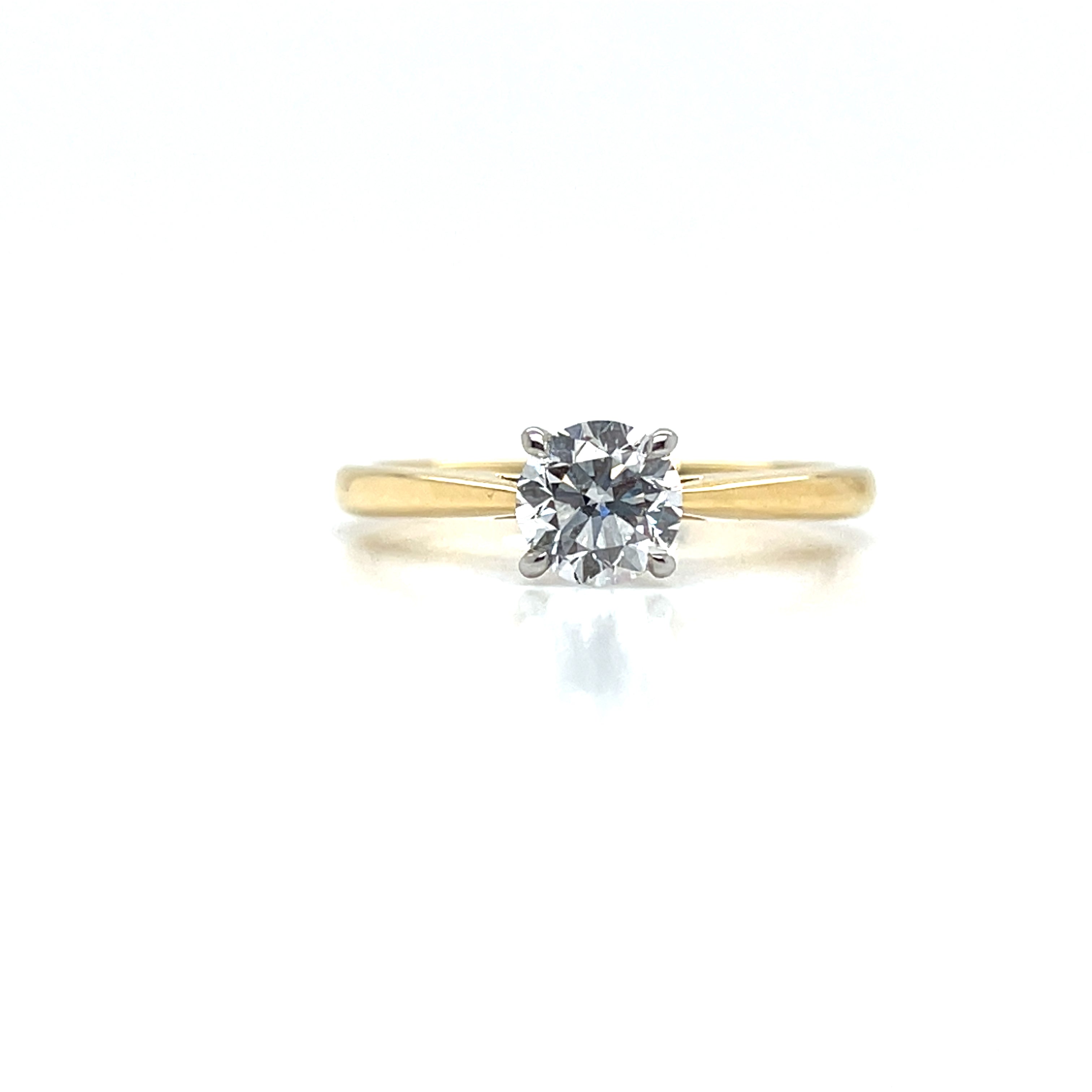
A finished ring should be inspected the same way whether it cost a little or a lot. For a clear example of a finished piece, see our 18ct yellow gold 0.70ct platinum head diamond solitaire ring, which has a platinum head and a GIA certificate for an F VS2 stone.
Judging craftsmanship takes a loupe, a checklist and a jeweller willing to answer detailed questions. At Morgan Banks, we have been trading since 1935.
Frequently Asked Questions
How can you tell if an engagement ring is well made?
Start with the joints. Run a fingertip around the inside of the band and across every seam where the head meets the shoulders; a well-made ring feels continuous, with no ridge or catch. Check that the prongs are even in length and thickness, that the stone sits level in its seat, and that the polish is consistent inside the band as well as on top. A heavier ring is not automatically better made, so judge the finish and the fit of the parts rather than the weight alone.
How can you tell whether a diamond is secure in its setting?
Hold the ring up to a light and look at each prong tip in turn. Every tip should curve over the girdle of the stone and touch it, with no gap you can see. Gently press the stone with a soft fingertip; any rocking or clicking means the seat is loose. Ask the jeweller to check the stone with a loupe before you leave, and request a written confirmation of the stone's weight and grading so there is a record if a prong needs attention later.
Should engagement ring claws be even?
Yes. Even claws are one of the clearest signs of engagement ring craftsmanship. Look at the ring face-on and from the side: the claws should be the same length, sit at matching angles and finish at the same height above the stone. Uneven claws usually mean one is carrying more load than the others, which speeds up wear and raises the risk of a lost stone. Ask for the ring to be viewed under magnification before purchase.
Does a heavier engagement ring mean better craftsmanship?
Not necessarily. Extra metal can hide thin sections or a rushed setting, and a very heavy band can feel uncomfortable on the finger. What matters is where the metal sits: a band that is thick enough at the base to resist bending, shoulders that taper evenly, and a head with enough material around each prong. Ask what the band measures at its thinnest point and how the ring was finished, rather than judging by weight.
What questions should you ask a jeweller about an engagement ring?
Ask what metal the ring is made from and whether it is hallmarked, how the setting is constructed and how the prongs were finished, and what documentation comes with the stone. Ask what happens if a prong wears or a stone works loose in the first few years, and whether resizing and re-polishing are offered. If you are buying remotely, ask for close-up photographs of the setting from several angles and a short video under magnification.
How do you check an engagement ring for sharp edges or rough spots?
Run the pad of your finger slowly around the entire ring, including the inside of the band, the underside of the head and the area between the prongs. Any point that snags on skin or clothing is a finishing fault. Then look at the ring under a bright light at an angle; a good polish reflects evenly, while rough spots show as dull patches. Sharp edges on prongs will catch on knitwear within days, so test before you commit.
