
Table of Contents
- What You'll Need Before You Start
- Step 1: Choosing a Diamond for a Custom Ring
- Step 2: Selecting the Metal and Setting Style
- Step 3: The Design Consultation and CAD Process
- Step 4: How Long Does a Bespoke Ring Take to Make?
- Step 5: Understanding Custom Engagement Ring Cost
- Common Design Pitfalls to Avoid
- Caring for Your Bespoke Engagement Ring
- Frequently Asked Questions
Last Updated: September 16, 2026
What You'll Need Before You Start
Designing a custom engagement ring is a process of narrowing choices, not inventing from nothing. Before any sketch is drawn, you need four things: a realistic budget, a sense of your partner's taste, a rough timeline, and a decision on bespoke versus ready-to-wear.
Gather these first:
- A budget range, including a contingency of around 10%
- Photos of rings your partner already wears or admires
- Their ring size, taken discreetly or estimated
- A target proposal date, working backwards from it
Step 1: Choosing a Diamond for a Custom Ring
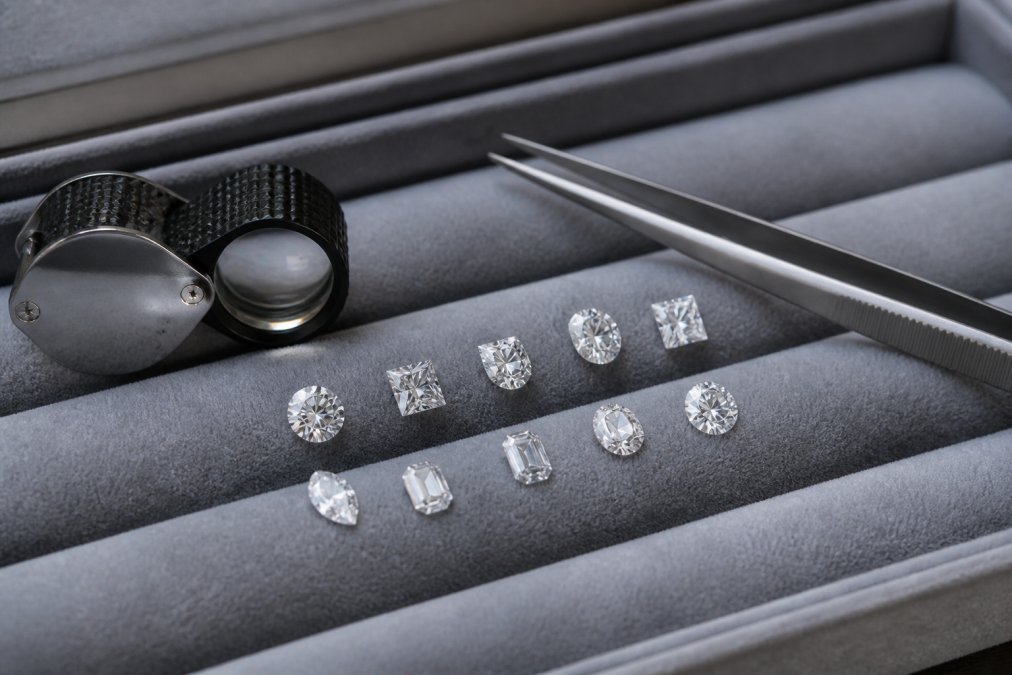
Choosing a diamond for a custom ring means balancing the 4Cs against your budget, then deciding between lab-grown and natural stones. Certification matters most.
The 4Cs That Matter Most
The 4Cs are cut, carat, clarity, and colour. Cut has the biggest visual impact, so prioritise it over carat weight: a well-cut 1.5ct stone outshines a poorly cut 2ct one.
Lab-Grown vs Natural Diamonds
Lab-grown diamonds are chemically and optically identical to natural diamonds but cost considerably less. Natural diamonds carry a rarity premium.
| Factor | Lab-Grown | Natural |
|---|---|---|
| Composition | Identical to natural | Identical to lab-grown |
| Certification | IGI or GIA available | GIA commonly used |
| Price | Lower for same spec | Higher for same spec |
| Best for | Larger carat on a budget | Traditional buyers |
Step 2: Selecting the Metal and Setting Style
Metal and setting choices shape how a ring looks day to day and how well it wears over decades, and both are decided early because they affect the CAD model. The deeper question is which suit the wearer: a ring that photographs beautifully can be wrong for someone who works with their hands.
Precious Metals Compared
Platinum is dense, naturally white, and highly durable, making it a strong choice for everyday wear. 18ct gold offers warmth and colour, though white gold is typically rhodium-plated and needs re-plating every 12-24 months.
- Platinum: Heavier feel, naturally white, excellent longevity, develops a soft patina rather than losing metal
- 18ct yellow gold: Warm tone, classic look, softer than platinum, scratches show as a gentle sheen
- 18ct white gold: Bright finish, may need re-plating over time, popular for contemporary solitaires
- 18ct rose gold: Pink hue from copper content, popular for vintage and Art Deco styles
- Palladium: Lighter than platinum, naturally white, a lower-cost alternative that still avoids plating
Popular Ring Setting Styles
Setting styles determine how the diamond sits, how much light it catches, and how much protection it offers. A solitaire focuses on one stone, a halo adds a ring of smaller diamonds, pavé sets small stones along the band, and a bezel wraps metal around the stone.
- Solitaire (four or six claw): Maximum light, classic, but claws can catch on knitwear
- Halo: Makes the centre stone appear larger, adds sparkle, but harder to clean
- Pavé: Continuous sparkle along the band, elegant, but small stones can loosen over years
- Bezel: Metal rim protects the stone, ideal for active wearers, slightly reduces light entry
- Three-stone: Represents past, present, future; frames the finger and suits oval or emerald cuts
- Channel-set: Stones set flush between metal walls, very low-profile and snag-free
Matching the Design to the Wearer
Before committing to a metal and setting, ask three questions about your partner:
- How active are their hands? Nurses, chefs, gardeners, and gym-goers do better with a bezel or low-profile setting; a high six-claw solitaire catches on gloves and clothing.
- What is their existing jewellery like? Delicate and minimal points to a thin band and a solitaire. Bold and layered points to a halo or three-stone with a wider band.
- Do they prefer tradition or modernity? Yellow gold and a solitaire read as timeless; rose gold and an oval halo read as contemporary.
Finger Shape and Proportion
The setting should flatter the finger it sits on. Long, slender fingers carry elongated cuts like oval, emerald, and marquise well, while shorter fingers suit a round or cushion cut with a slimmer band to create the illusion of length.
Step 3: The Design Consultation and CAD Process
The design consultation is where your ideas become a technical drawing: a jeweller takes your references, stone choice, metal, and setting, then produces a CAD design. Done well, this stage prevents almost every disappointment that follows.
What to Bring to the Consultation
Arrive prepared. Bring:
- Photos of rings your partner wears or admires, ideally on their hand
- Their ring size, or a ring borrowed from the correct finger
- A note of their daily activities and any jewellery they never take off
- Your budget range, stated plainly, a good jeweller designs within it rather than around it
- Any heirloom stones or metal you want incorporated
If you are planning a surprise, tell the jeweller. Most will handle the process discreetly.
What Happens During the Consultation
A typical consultation runs 45-90 minutes. The jeweller will:
- Review your references and ask about the wearer's style and lifestyle
- Show loose stones or stone options within your budget
- Discuss metal and setting combinations that suit the design
- Sketch a rough concept on screen
- Confirm the brief and outline the CAD timeline
You should leave with a written summary of the design, stone specification, metal, estimated cost, and expected delivery date.
The CAD Approval Stage
This is the most important checkpoint in the process. The 3D rendering is your last chance to change the design before metal is cast; after that, changes mean starting over.
When you review the rendering, check:
- Band width and profile: A 2mm band looks very different on screen than on a finger. Ask for the measurement in millimetres.
- Setting height: How far the stone sits above the finger. Anything above roughly 6mm will catch on clothing.
- Stone proportions: Does the centre stone look balanced against the shoulders? A 1.5ct stone on a 1.8mm band can look top-heavy.
- Claw count and shape: Four claws show more of the stone; six claws hold it more securely.
- Comfort fit: Ask whether the inside of the band will be flat or comfort-fit (rounded), which is standard for daily wear.
- Wedding band clearance: If a wedding band will sit alongside, ask the jeweller to model both together.
Remote Consultations
If you are not local, most of this can be handled remotely with photos, a ring size, and video calls. Ask for the rendering from multiple angles. The finished ring can be posted fully insured with tracking.
Step 4: How Long Does a Bespoke Ring Take to Make?
A bespoke ring typically takes four to eight weeks from approved design to finished piece. Complex designs, unusual stones, or engraving can extend that. If you have a proposal date fixed, work backwards and allow a buffer.
The timeline breaks down roughly as follows:
- Consultation and stone selection: 1 week
- CAD design and revisions: 1-2 weeks
- Casting and stone setting: 2-3 weeks
- Polishing, hallmarking, and final checks: 1 week
Step 5: Understanding Custom Engagement Ring Cost
Custom engagement ring cost depends on four variables: the stone, the metal, the complexity of the setting, and the labour involved. A bespoke piece usually carries a premium over ready-to-wear because it's made to your specification.
Common Design Pitfalls to Avoid
Most disappointing custom rings fail for predictable reasons. Avoiding these saves money and heartache.
- Designing for Instagram, not for daily wear. Very high settings catch on clothing and are impractical for someone who works with their hands.
- Ignoring the wedding band. If the engagement ring has a deep profile, a straight wedding band may not sit flush against it.
- Over-specifying clarity. Above VS2, most inclusions are invisible to the naked eye. That money is better spent on cut.
- Skipping the 3D approval. Always review the rendering carefully before casting begins; changes after casting are expensive.
- Forgetting resizing allowance. Fingers change size. Ask about future resizing before the ring is finished.
Caring for Your Bespoke Engagement Ring
A bespoke ring needs the same routine care as any fine piece, plus attention to the specific setting. Platinum and gold both scratch over time.
- Remove the ring before swimming, cleaning, or gardening
Frequently Asked Questions
Is it cheaper to design your own engagement ring?
It can be. A bespoke ring often costs less than a branded ready-to-wear piece because you are not paying for a designer label or retail markup. You control the budget by choosing the diamond, metal and setting. For example, a platinum three-stone lab-grown diamond ring starts at £2,250, while a 2.01ct natural diamond ring is £34,995. The final price depends on your choices.
How long does it take to have a ring custom-made?
Most bespoke rings take four to eight weeks from design approval to collection. The timeline includes CAD rendering, diamond sourcing, casting, setting and hallmarking. If you need a specific proposal date, start the process at least three months ahead. Complex designs or rare stones may take longer, so always confirm the schedule with your jeweller.
What should I consider when choosing a diamond for a bespoke ring?
Focus on the four Cs: cut, colour, clarity and carat. Cut has the biggest impact on sparkle, so prioritise excellent or very good grades. For colour, D to F is colourless and G to J is near-colourless. Clarity of VS2 or better looks clean to the eye. Lab-grown diamonds offer the same visual quality as natural stones at a lower price and with ethical sourcing.
Can I design a bespoke ring remotely if I don't live nearby?
Yes. Many jewellers offer remote consultations by video call, email or phone. You can review CAD designs and 3D renderings online, approve the final design and have the finished ring posted to you with full insurance. Some couples visit once for sizing and collection, but it is not always necessary. Ask about the remote process before you start.
Designing a bespoke engagement ring asks you to make a dozen small decisions that add up to one piece you'll wear for life. The right jeweller guides those decisions rather than leaving you to guess. At Morgan Banks, we've been crafting bespoke jewellery since 1935, offering expert guidance on stone selection, CAD design, and setting choice, with access to handmade pieces and a curated range of brands. Get started with Morgan Banks and design a ring that's genuinely yours.