
Quick Summary
A custom jewelry appraisal value is an opinion of worth for a stated purpose, not a single fixed number. It is shaped by metal type and weight, gemstone quality and treatment, setting security and craftsmanship, and the documents that prove what the piece is.
- Appraisal value is an opinion, and the stated purpose, such as insurance, estate division or sale, changes the right figure.
- Metal value is tied to market prices, so valuations can shift over time even when the piece is unchanged.
- Treatment status must be stated explicitly, because untreated stones sit in a different value band from treated ones.
- Gather design records, grading reports, invoices and maker marks before the appraisal, since they form the evidence trail.
- Insurance valuations usually reflect replacement value, which is typically higher than resale value for a bespoke piece.
Table of Contents
- What Custom Jewellery Appraisal Value Actually Measures
- Metal Type, Purity and Weight
- Gemstone Quality, Diamond Grading and Setting
- Craftsmanship, Design Labour and Provenance of a Bespoke Piece
- How to Prepare a Custom Piece for Appraisal and What Documents to Bring
- Jewellery Valuation for Insurance and Why Replacement Value Differs from Resale
- Jewellery Appraisal Cost and How Often to Update a Valuation
- Booking Your Appraisal or Bespoke Commission at Morgan Banks
- Frequently Asked Questions
What Custom Jewellery Appraisal Value Actually Measures
Last Updated: November 18, 2026
Custom jewellery appraisal value is an opinion, not a single fixed number. An appraisal describes an item, assesses its relative quality, and gives an opinion of value for a stated purpose. That purpose, whether insurance, estate division or sale, changes which figure is the right one.
A client often asks what their bespoke ring is "worth", and the honest answer depends on whether they need replacement cost for a policy or an estimate of resale. Jewelers of America describes appraisals as documents that provide an opinion of value, and notes that subjective features such as gemstone quality, rarity and quality of manufacture can all shape that opinion (Jewelers of America guidance on appraisals).
A bespoke piece adds a further layer. It has no market comparables of its own, so the appraiser works from the materials, the stones, the labour and the design, rather than from a recent sale of an identical item. This is why two appraisers can reasonably arrive at different values for the same custom ring.
Metal Type, Purity and Weight
Metal is usually the most straightforward input, because its value is tied to a published market price. Gold is typically graded in karats, and platinum is assessed by its purity and weight.
Weight matters as much as purity. A heavier gold band of the same karat carries more metal value, and a bespoke design with a substantial solid profile will differ from one with a lighter, hollow construction.
Windy City Diamonds notes that metal-price fluctuations can affect valuations, and that loose stones, weakened prongs and worn settings deserve attention during an appraisal (Windy City Diamonds on what determines a piece's value).
Gemstone Quality, Diamond Grading and Setting
For a diamond, the four Cs (cut, colour, clarity and carat weight) drive most of the grading, but the way those grades are expressed on paper matters as much as the grades themselves.
Carat weight is the simplest input but not a linear one.
Coloured gemstones follow a different logic. Species matters first (a ruby is not a pink sapphire in valuation terms, even when the colour is close), then colour hue, tone and saturation, then clarity and size.
Setting is the other half of the stone's contribution, and it works through two mechanisms. First, security: a well-made setting with sound prongs protects the stone and supports replacement value, while worn or weakened prongs are a risk that appraisers record. Second, presentation: a bespoke setting that showcases the stone adds craftsmanship value, whereas a setting that hides the stone or sits awkwardly can reduce what the piece is worth.
Certification is where custom pieces most often lose value unnecessarily. Our guide on how to choose a diamond clarity grade explains what the grades mean in practice, and our piece on choosing the right diamond setting covers how setting decisions affect both the look and the value of a finished ring.
Craftsmanship, Design Labour and Provenance of a Bespoke Piece
This is where custom jewellery differs most from off-the-shelf pieces. A bespoke design carries the cost of the designer's time, the jeweller's hand work and any one-off techniques used to build it.
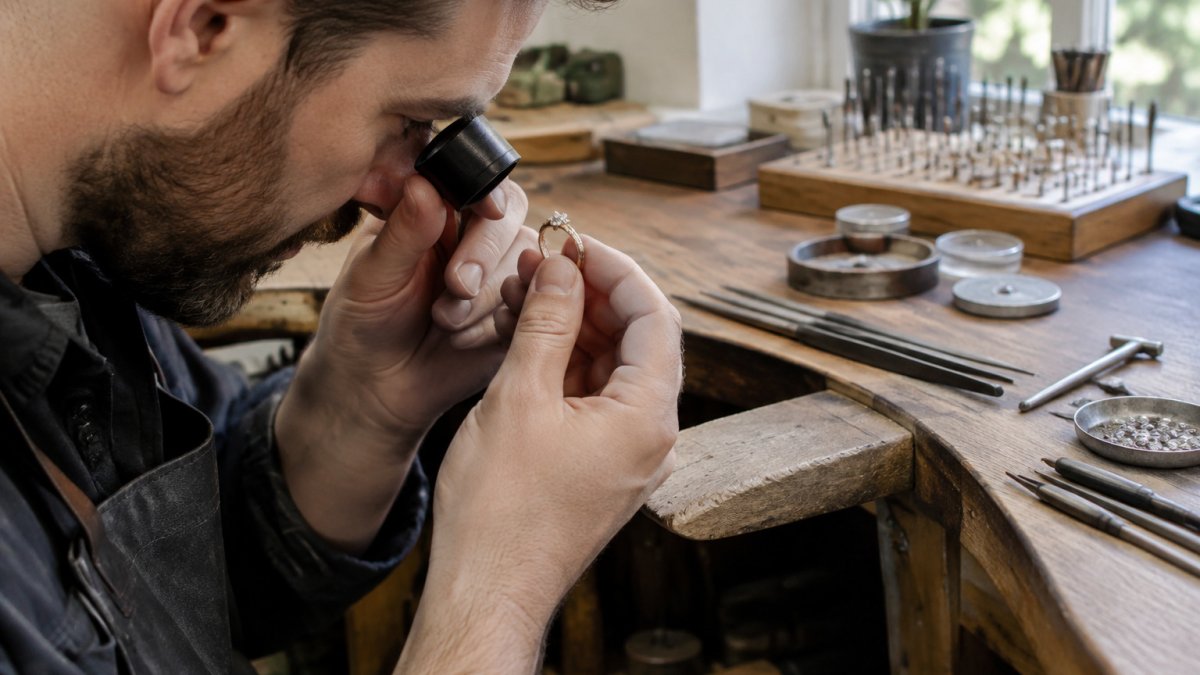
Provenance can add value where it is well documented. Records of who commissioned the piece, when it was made, and which workshop produced it all support the appraisal.
Market research supports the view that perceived value influences buying decisions. A study of contemporary art jewellery by Chen et al. found that perceived value was the most direct factor affecting purchasing behaviour (The Impact of Customer Perceived Value of Contemporary Art Jewelry).
How to Prepare a Custom Piece for Appraisal and What Documents to Bring
Preparation makes an appraisal faster and more accurate, but for a custom piece the paperwork does more than speed things up: it is often the only evidence of what the piece actually is. If you are unsure whether your certification reports are genuine, our guide on how to verify diamond certification reports walks through the checks to make before you bring them.
A practical checklist for a custom piece looks like this:
- Design records: sketches, 3D renders, CAD files or the written brief for the commission. These show the design intent and the labour that went into it, which supports the craftsmanship element of replacement value.
- Grading reports: certificates for any diamonds or coloured gemstones, checked against the stones in the setting.
- Purchase or commission invoice: showing what was paid and when, which anchors the replacement-cost figure.
- Metal documentation: any hallmark or assay record for the precious metal, plus the stated karat or purity.
- Photographs: clear images of the piece from several angles, plus close-ups of the stones and any maker's marks.
- Maker marks and provenance records: who commissioned the piece, which workshop made it, and any signature or stamp. Provenance adds measurable value only where it is documented, so a written record is worth more than a recollection.
- Maintenance and repair history: details of any resizing, re-plating or stone replacement, because alterations change condition and sometimes change the stone itself.
Keep the originals safe and bring copies where possible. The reason each item matters is that the appraiser is building an evidence trail: a grading report supports the stone value, an invoice supports the replacement cost, design records support the labour, and maker marks support provenance.
Watch out: mismatched or outdated paperwork is worse than no paperwork, because it forces the appraiser to reconcile conflicting evidence before valuing the piece. Our article on why regular jewellery valuation protects your collection explains how often to review your cover and what to ask for in the report.
The paperwork below is what the appraiser uses to build the valuation, so gather these items before your visit.
| Document | What it supports |
|---|---|
| Design records (sketches, renders, CAD files, brief) | Design intent and craftsmanship labour |
| Grading reports for diamonds and coloured gemstones | Stone quality and value |
| Purchase or commission invoice | Replacement-cost anchor |
| Metal documentation (hallmark, assay, karat) | Metal type and purity |
| Clear photographs from several angles | Condition and visual record |
| Maker marks and provenance records | Provenance and market position |
| Maintenance and repair history | Condition and any stone changes |
Jewellery Valuation for Insurance and Why Replacement Value Differs from Resale
An insurance valuation usually reflects replacement value, which is the cost of acquiring a comparable piece new. Resale value is what a buyer might pay on the second-hand market, and it is almost always lower.
Insurers generally want a current replacement figure, so a valuation from many years ago may leave you under-insured.
Be clear with your appraiser about the purpose before the valuation begins. A report written for insurance may be worded differently from one written for a sale or an estate division, and the figure may differ too.
Jewellery Appraisal Cost and How Often to Update a Valuation
Appraisal fees vary, and the cost depends on the complexity of the piece, the time required, and the type of report needed. Our guide to bespoke jewellery commission pricing explains what affects the cost of a commission, which can help you budget.
How often to update a valuation depends on the piece and the market. Review insured jewellery regularly, and sooner after a major change such as a new stone, a repair, or a significant move in precious-metal prices. Metal-price movement alone can shift a valuation meaningfully over a few years.
Booking Your Appraisal or Bespoke Commission at Morgan Banks
If you have a bespoke piece you would like valued, or you are planning a commission and want to understand how value is built into it, we are happy to help. We have been fine jewellers since 1935, and we can explain the paperwork and the purpose of your valuation before work begins.
Contact us to arrange an appointment.
Frequently Asked Questions
What factors affect the appraisal value of custom jewellery?
The main factors are the metal type, purity and weight, the quality of any gemstones including carat, cut, colour and clarity, the craftsmanship and design labour, the condition of the piece and any provenance or maker documentation. Custom pieces add a further consideration: a one-of-a-kind design has no direct comparable sales, so the appraiser relies on the cost of materials, the hours of skilled work and the market for similar bespoke work. Each factor is weighed against the purpose of the appraisal, so the same ring can carry different values for insurance and for resale.
How is custom jewellery appraised?
An appraiser examines the piece, weighs and tests the metals, grades any gemstones and checks for hallmarks, maker's marks and signs of repair or damage. For a bespoke piece, they also review design drawings, invoices and workshop records where available. They then apply a recognised valuation method, usually comparing the piece with similar items or estimating the cost to replace it, and write a report stating the value, the purpose and the basis for the figure. The result is an opinion of value rather than a single fixed price.
Does the quality of craftsmanship affect jewellery value?
Yes. Skilled setting, even finishing, secure construction and considered design all raise the cost of making a piece, and a replacement valuation will reflect that labour. Poor workmanship, loose stones, worn prongs or previous amateur repairs can reduce the value. For a resale valuation, craftsmanship matters less than the metal and stones, because buyers pay mainly for materials, though well-made pieces from recognised makers still tend to sell better.
Do certificates increase the value of a diamond or gemstone?
A grading report from a recognised laboratory does not add value on its own, but it confirms the carat weight, cut, colour and clarity that determine value, and it makes those characteristics far easier to verify. Insurers and buyers generally expect a report for stones of significant size, and an appraiser will rely on it rather than an estimate. Keep the original report with the appraisal documents for the piece.
Why can an insurance replacement valuation be higher than a resale value?
A replacement valuation estimates what it would cost to buy a similar piece new from a retailer, including labour and retail mark-up. A resale value estimates what a buyer would pay for the item secondhand, which is usually lower because the buyer is taking on the risk and receives no retail warranty. For bespoke jewellery, the gap can be wide because the design and labour are unique to the piece and hard to recover on resale.
How often should custom jewellery be revalued?
Most owners review a valuation every three to five years, and sooner if precious metal prices move sharply, the piece is altered or repaired, a stone is replaced or the item is worn in a way that may have caused damage. Insurers often require an up-to-date valuation for high-value items, so check the terms of your policy. Keeping the appraisal current prevents underinsurance, which can leave you short if you need to claim.
What documents should I take to a jewellery appraisal?
Bring any original receipts, invoices, design sketches or 3D renderings, grading reports for gemstones, previous valuations and records of repairs or alterations. For a custom commission, a written brief or the final specification helps the appraiser understand the intended design and the materials used. Photographs of the piece from several angles and any hallmarks or maker's marks should also be included, as these support identification and provenance.
Does the original purchase price determine an appraisal value?
No. The original price is useful evidence of what was paid, but an appraisal value reflects the purpose of the valuation and the current market at the date given. Metal prices can rise or fall after purchase, and a bespoke piece may be worth more or less than its original cost depending on the materials and labour involved. The purchase price is one document among several that the appraiser considers.
