
Table of Contents
- What Bespoke Jewellery Really Means
- The Custom-Made Jewellery Process, Stage by Stage
- Bespoke Ring Design: Turning an Idea into a Wearable Piece
- Choosing Metals and Gemstones for a One-of-a-Kind Piece
- Bespoke Jewellery Cost: What Drives the Price
- How Long Does Bespoke Jewellery Take?
- Sourcing, Quality Assurance and Aftercare
- Conclusion
- Frequently Asked Questions
Last Updated: October 21, 2026
What Bespoke Jewellery Really Means
Bespoke jewellery is a piece designed and made for one individual client, from the first conversation to the finished item, rather than adapted from an existing range. At Morgan Banks, the difference between a bespoke commission and a shop-bought piece comes down to one thing: the design starts with you, not with a catalogue.

That distinction shapes everything that follows, including cost, timeline and how much say you get in the finished piece.
Bespoke Versus Ready-Made and Mass-Produced Pieces
Ready-made jewellery is designed for a broad market and manufactured in quantity. Mass-produced pieces follow the same pattern at scale. Bespoke work is made to measure, so the ring fits your finger and your lifestyle, and the design brief reflects a specific person rather than a demographic.
The trade-off is time and cost. A ready-made piece can leave the shop the same day. A bespoke commission involves consultation, sketching, CAD design, a wax model and hand-finishing before you wear it.
The Custom-Made Jewellery Process, Stage by Stage
The custom-made jewellery process runs through six stages: consultation, design brief, sketch, CAD design and 3D modelling, wax model and casting, then stone setting and hand-finishing. Each stage ends with your approval, so nothing is cut or set until you are happy with what you are getting.
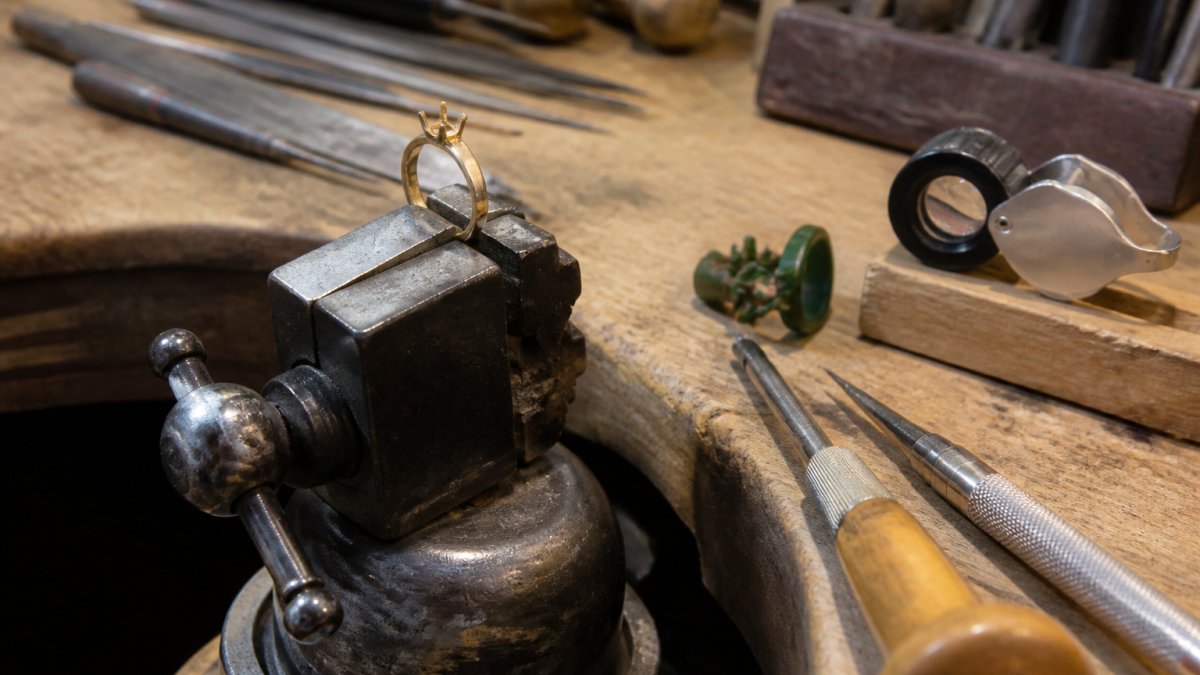
Consultation and Design Brief
The consultation turns a vague idea into a workable brief. Bring inspiration, a photograph, an heirloom, a rough sketch, or even a description of a piece you have seen, and the jeweller translates it into clear parameters: metal, stone type and size, proportions, finger size, and budget. A good brief also records the practical constraints: how often the piece will be worn, whether it needs to sit flush against an existing ring, and any metal sensitivities. This is the stage where a budget figure should be set, because it is far easier to design to a number than to remove cost from a finished concept.
Sketch and Concept Development
Before any CAD work, most workshops produce hand sketches or concept drawings. These are fast and cheap to revise, and they settle the big questions, silhouette, stone orientation, shoulder detail, and overall proportion, before the process becomes technical.
CAD Design and 3D Modelling
CAD (computer-aided design) turns the approved concept into a precise three-dimensional model. The model lets you see the piece from every angle, check proportions against your finger size, and confirm stone placement before any metal is cut. Revisions at CAD stage are normal and relatively inexpensive; revisions after casting are not.
Wax Model and Prototyping
A wax model is milled or printed from the CAD file and finished by hand. It is the first physical version of the piece, and it is the moment to try it on. Proportions that look right on a screen can feel very different on the hand, a band that appears elegant in a render may feel too narrow in wear, and a setting that looks balanced in 3D may sit too high. Approving the wax is the last cheap moment to change your mind.
Casting or Fabrication
Casting turns the wax model into metal: the wax is invested in a plaster mould, burned out, and molten metal is drawn into the cavity. Some pieces are instead fabricated from sheet, wire and tube, or a combination of casting and fabrication is used. Each method has trade-offs, casting suits complex shapes and repeatable detail, while fabrication suits simple bands and allows work-hardened, structurally strong metal.
Stone Setting
Setting is where each gemstone is placed and secured by hand. The main techniques are claw or prong setting, bezel setting, pavé, channel and flush setting, and the choice affects both look and security. A bezel set stone is more protected in daily wear; a claw setting shows more of the stone but exposes the claws to knocks.
Hand-Finishing and Quality Checks
Hand-finishing is where craftsmanship shows: filing, emerying, polishing, and refining surfaces until the piece is ready. It is the least visible part of the work and the part that decides how the piece wears over years. A proper finish includes checking that every stone is tight, that claws are uniform, that the piece sits comfortably, and that the sizing is correct.
Bespoke Ring Design: Turning an Idea into a Wearable Piece
Bespoke ring design succeeds when the idea survives contact with wearability. A striking design that catches on clothing or sits awkwardly on the hand will not get worn.
Our platinum emerald cut engagement ring at £1,900 shows how a bespoke commission can take shape: a 0.25ct emerald cut centre stone graded F VS2, with round brilliant shoulders totalling a further 0.25ct in G SI, set in platinum. It is a useful reference point for anyone weighing up stone shape, shoulder detail and metal choice.
Choosing Metals and Gemstones for a One-of-a-Kind Piece
Material selection decides both the look and the durability of a one-of-a-kind piece. Yellow gold, white gold, rose gold and platinum each behave differently in daily wear, and the right choice depends on how often the piece will be worn and what it will be worn alongside.
Gemstones deserve the same care. Diamond is the default for engagement rings, but cut, colour and clarity grading matter more than carat weight for how a stone actually performs in the light.
Bespoke Jewellery Cost: What Drives the Price
Bespoke jewellery cost is driven by four factors: metal, gemstones, design complexity and labour hours. There is no single price band, because a simple band and a multi-stone commission use very different quantities of each. What most guides leave out is how those factors interact, and where the money actually goes. This section breaks that down so you can budget with realistic expectations rather than a single headline figure.
Thomas Sabo Gold-plated ring in organic shape →
Metal: Weight and Type
Metal cost is driven by weight and by the price of the metal itself. A heavier band uses more metal, and platinum is denser and more expensive per gram than gold alloys. White gold, yellow gold and rose gold are priced similarly per gram but behave differently in wear. Ask for the estimated metal weight in the quote, because it is the most transparent cost line in any commission.
Gemstones: The Largest Variable
Gemstones are usually the largest single variable. For diamonds, price is driven by the 4Cs, cut, colour, clarity and carat, and cut has the greatest effect on how a stone performs in the light. A well-cut stone of lower colour or clarity can outperform a poorly cut stone of higher grade. For coloured stones, origin, treatment and rarity drive price. Ask for certification on any significant stone.
Design Complexity and Labour
Design complexity drives labour hours: a solitaire setting is quicker to make than a pavé halo, and hand-engraving or milgrain detail adds hours that are visible in the quote. Labour is also where revisions show up. CAD revisions are usually inexpensive; changes after casting or setting are not, because they involve reworking finished metal.
Illustrative Budget Bands
As a reference point from our own collection, our Thomas Sabo gold-plated ring in organic shape is £125, and the matching small gold-plated ear studs are £100. Those are ready-made pieces in recycled silver with 18k gold plating, and they show where the entry point sits. A bespoke commission in precious metal with certified stones sits well above that. As a broad pattern, a simple precious-metal band with no stones typically sits at the lower end of bespoke pricing, a single-stone ring with a certified diamond sits in the middle, and multi-stone or intricately set pieces sit at the upper end.


Revisions, Timelines and Hidden Costs
Two costs are commonly underestimated: revisions after casting, and rush timelines. Changes made after metal is cut can require rework or remaking, and compressed timelines can attract premiums from setters and casters.
How Long Does Bespoke Jewellery Take?
Bespoke jewellery typically takes several weeks from approved design to finished piece, with the exact timeline set by design complexity, stone sourcing and how quickly you approve each stage. Simple commissions move faster; intricate settings and specific stone requirements add time.
If you have a date in mind, say so at the consultation so the schedule can be built around it.
| Stage | What Happens | Your Involvement |
|---|---|---|
| Consultation and brief | Ideas, budget and parameters agreed | In person or remote |
| Design and CAD | Sketches, 3D model, revisions | Approve the design |
| Wax model | Physical model to hold and try | Approve the fit |
| Casting and setting | Metal cast, stones set by hand | None |
| Hand-finishing | Polishing and final checks | Collect or arrange delivery |
Sourcing, Quality Assurance and Aftercare
Quality assurance in bespoke work comes down to checking at every stage rather than at the end.
Sourcing matters too. Our emerald cut commission carries GIA certification, which is the documentation that lets a buyer verify grading independently.
Aftercare keeps a piece wearable.
Conclusion
Commissioning a piece means putting your trust in a workshop for weeks, and that trust has to be earned with clear stages, honest pricing and visible approvals. Morgan Banks has been a fine jeweller since 1935, specialising in bespoke jewellery, engagement rings and wedding bands, with expert guidance through metal and stone selection and a curated range of watches and brands including Thomas Sabo, ChloBo and BOSS. Get started with Morgan Banks and commission a piece made to measure for you.
Frequently Asked Questions
What does bespoke mean in jewellery?
Bespoke jewellery is designed and made for one individual client from a blank starting point, rather than adapted from an existing catalogue design. The design brief, metal choice, gemstones and dimensions are all decided with you. In practice this means sketches, a CAD design or wax model for approval, and hand-finishing by an artisan. It differs from made-to-measure, where a standard design is adjusted, and from ready-made pieces bought off the shelf.
How much does bespoke jewellery cost?
Bespoke jewellery cost depends on three main drivers: the metal, the gemstones and the complexity of the design. Platinum and 18ct gold cost more than recycled silver, and a large certified diamond costs more than a cluster of small stones. Labour rises with intricate settings and hand engraving. As a benchmark, a platinum emerald-cut engagement ring with 0.50ct total diamond weight is listed at £1,900, while a gold-plated Thomas Sabo ring is £125. Ask for a written quote before work starts.
How long does bespoke jewellery take to make?
Most commissions take four to eight weeks from approved design to finished piece. Simple designs with stock metals and stones can be quicker, while complex pieces with sourced gemstones or hand engraving take longer. The design stage adds time too, since you may want revisions after seeing sketches or a CAD model. If you need a ring for a specific date, raise it at the consultation so the jeweller can plan the production timeline around it.
Can I see a sketch or 3D model before the piece is made?
Yes, and you should ask for it. This is your chance to check proportions, stone placement and how the ring sits on the hand.
What should I bring to a bespoke jewellery consultation?
Bring inspiration images, any existing jewellery you love or want to remake, and a clear idea of your budget. A sense of lifestyle helps: a nurse or keen gardener may want a lower-set setting that will not catch. If you are commissioning a piece for someone else, bring their ring size and a photo of jewellery they already wear.
How can I assess the craftsmanship of a bespoke ring?
Look closely at the setting: stones should sit level and secure, with no gaps or exposed claws. Check the inside of the band for a smooth, polished finish and a clear hallmark. Run a finger over the joins to feel for ridges, and inspect the piece under magnification if you can. A jeweller should be happy to explain each stage and show you the work.