
Last Updated: November 20, 2026
Quick Summary
Choose your engagement ring metal by matching it to your daily habits first: platinum and 18ct gold resist knocks better than 9ct for active hands, while white gold needs rhodium replating every 12-18 months. Compare platinum, gold and silver side by side on durability, maintenance and cost before deciding.
- White gold was chosen by 43% of respondents in Jewelers Mutual's Engagement Ring Study 2026, up from 35% in 2024.
- Platinum keeps its colour without plating, while white gold's rhodium wears thin over 12 to 18 months.
- Nine-carat gold is 37.5% pure gold; 18ct is 75%, giving richer colour and a denser alloy.
- No precious metal is scratch-proof, so aim for a wear pattern you can live with and maintain.
- Matching metals matters when adding a wedding band, since soldering platinum to white gold is not straightforward.
Table of Contents
- Start With How You'll Wear It Every Day
- Compare Platinum, Gold and Silver Side by Side
- Platinum vs White Gold Engagement Ring: What Actually Differs
- 9ct vs 18ct Gold Ring: Purity, Colour and Cost
- Engagement Ring Metal Durability and How Metals Age
- Engagement Ring Metal Maintenance: Cleaning, Plating and Repairs
- Budget, Skin Sensitivity and Responsible Sourcing
- Book a Consultation at Morgan Banks in Kendal
- Frequently Asked Questions
Start With How You'll Wear It Every Day
The right engagement ring metal is the one that matches your daily life, not the one topping a trend list. Jewelers Mutual's Engagement Ring Study 2026 found white gold chosen by 43% of respondents, up from 35% in 2024, but popularity tells you nothing about whether it suits a nurse, a joiner or a violinist. The same lesson holds: habits decide the metal before style does.
Match the Metal to Your Hands and Habits
Active hands push metal harder. Gym sessions, gardening and heavy lifting all leave marks, and softer metals show them first.
- Desk-based work: almost any metal works; prioritise appearance and budget.
- Hands-on work or sport: platinum and 18ct gold resist knocks better than 9ct.
- Frequent hand washing or swimming: platinum and 18ct gold hold up well; rhodium plating on white gold wears over time.
- Skin sensitivity: platinum is generally considered a suitable choice for reactive skin, while some white gold alloys contain nickel.
If you want the deeper comparison, read our guide on which metal is best for daily wear eternity rings.
Compare Platinum, Gold and Silver Side by Side
Platinum, gold and silver are the three main precious metal choices, and each trades something different. Here is how they line up.
| Metal | Appearance | Durability | Maintenance | Best For |
|---|---|---|---|---|
| Platinum | Cool white, stays white | Excellent, scratches displace rather than wear away | Occasional polish, no replating | Daily wear, sensitive skin |
| White gold | Bright white, plated | Good, plating wears over time | Rhodium replating every 12-18 months | Classic white look on a budget |
| Yellow gold | Warm, traditional | Good at 18ct, softer at 9ct | Polish and occasional re-polish | Traditional tastes, warm skin tones |
| Rose gold | Warm pink, copper alloy | Good, copper adds hardness | Polish only | Vintage styling, warmer complexions |
| Silver | Bright white, tarnishes | Fair, softer metal | Regular cleaning, replating not possible | Occasional wear, lower budgets |
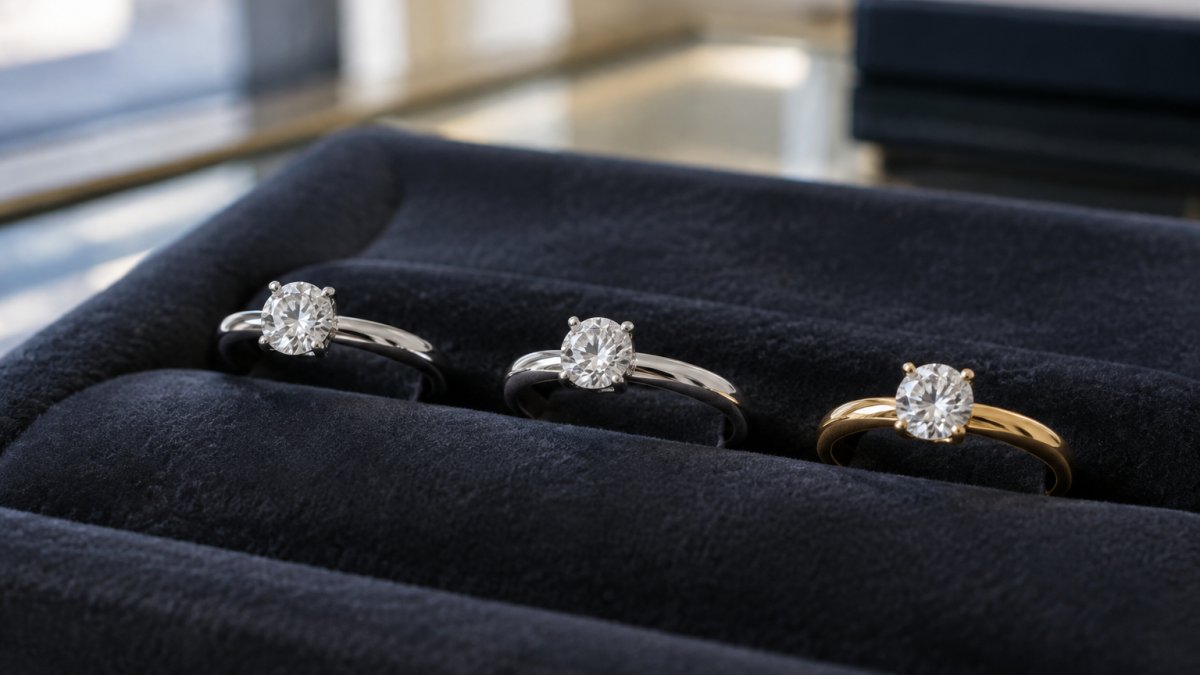
Pros and Cons of Each Metal
Platinum: dense and slow to wear, but heavier on the wallet and heavier on the finger. White gold: gives the platinum look at a lower price, though rhodium plating needs refreshing. Yellow and rose gold: warm, characterful and easy to repair, but 9ct versions scratch more readily. Silver: affordable and bright, yet too soft for a lifetime of daily wear.
Weighing a band against an eternity style? Our breakdown of eternity ring versus wedding band differences explains how the metal choice shifts with the design.
Platinum vs White Gold Engagement Ring: What Actually Differs
The platinum versus white gold engagement ring decision comes down to maintenance and composition. Platinum is a dense, naturally white metal that keeps its colour without plating. White gold is yellow gold alloyed with white metals and finished with rhodium plating for that bright white surface.
That plating is the catch. Rhodium wears thin over 12 to 18 months, exposing a faintly yellow tone underneath, so budget for replating. Platinum needs no such treatment, though it does develop a soft patina as scratches displace the metal rather than remove it.
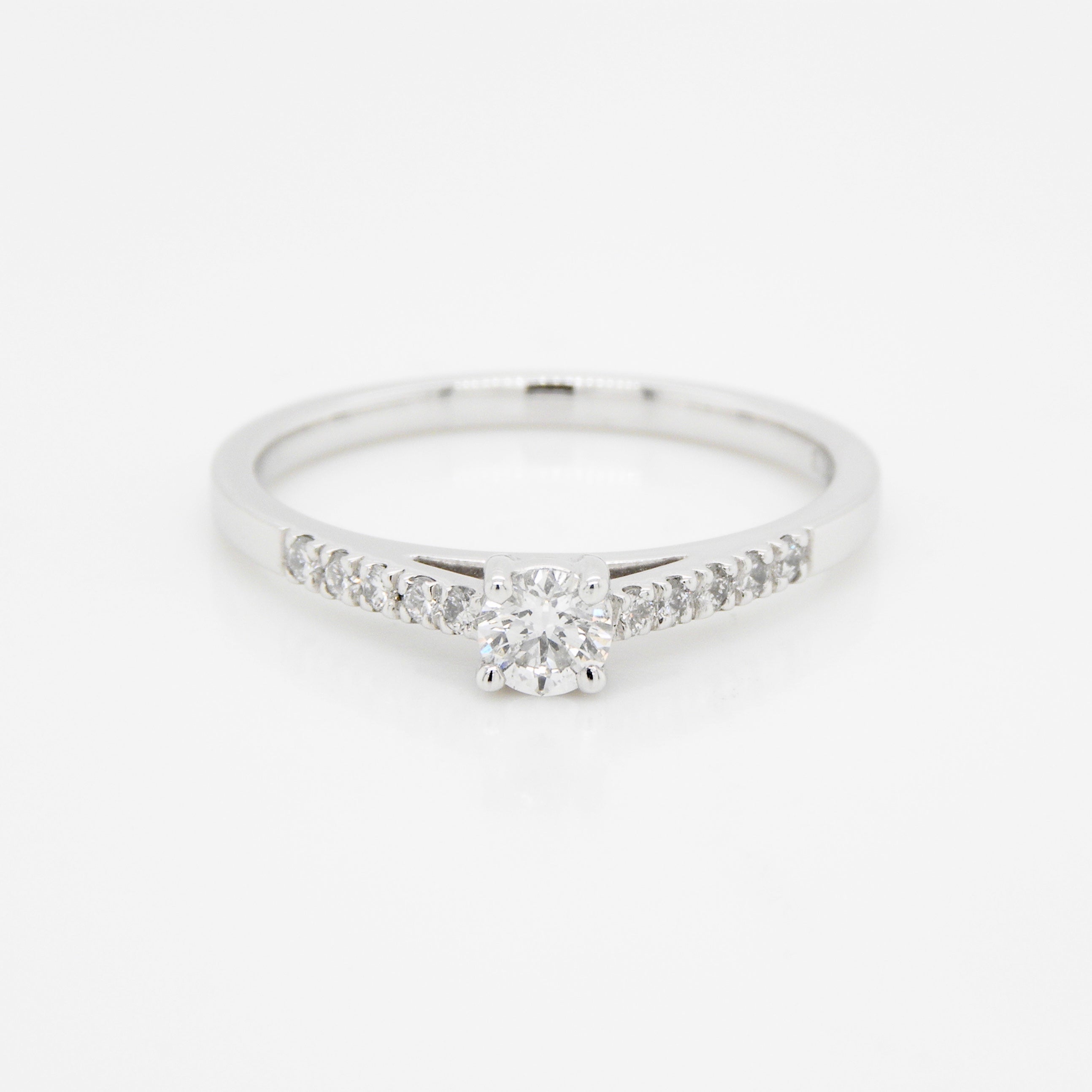
See the difference in person: compare our platinum diamond ring with halo shoulders against an 18ct white gold diamond engagement ring, both set with round brilliant diamonds.
9ct vs 18ct Gold Ring: Purity, Colour and Cost
The 9ct versus 18ct gold ring question is about purity, colour depth and price. Nine-carat gold is 37.5% pure gold; 18ct is 75%. Higher purity means a richer colour and a denser, more durable alloy, and it costs more per gram.
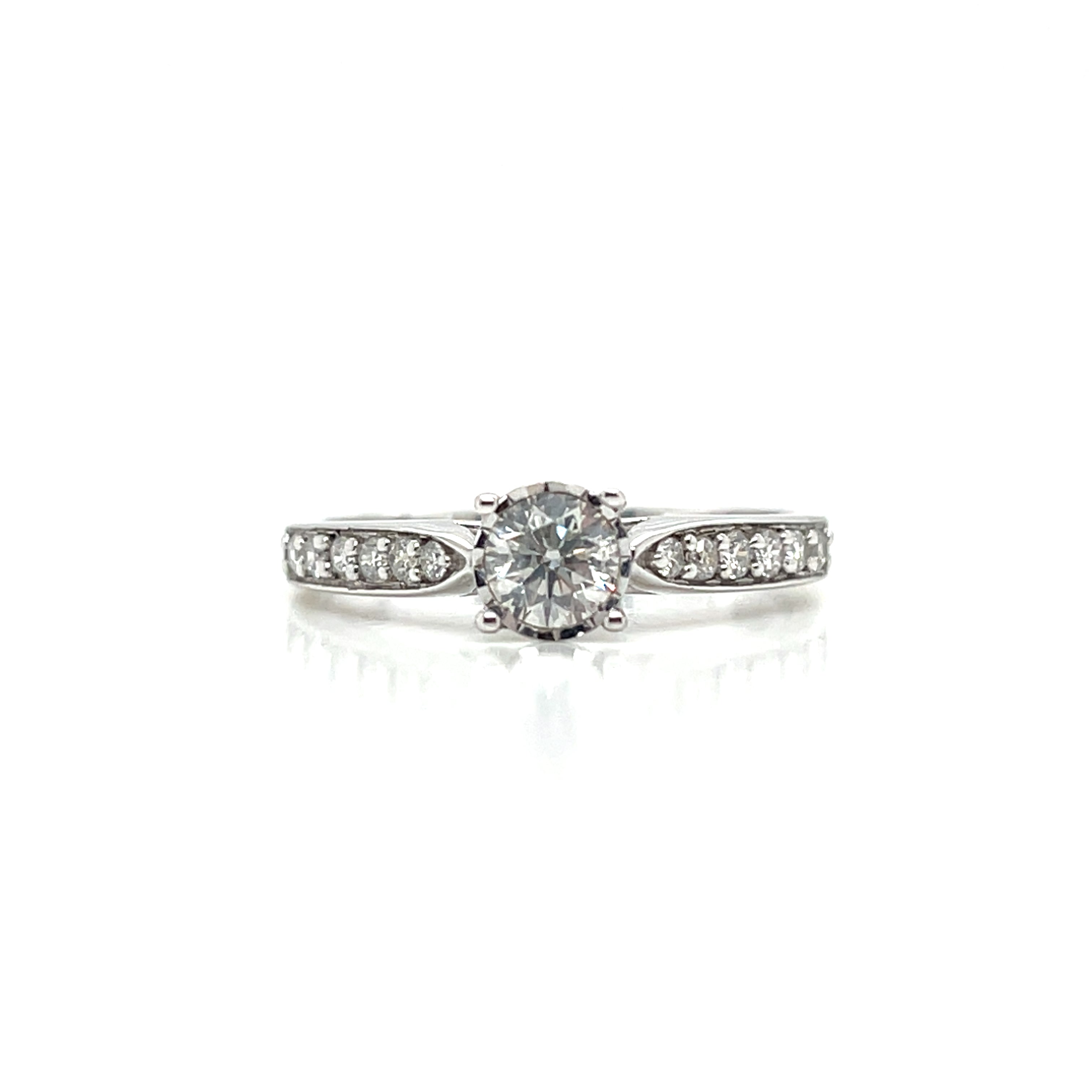
Eighteen-carat yellow gold carries a deeper, warmer tone that many buyers prefer for traditional settings. Nine-carat holds up well for lighter wear and keeps budgets comfortable. For a white metal look at 9ct, our 9ct white gold illusion set ring shows how bright the lower-purity option can appear once plated.
Engagement Ring Metal Durability and How Metals Age
Engagement ring metal durability is where most buying guides oversimplify. Hardness, scratch resistance and metal loss are three different properties, and a metal that scores well on one can disappoint on another. Understanding the mechanism matters more than memorising a Mohs number.
Hardness, Scratch Resistance and Metal Loss Are Not the Same Thing
Hardness describes how well a surface resists being indented. Scratch resistance describes how well it resists a sharp point being dragged across it. Metal loss describes how much material is actually removed over years of wear. Platinum is denser than gold and, when knocked, the metal displaces rather than flakes away. That is why a platinum ring develops a soft satin patina instead of thinning at the prongs. Eighteen-carat gold is softer still in the abstract, but its alloy mix gives it good day-to-day resilience; 9ct gold adds harder alloying metals, which raises hardness at the cost of gold purity and, some find, a slightly less rich colour.
A common pattern is that buyers fixate on the Mohs number and overlook density and alloy composition, which is why a "softer" platinum ring often outlasts a "harder" 9ct band in real wear.
What Realistic Wear Actually Looks Like
- Desk-based wear: fine surface scratches appear on all metals within months; they polish out and are cosmetic.
- Hands-on work, gym or gardening: platinum and 18ct gold resist knocks better than 9ct, but none is scratch-proof. Expect visible marks within the first year on any metal worn daily.
- Frequent hand washing, swimming or cleaning: chlorine and repeated wet-dry cycles dull rhodium plating on white gold faster; platinum and 18ct gold hold their appearance with less intervention.
- Long-term metal loss: platinum's displacement behaviour means prongs stay secure for longer between inspections; softer alloys can thin at high-wear points and need prong re-tipping sooner.
Watch out: no precious metal is scratch-proof, and any guide that promises a scratch-free ring is overselling. The realistic goal is a metal whose wear pattern you can live with and maintain.
How Each Metal Ages
Platinum develops a satin patina that many owners prefer. Yellow gold picks up fine surface scratches that polish out and, over decades, can show a gentle softening of detail. Rose gold's copper content gives it good hardness but can darken slightly in the recesses with wear. White gold dulls as rhodium fades, exposing a faintly yellow tone underneath until replated. None of this is damage, it is normal wear, and a jeweller can refinish many of these metals.
If you want the deeper comparison, read our guide on which metal is best for daily wear eternity rings.
Engagement Ring Metal Maintenance: Cleaning, Plating and Repairs
Engagement ring metal maintenance is simple if you stay ahead of it, but the long-term cost and repair picture is where metal choice really bites. Most guides stop at "clean it with warm water"; the practical question is what you will spend and how often, and whether your metal can be resized, soldered and matched to a wedding band years down the line.
A Realistic Maintenance Schedule
- Weekly: clean most metals with warm water, mild washing-up liquid and a soft brush, then dry with a lint-free cloth. Avoid chlorine and remove rings before swimming or cleaning.
- **
- **
- Every few years: professional polish for platinum and gold to refresh the surface; platinum owners who like the patina can skip this.
- As needed: resizing and repairs, which vary sharply by metal.
Long-Term Ownership Costs and Repair Compatibility
Purchase price is only part of the story. White gold carries an ongoing rhodium plating cost every 12 to 18 months for the life of the ring, over a decade that is a meaningful addition to the purchase price, and it is the single biggest ownership-cost difference between white gold and platinum. Platinum needs no replating but may need occasional polishing; its repairs demand a specialist's torch and skill, which can make resizing and soldering more expensive per job. Yellow and rose gold are the easiest to resize and repair, and 18ct holds detail better through repeated work than 9ct. Silver is affordable but too soft for a lifetime of daily wear and is not replatable.
Metal choice also affects future repairs and setting security. When you later add a wedding band, matching metals matters: soldering a platinum ring to a white gold band is not straightforward, and mixing metals can cause galvanic issues and uneven wear at the join. Choosing the same metal, or planning a deliberate two-tone look, now saves awkward conversations later.
Watch out: a jeweller who cannot explain how they will resize and solder your chosen metal is a warning sign. Ask before you buy, not after the ring needs work.
Weighing a band against an eternity style? Our breakdown of eternity ring versus wedding band differences explains how the metal choice shifts with the design.
Budget, Skin Sensitivity and Responsible Sourcing
Set your budget before you fall for a setting.
Ask your jeweller about the alloy before buying if skin sensitivity is a concern.
Book a Consultation at Morgan Banks in Kendal
Choosing a metal is easier with the ring on your hand. Our team can help you think through the metal options against your daily habits and budget.
Metal choice rewards a little honesty about your lifestyle. If your hands work hard, platinum or 18ct gold will serve you longer; if budget leads, 9ct white gold with good plating looks every bit as bright. At Morgan Banks, we have guided couples through this decision since 1935, with bespoke engagement rings, expert fitting and a curated collection to try in person. Get started with Morgan Banks and choose a ring metal built to last a lifetime.
Frequently Asked Questions
What is the best metal for an engagement ring?
There is no single best metal, only the best fit for how you live. Platinum suits daily wear and active hands because it is dense and holds settings firmly, though it costs more. White gold offers a bright finish at a lower price and needs rhodium plating every 12 to 18 months to keep its colour. Yellow gold hides scratches well and needs the least upkeep. Try on a few finishes before deciding, since colour against your skin often settles the question.
Is platinum better than white gold for an engagement ring?
Platinum and white gold differ most in maintenance and weight. Platinum is naturally white, so it never needs plating, and it develops a soft patina rather than losing metal. White gold is a gold alloy finished with rhodium plating, which wears away over time and needs re-plating to restore its brightness. Platinum is the heavier, more expensive option; white gold gives a similar look for less. Both hold diamonds securely when the setting is well made.
What is the difference between 9ct and 18ct gold?
The number refers to gold purity: 9ct is 37.5% gold and 18ct is 75% gold, with the rest made up of other metals that affect colour and strength. 18ct yellow gold has a richer colour and is the traditional choice for fine engagement rings, while 9ct is harder wearing and costs less. Neither is wrong. Look at both in person, because the colour difference is more obvious in daylight than in photographs.
Can you resize an engagement ring made from any metal?
Most plain bands in platinum, yellow gold and white gold can be resized, usually by a jeweller cutting and re-joining the band or adjusting it on a mandrel. The limits come from the design, not the metal: rings with diamonds running all the way around the band, channel settings or intricate shoulders are harder to alter without disturbing the stones.
