
Table of Contents
- What Makes Bespoke Engagement Ring Design Different
- The Initial Consultation and Design Concept
- Selecting the Center Stone and Understanding the 4Cs
- The 3D Modeling and CAD Process
- Choosing Metal Types and Ring Profiles
- How Long Does a Custom Engagement Ring Take to Make
- Cost of Bespoke Engagement Rings and Budget Planning
- Custom Engagement Ring Design Tips and Best Practices
- Frequently Asked Questions
What Makes Bespoke Engagement Ring Design Different
A bespoke engagement ring is custom-created to your exact vision through collaboration with a skilled jeweller. Unlike off-the-shelf rings, bespoke design transforms your imagination into reality, ensuring your ring becomes a genuine expression of your relationship rather than a compromise between what exists and what you hoped for.

Ready-made rings offer convenience; bespoke engagement ring design offers certainty. You control the centre stone, setting style, metal type, and every architectural detail. At Morgan Banks, we've guided couples through this process since 1935.
The Initial Consultation and Design Concept
Your bespoke engagement ring design journey begins with a conversation where the jeweller learns who you are, what matters to you, and what you envision in the perfect ring.

Understanding Your Vision
The jeweller will ask detailed questions about your aesthetic preferences, lifestyle, and the emotional significance of the ring. They'll examine your hands and discuss practical factors like durability and comfort, since a ring designed for someone who works with their hands demands different structural considerations than one for an office environment.
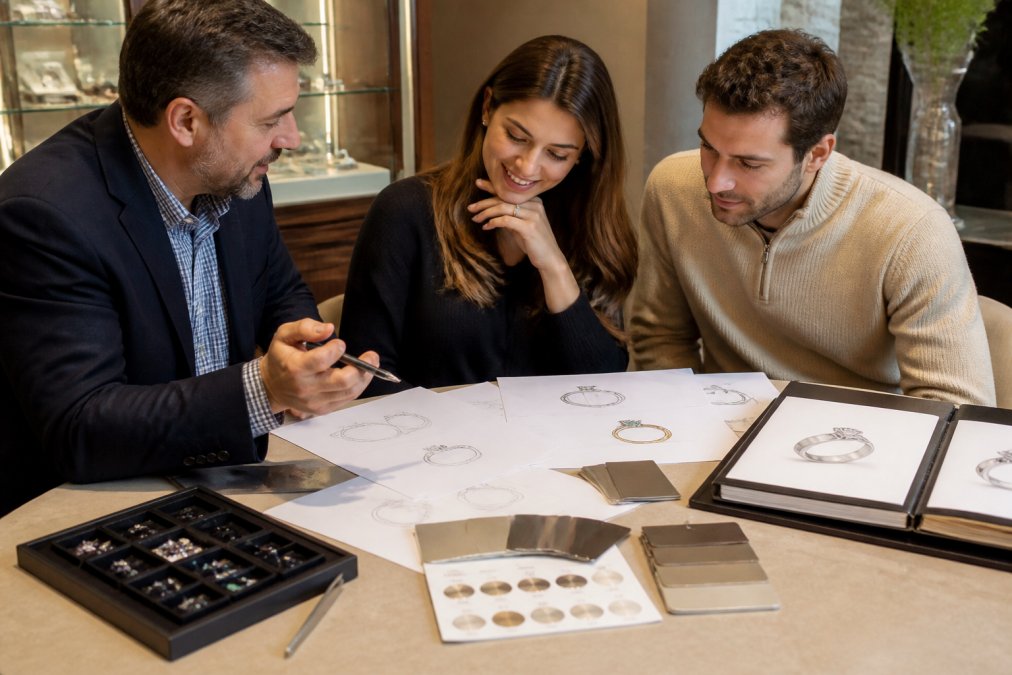
Many jewellers create preliminary sketches during this consultation to capture direction and proportions. This flexibility is central to bespoke engagement ring design.
Budget Expectations
A transparent discussion about your budget range allows the jeweller to recommend realistic options for centre stone size, metal type, and setting complexity. With bespoke design, you're paying for the design process, craftsmanship, and the ability to specify every element.
Selecting the Center Stone and Understanding the 4Cs
The centre stone is the visual and emotional anchor of your bespoke engagement ring design. Understanding the 4Cs framework helps you make informed decisions aligned with your priorities and budget.
Cut, Clarity, Colour, and Carat Weight
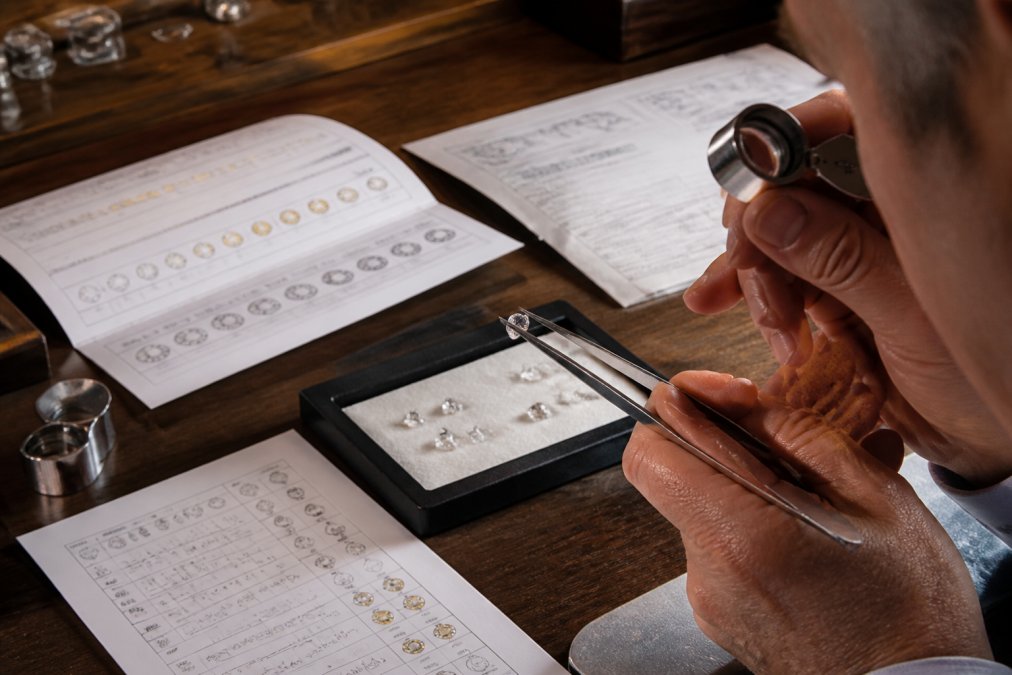
Cut refers to how well the diamond has been shaped and faceted, affecting brilliance and sparkle. For bespoke engagement ring design, prioritising cut quality often delivers more visual impact than chasing higher carat weight.
Clarity measures inclusions inside the diamond. Most engagement rings fall into the VS1 to SI1 range, where inclusions are not visible without magnification, representing an excellent balance between quality and cost.
Colour grades how colourless the diamond is, ranging from D (colourless) to Z (light colour). Diamonds graded G through J appear colourless to the naked eye while costing significantly less, allowing you to allocate budget more strategically (gia.edu).
Carat Weight measures the diamond's weight. A well-cut 0.9-carat diamond often outperforms a poorly cut 1.2-carat stone visually while costing less.
Certified Gemstones and Authenticity
Certification from an independent gemological laboratory, such as the Gemological Institute of America (GIA) or the International Gemological Institute (IGI), provides objective verification of a diamond's characteristics. Request certification as a standard requirement; the certificate becomes part of your ring's permanent record.
The 3D Modeling and CAD Process
Once you've selected your centre stone and refined your design concept, the bespoke engagement ring design moves into digital territory. Modern jewellers use Computer-Aided Design (CAD) software to create precise 3D models before any metal is cut or cast.

From Sketch to Digital Rendering
The CAD rendering transforms your approved sketch into a photorealistic 3D model showing exactly how your ring will look from every angle. Many couples request adjustments during the CAD phase, as proportions might feel different on screen than on paper. These refinements are far simpler and less expensive to make in CAD than after casting.
Common CAD Design Pitfalls to Avoid
Proportional miscalculation is the most common issue. Request a printed scale model or ask the jeweller to show you comparable finished rings.
Structural compromises occur when design aesthetics override engineering requirements. A reputable jeweller flags these concerns during CAD review. Ask directly: "Is this setting structurally sound for daily wear?"
Stone positioning errors happen when the CAD model doesn't account for how light will actually interact with your specific diamond. Discuss stone positioning explicitly with your jeweller.
Choosing Metal Types and Ring Profiles
The metal you choose affects durability, appearance, maintenance requirements, and cost. Your choice also influences how the centre stone appears and how the ring feels on your finger.
Platinum, 18K Gold, and Alloy Options
Platinum is the premium choice for bespoke engagement ring design. It's naturally white, extremely durable, and hypoallergenic, requiring no replating or regular maintenance. Morgan Banks offers the Platinum Oval shaped Diamond Engagement Ring ENG5487 SMT featuring a certified 0.30ct centre stone in F colour, VS1 clarity.
18K Gold offers an excellent balance between durability, aesthetics, and cost in yellow, white, and rose finishes. White gold requires periodic replating every 5-10 years, while yellow and rose gold develop a natural patina over time.
Alloy options like palladium offer alternatives if you have specific requirements, allergies, or budget constraints.
Setting Styles: Prong, Bezel, Halo, and Pavé
Prong settings use metal claws to hold the centre stone, maximising light and enhancing brilliance. They require periodic inspection to ensure prongs remain tight.
Bezel settings surround the stone's perimeter with metal, creating a contemporary look and offering superior protection with less maintenance.
Halo settings surround the centre stone with smaller diamonds, amplifying sparkle and creating the visual impression of a larger stone.
Pavé settings feature small diamonds set closely together along the band, creating continuous sparkle. This labour-intensive work requires exceptional craftsmanship and periodic professional inspection.
How Long Does a Custom Engagement Ring Take to Make
Timeline is often the biggest surprise for couples new to bespoke engagement ring design. Custom rings require weeks or months from design approval to completion.
Timeline Stages and Lead Times
Design and CAD refinement typically takes 2-4 weeks, including initial consultation, sketch development, CAD creation, and approval iterations.
Stone sourcing and certification adds 1-3 weeks if you haven't already selected your centre stone.
Wax model creation and casting takes 2-4 weeks, involving multiple quality checkpoints.
Stone setting and finishing requires 1-3 weeks.
Quality inspection and sizing takes 3-7 days.
Total timeline for bespoke engagement ring design typically ranges from 8-16 weeks from initial consultation to completion.
Factors That Affect Production Time
Design complexity significantly impacts timeline. Simple solitaire designs complete faster than intricate halos with pavé band work.
Stone availability can extend timelines if your selected diamond requires certification or special sourcing.
Seasonal demand affects jeweller capacity, potentially extending timelines during peak engagement season.
Cost of Bespoke Engagement Rings and Budget Planning
Bespoke engagement ring design requires understanding what drives costs and how to allocate budget strategically.
Price Breakdown and What Influences Cost
Centre stone cost typically represents 40-70% of the total investment. Prioritising cut quality over carat weight often delivers better visual results.
Metal cost varies based on your choice. Platinum costs roughly 2-3 times more than 18K gold for comparable weight (usgs.gov).
Setting and craftsmanship encompass design work, CAD creation, wax model development, casting, setting, and finishing, typically representing 20-40% of total cost.
Accent stones add proportional cost, while certification and appraisal add modest costs, typically £100-300 for diamond certification and £150-400 for professional appraisal.
Morgan Banks offers bespoke engagement ring design across a range of price points. The Platinum Diamond Marquise 0.30ct Engagement Ring ENG30012 MT starts at £1,990, while the Platinum Pear Shaped Diamond Ring 1.02ct E SI1 reaches £11,795.
Bespoke Versus Ready-Made: Value Comparison
Ready-made rings come with inventory carrying costs, retail markups, and marketing expenses built into the price. Bespoke engagement ring design costs more upfront but delivers certainty, you control every variable. For most couples, that control justifies the additional investment, and a custom ring typically requires fewer adjustments or repairs over decades of wear.
Custom Engagement Ring Design Tips and Best Practices
Structural Integrity and Resizing Considerations
Metal thickness is critical for durability. Discuss minimum thickness requirements with your jeweller and ask directly: "Are these prongs dimensioned to secure this stone safely for decades of daily wear?"
Resizing limitations affect long-term wearability. Some designs, particularly those with intricate pavé work, cannot be resized without destroying the design. Discuss resizing possibilities before committing.
Post-Purchase Maintenance and Warranty Protection
Professional cleaning should occur annually. Prong inspection is essential for prong-set rings annually. Replating is necessary for white gold rings every 5-10 years. Reputable bespoke engagement ring designers typically offer warranties covering craftsmanship defects for 1-2 years.
Ethical Sourcing and Traceability
An increasing number of couples prioritise ethical sourcing when selecting stones and metals for bespoke engagement ring design. Diamond sourcing has improved with the Kimberley Process Certification Scheme, while some couples prefer lab-grown diamonds, which eliminate mining-related environmental and ethical concerns. Metal sourcing also warrants consideration, recycled platinum and gold reduce environmental impact compared to newly mined metal. Request documentation and ask your jeweller about the metal's sourcing and whether recycled options are available.
| Component | Typical Timeline | Key Decisions |
|---|---|---|
| Design & CAD | 2-4 weeks | Vision clarity, revision requests |
| Stone sourcing | 1-3 weeks | Certified vs. uncertified, inventory availability |
| Wax model & casting | 2-4 weeks | Metal choice, design complexity |
| Setting & finishing | 1-3 weeks | Setting style intricacy, accent stones |
| Quality & sizing | 3-7 days | Final adjustments, inspection thoroughness |
| Total | 8-16 weeks | Overall production pace |
Creating a bespoke engagement ring design is one of the most significant decisions you'll make as a couple. The process demands patience, clear communication, and partnership with a jeweller who understands that your ring represents far more than metal and stone, it embodies your commitment and your unique story.
At Morgan Banks, we've been crafting bespoke engagement rings since 1935. Our experience guides couples through every decision point, from initial vision through final delivery. We specialise in translating your imagination into reality through meticulous design, expert craftsmanship, and unwavering attention to detail. Explore our Raphael Collection of bespoke engagement rings and discover how custom design transforms your vision into an heirloom.
Frequently Asked Questions
Q: What are the main steps in the bespoke engagement ring design process?
A: The process begins with an initial consultation where you discuss your vision, budget, and preferences. Next, you'll select a centre stone and choose metal types. The jeweller creates design sketches and CAD renderings for your approval. Once approved, the ring moves into the crafting and casting phase, followed by setting the stone and final finishing. Throughout, you'll have multiple opportunities to review and approve changes before the final piece is completed.
Q: How long does a custom engagement ring take to make?
A: Lead times typically range from 8 to 12 weeks, depending on complexity and current workshop capacity. Simple designs may be completed in 6 to 8 weeks, whilst intricate pieces with multiple stones or detailed metalwork can take 12 to 16 weeks. The timeline includes design approval, stone sourcing, CAD refinement, casting, setting, and finishing. Always discuss specific timelines with your jeweller at the outset, as rush services may incur additional costs.
Q: What should I budget for a bespoke engagement ring?
A: Bespoke engagement rings range from £1,500 to £15,000 or more, depending on the centre stone quality, metal choice, and design complexity. A modest platinum ring with a 0.3-carat diamond may start around £2,000, whilst a 1-carat certified stone in platinum with a halo setting can exceed £10,000. Design fees typically range from £200 to £500. Request a detailed cost breakdown from your jeweller, including stone, metal, labour, and any finishing touches.
Q: What are the key design tips for creating a bespoke engagement ring?
A: Start with inspiration but remain open to expert advice on proportions and structural integrity. Ensure your centre stone complements the metal and setting style, platinum suits all cuts, whilst 18K gold works beautifully with warmer-toned stones. Request CAD renderings before casting so you can visualise the final design. Avoid overly delicate designs that may not withstand daily wear, and consider future resizing needs. Discuss maintenance requirements upfront, and ensure your jeweller provides a warranty covering craftsmanship.
Q: Can I design a bespoke ring remotely, or do I need to visit in person?
A: Many jewellers now offer remote consultations via video calls and digital design sharing, though initial in-person visits are valuable for viewing stones and understanding metal finishes. You can typically approve CAD designs and communicate revisions remotely. However, final fittings and stone setting inspections benefit from in-person visits. Discuss your location and preferred working arrangement with your jeweller, some offer flexible hybrid processes to accommodate distance.
Q: What is the difference between a CAD design and a hand-sketched ring design?
A: Hand sketches provide initial artistic direction and are quick to produce, but lack precise proportions and 3D perspective. CAD renderings offer photorealistic 3D visualisations showing exact dimensions, stone placement, and how light interacts with the metal and gemstone. CAD designs allow for accurate casting and reduce errors during production. Most jewellers use both: sketches for brainstorming, then CAD for final approval and manufacturing.
Q: What makes bespoke engagement rings more valuable than ready-made rings?
A: Bespoke rings are tailored to your exact specifications, ensuring a unique piece that reflects your personal style and relationship story. You control every detail, stone quality, metal type, setting style, and finish. Handcrafted pieces often feature superior craftsmanship and structural integrity compared to mass-produced alternatives. Additionally, bespoke rings hold sentimental and investment value, and many come with certificates of authenticity and detailed warranties on the craftsmanship.
Q: Should I have a specific design in mind before meeting a jeweller, or can they help me develop one?
A: You don't need a finished design, many couples arrive with inspiration from magazines, social media, or family heirlooms. A skilled jeweller will guide you through design possibilities, explaining what's structurally sound and what complements your chosen stone. Bring reference images, describe your lifestyle and preferences, and discuss your budget openly. Your jeweller's expertise will help refine vague ideas into a cohesive, wearable design that exceeds your expectations.
This article was written using GrandRanker