
Last Updated: November 7, 2026
Quick Summary
To choose the right diamond setting, start with how you live rather than how it looks: match the setting type to your daily routine, hands and habits. A bezel is generally the most protective option for everyday wear, while a low-profile setting reduces snagging and a halo makes a smaller centre stone look bigger.
- A diamond setting is the metal structure that holds the stone in place on the ring band.
- Prong and solitaire settings offer the most light exposure but leave the girdle open to chips.
- Prong-set rings are worth having their claws checked once a year, or every six months for halo and pavé.
- A high-set stone catches on knitwear, hair and gloves, so a low profile suits daily wear.
- At Morgan Banks in Kendal, platinum engagement rings start from £1,600.
Table of Contents
- Start With How You Live, Not the Look
- Diamond Ring Setting Types: What Each One Does
- Match the Setting to the Diamond Shape
- Secure Diamond Ring Settings for Daily Wear
- Diamond Setting for Everyday Wear: Height, Snagging and Comfort
- How the Setting Changes Perceived Size and Sparkle
- Engagement Ring Settings: Maintenance and Long-Term Cost
- Book a Bespoke Setting Consultation in Kendal
- Frequently Asked Questions
Start With How You Live, Not the Look
Learning how to choose the right diamond setting starts with your daily routine, not a Pinterest board. A diamond setting is the metal structure that holds the stone in place on the ring band (Complete Guide to Engagement Ring Settings: Types vs. Styles). The setting you wear happily for decades is the one that suits your hands and habits first.
So before you look at a single photo, answer four questions:
- Do you work with your hands, or sit at a desk?
- Do you wear rings to the gym, the garden or the pool?
- Do you prefer a low, smooth profile or a raised, showy stone?
- How often will you clean it?
The answers narrow the field faster than any trend list. A nurse who wears gloves all day needs a different setting from someone who works from home. Two people can love the same ring style and need different levels of stone security.
Watch out: choosing a high, open setting for an active lifestyle is a common mistake. It can look beautiful on display yet catch on everything within a short time.
Diamond Ring Setting Types: What Each One Does
Every diamond ring setting type solves a different problem, so match the type to the job before you fall for a look. There are five families worth knowing: prong, solitaire, halo and cluster, pavé, and bezel or channel. Each one changes how much metal shows, how exposed the stone sits and how easy the ring is to keep clean.
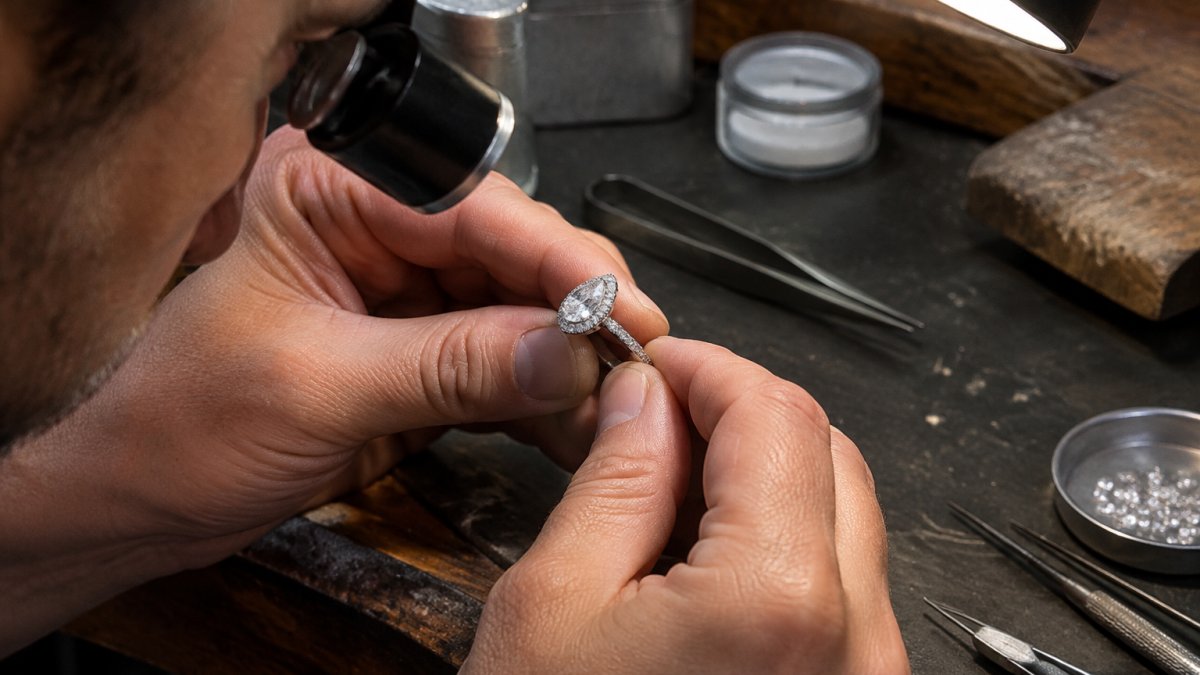
Here is the quick comparison we use at the counter:
| Setting type | Metal coverage | Stone security | Best for |
|---|---|---|---|
| Prong / solitaire | Low | Good, but exposed | Classic look, easy cleaning |
| Halo / cluster | Medium | Good | Bigger look, smaller centre stone |
| Pavé | Low, many small stones | Fair | Maximum sparkle |
| Bezel | High, full rim | Excellent | Daily wear, active hands |
| Channel | Medium | Very good | Smooth, snag-free band |
Prong and Solitaire Settings
A prong setting holds the stone with small metal claws, and a solitaire uses a single stone on a plain band. This is the classic design most people picture, and it lets the most light reach the diamond. The trade-off is exposure: the girdle sits open, so it can chip on a hard knock.
If you love the solitaire look but want something a little different, our guide to alternatives to solitaire diamond rings covers the options worth seeing.
Halo and Cluster Settings
A halo setting rings the centre stone with a circle of smaller diamonds, while a cluster groups several stones to mimic one larger one. Both add sparkle and make the centre stone look bigger for the money. Halos need a little more cleaning because the small stones trap soap and dust.
Wondering whether this style still holds up? Read our piece on halo diamond rings before you commit.
Pavé, Channel and Bezel Settings
Pavé sets tiny diamonds along the band for a river of sparkle, channel setting grips stones between two metal walls, and a bezel wraps the stone in a full metal rim. A bezel is generally the most protective option for everyday wear. Channel is smooth and snag-free. Pavé is the most delicate of the three.
Match the Setting to the Diamond Shape
Setting and diamond shape must work together, because a poorly matched pair looks cramped or leaves the stone vulnerable.
Round and oval. These are the most forgiving shapes. A round brilliant suits a four- or six-prong solitaire, a bezel, a halo or a three-stone design without much compromise.
Pear, marquise and heart. These shapes have delicate points that need metal at the tip. A prong or a bezel at each point is the practical answer; a halo can also shield the outline if the small stones are set close.
Square and rectangular cuts. Princess, emerald, Asscher and radiant cuts have corners that need either a prong at each corner or a bezel that follows the outline. A four-prong setting that grips the sides rather than the corners can make a square stone look rounded.
Proportions and depth. A deep stone needs a setting with enough height to clear the band, or the girdle will sit against the finger and rub. A shallow stone can sit low and flat, which suits a bezel or a low-profile prong setting.
A platinum pear-shaped ring with a halo and diamond-set shoulders shows the point-protection idea in practice: a pear centre stone held in claw settings. The claws guard the tip while the halo adds brilliance.
Secure Diamond Ring Settings for Daily Wear
Secure diamond ring settings share one feature: metal where the stone is most likely to take a knock. If the ring never comes off, protection beats exposure. Bezel settings lead here, with channel settings close behind. A four-prong solitaire with a low profile is a solid middle ground.
A common mistake is judging security by how tight the stone feels on day one. Prongs can wear and loosen over time, so a prong-set ring benefits from a check now and then. Ask a jeweller to look at the claws during a clean.
Diamond Setting for Everyday Wear: Height, Snagging and Comfort
Diamond setting for everyday wear comes down to height. A high-set stone catches on knitwear, hair and gloves, and every snag puts stress on the claws. A low-profile setting sits close to the finger and clears pockets and sleeves without drama.
Comfort matters as much as looks. A ring that spins or presses on the neighbouring fingers will spend more time in a drawer than on your hand.
For a wider look at pieces built for constant use, our guide on choosing diamond jewellery for daily wear walks through the practical checks. As a rule, the lower and smoother the profile, the more you will wear it without thinking.
How the Setting Changes Perceived Size and Sparkle
The right setting can make a diamond look larger and brighter without changing the stone. A halo adds a ring of sparkle around the centre and reads as a bigger stone from across a room. A bezel can make a diamond appear slightly smaller because metal covers the edge, but it frames the stone cleanly.
Prong settings win on light exposure: more of the diamond is open to light, which supports brilliance (Complete Guide to Engagement Ring Settings: Types vs. Styles). Pavé adds sparkle along the band and draws the eye. None of this changes the diamond's cut, colour or clarity, but it changes what people notice first.
Engagement Ring Settings: Maintenance and Long-Term Cost
Engagement ring settings differ in what they demand over the years, and that ongoing care is part of the true cost. The purchase price is only the first number; the second is what the setting asks of you in cleaning, inspection and repair. Compare settings on those three jobs before you decide.
Cleaning difficulty by setting. A simple solitaire or four-prong setting is the easiest to keep clean: fewer stones, fewer claws and open space around the girdle.
Inspection frequency. Prong-set rings are generally worth having their claws checked once a year, and more often if they are worn daily or during sport. Halos and pavé carry more small stones, so there is more to check and tighten; a six-month look is sensible for a heavily pavéed band.
Repair considerations. Re-tipping worn prongs is a routine job on a solitaire, and it is cheaper than replacing a lost stone. On a halo or pavé band, replacing a single small stone is fiddly and can mean removing and resetting neighbouring stones, which adds labour.
Plan for these routine jobs:
- Clean the ring at home with warm water and mild soap, and soak halos and pavé for a few minutes before brushing
- Have the claws checked once a year, or every six months for halo and pavé
- Re-tip worn prongs before they fail
- Tighten small pavé or halo stones as needed
- Ask for the setting to be checked whenever the ring is cleaned professionally
Cost mechanics. The setting's design complexity, the number of accent stones, the metal choice and any custom work all move the total.
Thinking ahead to the wedding band? A setting that sits high can leave a gap against a straight band. Our guide on wedding bands that sit flush explains how to plan the pair together.
Book a Bespoke Setting Consultation in Kendal
The final step is the one that removes the guesswork: see the setting on your hand before it is made. At Morgan Banks, we design bespoke rings and can show you how the piece will look before any metal is cut. If you want to understand that journey first, read how our bespoke engagement ring design process works.
We are a trusted, long-established jeweller in Kendal, and we will talk you through stone security, comfort and cost honestly. Our platinum engagement rings start from £1,600, and we can tailor the setting to your stone and your daily life.
Choosing a setting is a decision you will live with every day, so take the time to match it to your hands, your habits and your stone. Morgan Banks offers bespoke design, a curated collection of engagement rings, and expert guidance from a team that has done this since 1935. Get started with Morgan Banks and find a setting made for the way you actually live.
Frequently Asked Questions
What is the most secure setting for a diamond?
A bezel setting is generally the most secure. A metal rim wraps the full edge of the stone, so there are no exposed prongs to catch or bend. Channel settings are also very protective because the stones sit between two walls of metal. Claw and prong settings hold a diamond well when they are checked regularly, but they expose more of the girdle. If you are hard on your hands, ask for a bezel or a low-set halo with a protective collar.
Which diamond setting makes a stone look bigger?
A halo setting adds a ring of accent stones around the centre stone, which makes the overall spread look larger than the centre diamond alone. The Raphael Collection Platinum Diamond Pear ring, for example, pairs a 0.40ct pear centre with 0.35ct of halo and shoulder diamonds for a 0.75ct total. An illusion setting does something similar with metalwork rather than extra stones. A thin band with a well-cut centre stone also helps, because less metal competes with the diamond.
Which diamond setting is best for everyday wear?
Low-profile bezel and channel settings suit everyday wear best. They sit close to the finger, cover the stone edges and leave nothing to snag on knitwear or gloves. If you prefer a claw setting, choose a lower-set stone and have the prongs checked every six to twelve months. A diamond setting for everyday wear should balance protection with comfort, so try the ring on and make a fist before you commit.
Can you change the setting of an existing diamond ring?
In many cases, a jeweller can unset a diamond, check it for chips or loose facets, then reset it into a new mount. The cost depends on the new setting, the metal and whether the stone needs work first. Halo and pavé remounts cost more than a simple solitaire because of the extra stones and labour. Bring the ring in for an assessment before you decide, and ask for a written quote covering setting, metal and any repairs.
