
Last Updated: October 29, 2026
Quick Summary
Choose diamond jewellery for daily wear by picking a small, low-profile piece with a secure rub-over or bezel setting, set in 9ct gold or platinum. Round brilliant stones are the most secure shape for everyday use, and studs, pendants and bracelets each suit different routines.
- Pick rub-over or bezel settings, which protect the stone's girdle better than tall claw settings.
- Choose 9ct gold for everyday strength, since it is harder than 18ct.
- Round brilliant stones are the most secure shape for everyday wear.
- Prioritise cut first when budgeting, because it drives the sparkle you actually see.
- Check settings every few months for loose stones, bent prongs and worn clasps.
Table of Contents
- Best Diamond Jewellery for Daily Wear: Studs, Pendants and Bracelets
- Diamond Jewellery Settings for Everyday Wear: Durability by Setting, Metal and Shape
- Diamond Rings for Everyday Wear: Choosing a Practical Band
- A Buying Framework: The 4Cs, Budget and Lifestyle
- Comfort, Fit and Skin Sensitivity
- How to Care for Diamond Jewellery
- Booking a Fitting or Inspection at Morgan Banks
- Frequently Asked Questions
Diamond jewellery is not just for weddings and anniversaries. Choosing diamond jewellery for daily wear comes down to a few clear choices: the type of piece, the setting, the metal and the size. Get those right and a diamond piece can handle years of daily use.
A diamond is a naturally very hard mineral, which is why it suits pieces worn most days. The real question for everyday wear is not whether a diamond can cope, but how the piece around it is built. Prongs, bezels and claw settings all protect the stone in different ways, and that is where the sensible decisions begin.
Everyday wear also changes what looks right. A small diamond stud or a fine pendant sits comfortably with a jumper or a shirt. A bulky cluster can feel out of place at a desk or in the car.
Here is what tends to work best for daily use:
- Small, well-set stones rather than many loose ones
- Lightweight designs that do not catch on clothing
- Metals like 9ct white or yellow gold for everyday strength
- Settings that cover the girdle of the stone, such as rub-over mounts
- Pieces that move easily from a daytime outfit to an evening one
Best Diamond Jewellery for Daily Wear: Studs, Pendants and Bracelets
Diamond studs, pendants and bracelets are the three pieces most people reach for every day. Each one suits a different kind of routine, and each one has a few practical trade-offs worth knowing before you buy.
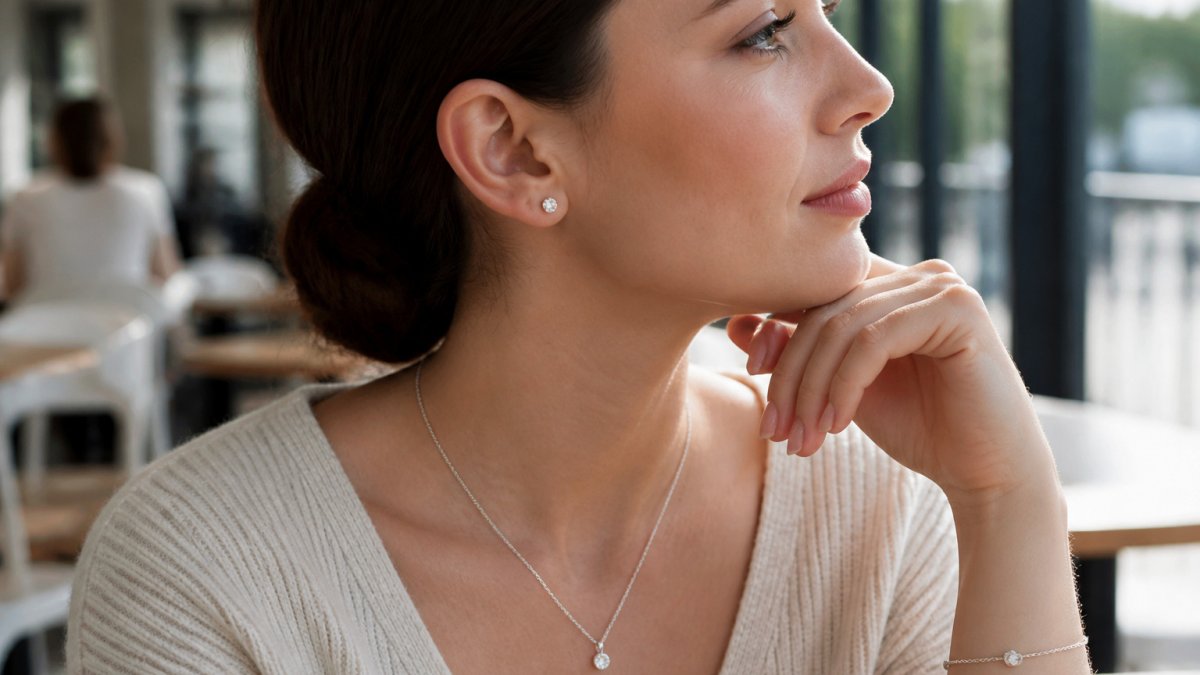
Studs are the easiest everyday choice. They sit close to the ear, stay out of the way and match almost any outfit. Look for a secure butterfly or screw back, since a loose back is the most common reason a stud goes missing.
Pendants add a soft focal point without much bulk. A fine chain and a single well-set stone work well for daily wear. Our 9ct White Gold Lab Grown Diamond Earrings are a good example of a light, simple design, and our White gold 9ct Lab Grown diamond rub over pendent shows how a rub-over setting keeps the stone protected against knocks.
Bracelets need the most thought. A tennis-style or line bracelet can catch on sleeves and bags, so a slim, low-profile design with secure clasps is usually more practical. Our 9ct Yellow Gold & Diamond Bracelet is set with individually spaced diamonds in rub-over mounts, which suits regular wear.
Watch out: a bracelet worn during gardening, cooking or gym sessions takes knocks that a stud never will. Remove it for heavy tasks.
Diamond Jewellery Settings for Everyday Wear: Durability by Setting, Metal and Shape
The setting matters more than most buyers expect. It decides how well the stone is held, how exposed the diamond is to bumps, and how often the piece needs checking.
Rub-over (bezel) settings wrap a metal rim around the stone. They protect the girdle well and suit active lifestyles. Claw or prong settings show more of the diamond and let in more light, but the prongs can snag and bend over time, so they need regular inspection.
Metal also plays a part. Gold is an alloy, and 9ct gold is harder than 18ct, which makes it a sensible choice for everyday pieces. Platinum is very durable but costs more. Round brilliant stones tend to be the most secure shape for everyday wear, while pointed shapes such as marquise and pear have corners that can chip if knocked.
A common mistake is choosing a delicate setting for a piece worn every day. A setting that looks beautiful in the showroom may not survive a year of daily life.
The table below sums up how setting, metal and shape affect durability for everyday diamond jewellery.
| Factor | Option | Key point |
|---|---|---|
| Setting | Rub-over (bezel) | Protects the girdle well, suits active lifestyles |
| Setting | Claw or prong | Shows more diamond, prongs can snag and bend |
| Metal | 9ct gold | Harder than 18ct, sensible for everyday pieces |
| Metal | Platinum | Very durable but costs more |
| Shape | Round brilliant | Most secure shape for everyday wear |
| Shape | Marquise or pear | Pointed corners can chip if knocked |
Diamond Rings for Everyday Wear: Choosing a Practical Band
A diamond ring worn daily faces more risk than any other piece, because hands touch everything. A practical band is usually a low-profile design with a secure setting and a comfortable fit.
Look for a band that sits flat against the finger and does not rotate. A three-stone curve band is a practical option because the stones are spread along a sturdy shape rather than raised high on one point. Our 18ct White Gold 3 Stone Diamond Curve Band is an example of this kind of design.
If you want a different style, Best Alternatives to Solitaire Diamond Rings for 2026 compares options that tend to suit everyday use better than a tall solitaire.
A Buying Framework: The 4Cs, Budget and Lifestyle
Most guides list the 4Cs and stop. For a piece worn every day, the useful question is not what each C means but where you can trade down without it showing, and where cutting corners costs you sparkle or durability.
Cut is the one to protect. Cut governs how much light a diamond returns, so it drives the sparkle you actually see across a desk or in daylight. A well-cut smaller stone will out-sparkle a poorly cut larger one at the same price. For everyday pieces, prioritise a very good to excellent cut before you spend on anything else.
Colour is where most buyers can save. Once a stone is set in white metal, near-colourless grades look clean to the naked eye, and the difference between neighbouring colour grades is very hard to see face-up in a small stone. In yellow or rose gold, a slightly warmer grade can even look intentional. Spend the saved money on cut instead.
Made in store 9ct Yellow Gold & Diamond Bracelet →
Clarity can be relaxed in small stones. In stones under roughly a third of a carat, inclusions are usually too small to see without a loupe, especially in a rub-over setting that covers the edges. Choose a clarity grade that is clean to the eye rather than flawless under magnification.
Carat is a size-and-budget decision, not a quality one. A smaller stone in a protective setting often wears better and looks more considered than a large stone in a tall claw setting that catches on everything. If size matters to you, put the money into a slightly larger well-cut stone and keep the setting low-profile.
Set the budget before you shop. Decide what you are comfortable spending on a piece you will wear most days, then allocate it in this order: cut first, then a secure setting and metal, then colour and clarity, then carat. That order protects the two things daily wear exposes most, sparkle and durability.
Map the piece to your routine. A desk-based day tolerates a taller claw setting; hands-on work, gym sessions and childcare favour rub-over settings and low profiles. Be honest about the tasks your hands and wrists are in each day, because that determines whether a setting survives.
Comfort, Fit and Skin Sensitivity
A piece you forget you are wearing is the best everyday piece, and comfort comes down to a few specific choices: how the piece fastens, how it sits, how heavy it is and what metal touches your skin.
Earrings: the back matters as much as the stud. Butterfly backs are the most common and are easy to put on, but they loosen with repeated use, which is the usual reason a stud goes missing. Screw backs hold more securely and suit people who wear studs constantly or who are active. For heavier or larger studs, a slightly longer post with a secure back spreads the weight and stops the earring drooping forward.
Necklaces: length and weight decide whether it stays put. A chain that is too long swings forward when you lean over a desk; one that is too short sits high and can feel tight. A fine chain with a single small pendant is the most forgiving everyday option because it moves with you and does not catch.
Rings: fit changes through the day. Fingers swell with heat and activity and shrink in the cold, so a ring that feels right in the morning can feel tight by evening. Aim for a fit that slides over the knuckle with slight resistance but does not rotate freely on the finger.
Bracelets: weight and clasp security are the trade-off. A slim, low-profile bracelet is more comfortable for all-day wear, but the clasp is the weak point. Check that the clasp closes with a positive click and consider a design with a secondary safety catch if you wear it constantly.
Metal sensitivity is common and manageable. Nickel is the most frequent cause of reactions, and it is more likely in plated or base-metal pieces than in solid gold or platinum alloys. If you have reacted before, tell the person selling to you so the metal can be chosen deliberately, and avoid plated finishes on pieces worn against the skin every day, because plating wears through with friction.
Weight adds up over a full day. A heavy chain or a bulky ring can feel fine for an hour and tiring by evening. Lighter pieces are generally worn more often, which is the whole point of an everyday piece.
If a piece feels tight, rubs or leaves a mark after a normal day, it is the wrong fit, not something to get used to. Adjust the size or the design before you commit, because an uncomfortable piece tends to end up in the drawer.
How to Care for Diamond Jewellery
Regular care keeps everyday diamond jewellery looking its best. Clean pieces gently with warm water, a drop of mild dish soap and a soft brush. Rinse well and dry with a lint-free cloth.
Check settings every few months. Look for loose stones, bent prongs and worn clasps. Catching a problem early is far cheaper than a full repair.
Remove jewellery before swimming, using cleaning products or doing heavy work (Hand care advice). Store pieces separately in a soft pouch so they do not scratch each other.
Booking a Fitting or Inspection at Morgan Banks
If you are unsure whether a piece suits daily wear, a professional inspection is a good next step. At Morgan Banks in Kendal, we can check settings, tighten clasps and advise on the right design for your routine. You can also book a fitting or inspection to get personal advice before you buy.
Frequently Asked Questions
Can you wear diamond jewellery every day?
Yes. Diamonds are the hardest natural material, so a well-made diamond piece handles daily wear far better than most jewellery. Durability depends more on the setting and metal than on the stone itself. Rub-over and bezel settings protect the edges of the diamond, while claw settings expose more of the stone to knocks. Taking pieces off for heavy manual work, sports and swimming in chlorinated water helps them last.
What type of diamond jewellery is best for everyday wear?
Morgan Banks offers a 9ct yellow gold bracelet with three individually spaced diamonds in rub-over mounts at £995.00. Its listing describes it as a perfect piece for everyday wear.
Which diamond setting is safest for daily wear?
A white gold 9ct lab-grown diamond pendant is listed at £285.00; its chain is sold separately.
How do you keep diamond jewellery clean when wearing it daily?
Oils from skin, hand cream and soap build up on diamonds and dull their sparkle. Clean pieces every few weeks with warm water, a few drops of mild washing-up liquid and a soft brush, then rinse and dry with a lint-free cloth. Remove jewellery before applying lotions or perfume. Have settings checked by a jeweller once or twice a year so loose stones are caught early.
Diamond jewellery can be a practical everyday companion when you choose the right setting, metal and size. Start with a secure, lightweight piece, look after it with simple care, and it will keep its sparkle through years of regular wear.
