
Quick Summary
To choose the right diamond cut for your finger, start by separating shape from cut quality, since shape is the stone's outline and cut quality describes how well it reflects light. Then match the shape to your finger: elongated oval or pear cuts suit shorter fingers, while ovals or marquise cuts often balance wider fingers. Check the cut grade and proportions before you buy.
- Shape is the stone's outline; cut quality is how well its facets reflect light, graded separately.
- Measure ring size, knuckle width in millimetres, and visible ring finger length before shopping.
- Oval and pear shapes tend to lengthen short fingers.
- Ovals and marquise cuts are often recommended for wider fingers, with a slimmer band.
- Ask for measurements and proportions, because photographs can mislead about a stone's size.
Table of Contents
- Diamond Shape and Diamond Cut Are Not the Same Thing
- Measure Your Finger and Hand Before You Shop
- Choosing a Diamond Shape for Short Fingers
- Choosing a Diamond Shape for Wide Fingers
- Matching Engagement Ring Styles to Different Hand Shapes
- How Setting, Band and Budget Change the Result
- Booking a Try-On Before You Commit to a Ring
- Frequently Asked Questions
Diamond Shape and Diamond Cut Are Not the Same Thing
Last Updated: November 16, 2026
Choosing a diamond cut for your finger starts with one distinction most guides blur: shape and cut quality are different things. Shape is the outline of the stone, such as round, oval, emerald or pear (Guide to Diamond Engagement Ring Shapes). Cut quality describes how well the facets reflect light, which is graded separately. Confusing the two leads many buyers to pick a flattering outline and then overpay for a poorly proportioned stone.
A diamond's shape affects how long and wide the stone appears on the hand. Its cut quality affects how much it sparkles. You can have an elongated oval with excellent proportions or a round stone with poor light return. Buyers who get both right usually start with shape, then check cut grade and proportions.
Watch out: do not judge a stone by its outline in a photograph alone. Ask for the measurements and proportions, because two oval stones of the same carat weight can look quite different on the finger.
Measure Your Finger and Hand Before You Shop
Measuring your finger and hand gives you a practical starting point, but the measurement only becomes useful when you turn it into a repeatable comparison method. Three readings can do most of the work: ring size, finger width at the knuckle, and the visible length of the ring finger from base to tip.
Start with ring size. In the UK, ring sizes run alphabetically from A to Z, with half sizes in between. If you are between sizes, note both and try samples in each.
Next, measure finger width at the knuckle with a strip of paper and a ruler, recording the result in millimetres. Then note the visible length of the ring finger from the base to the fingertip. These two numbers let you describe your hand in proportions rather than vague terms. There is no official threshold, so treat this as a descriptive guide rather than a rule.
With those numbers, you can compare shapes on a like-for-like basis. A useful method is to photograph your bare hand against a plain background, then hold or place printed shape outlines at the same scale over the ring finger. Compare a round, an oval, a pear, an emerald and a marquise at the same face-up width, and note which outline leaves the most visible finger above and below the stone.
Watch out: do not judge proportion from a single photo taken at an angle, because foreshortening makes short fingers look shorter and elongated stones look longer than they will in person.
A second comparison pass under natural light will confirm what the outlines suggest. Keep your ring size, knuckle width and finger length written down, and bring them to any appointment so the stones you try are matched to your hand rather than to a generic recommendation.
The article's three measurements give you a repeatable starting point before you compare shapes.
| Measurement | How to take it | Why it matters |
|---|---|---|
| Ring size | UK sizes run A to Z, with half sizes | Note both sizes if you are between them |
| Knuckle width | Strip of paper and a ruler, in millimetres | Describes hand proportion |
| Ring finger length | Visible length from base to fingertip | Shows how much finger a shape leaves visible |
| Shape comparison | Photograph hand, place outlines at the same scale | Compare round, oval, pear, emerald and marquise fairly |
Choosing a Diamond Shape for Short Fingers
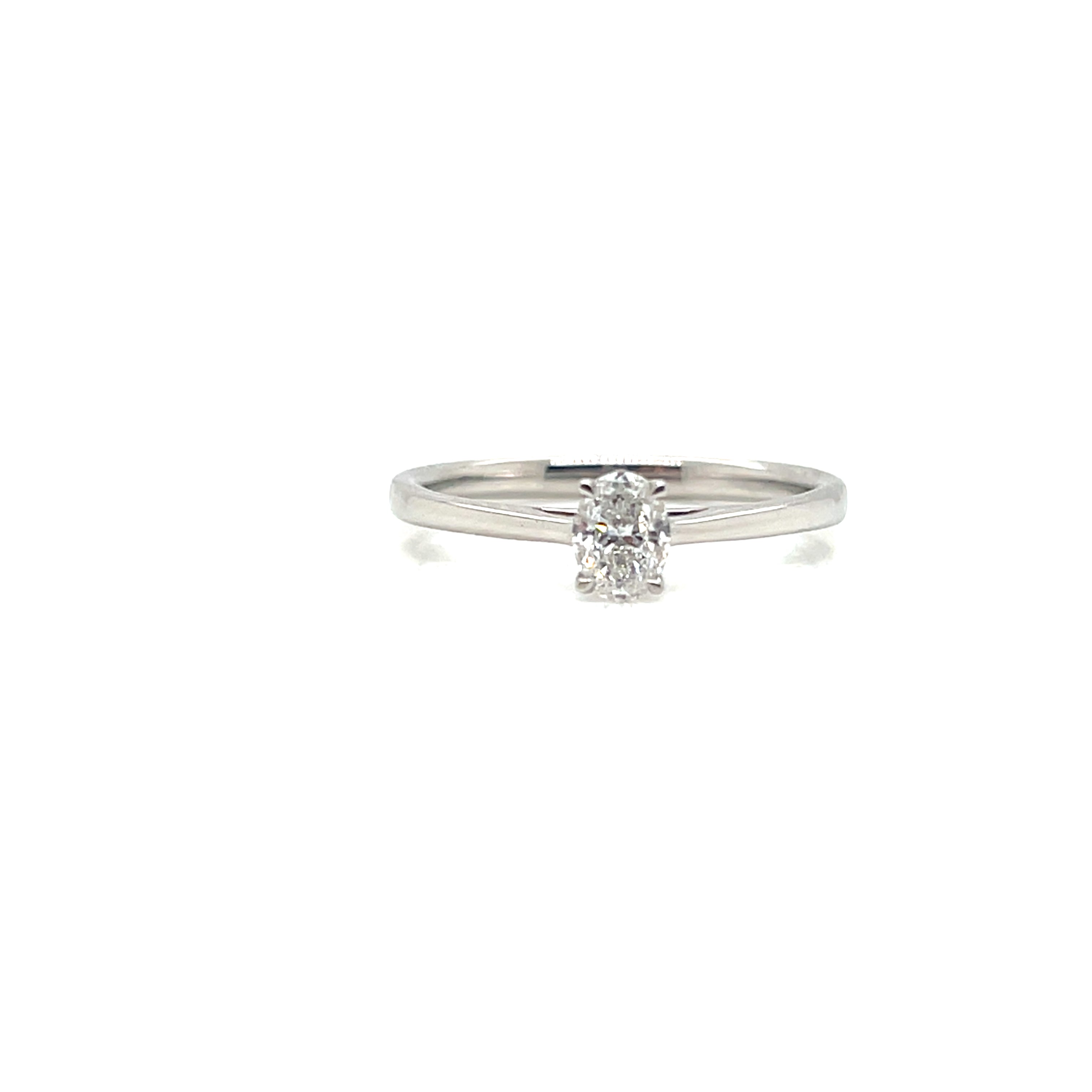
For shorter fingers, elongated shapes tend to create the strongest lengthening effect. Oval and pear cuts draw the eye along the finger, which many people find flattering. An oval is one of the most popular choices for this reason, and our product: Platinum Oval Cut Engagement Ring .32ct E VS2 shows how an oval centre stone can sit well on a finger with a more compact outline.
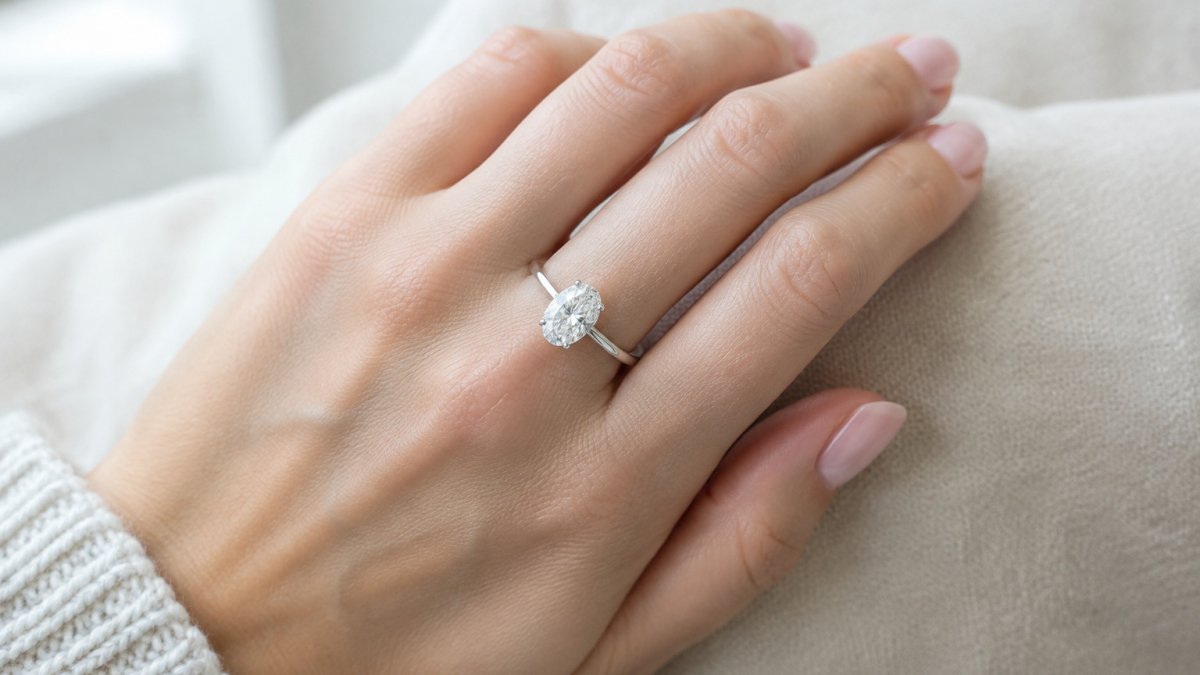
Round stones are versatile, but a round centre tends to look more compact on short fingers. Pear and marquise shapes can also elongate, though their pointed ends need careful setting to avoid looking uneven.
Choosing a Diamond Shape for Wide Fingers
Wider fingers often suit shapes that have a longer outline, because the stone's length balances the finger's width. Ovals and marquise cuts are frequently recommended here. A round stone can look balanced too, particularly if the band is kept fairly slim.
Band width matters just as much as the shape. A wide band on a broad finger can make the whole ring feel heavy, so many buyers choose a slimmer band to keep proportions in balance.
Matching Engagement Ring Styles to Different Hand Shapes
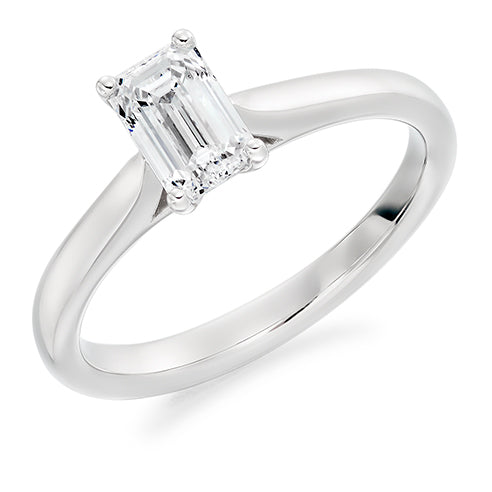
Hand shape affects how a ring setting frames the stone. Square palms often carry bolder shapes well. Slender hands usually suit delicate settings and elongated stones. A product: Platinum Emerald Cut Engagement Ring .70ct F VS2 offers a rectangular outline with clean step facets, which many buyers find suits a more structured hand shape.
Many people find that a halo or shoulder-set design adds visual width. Choose a style that complements your hand rather than fighting it.
How Setting, Band and Budget Change the Result
The setting, band and stone dimensions work together, and changing one alters how the others read on the hand. A claw setting, also called a prong setting, lifts the stone and lets light reach more of the pavilion, which usually increases visible sparkle. A fuller setting, such as a bezel or a halo, covers part of the stone's edge but can make a smaller centre diamond appear larger because the metal or surrounding stones add visual width.
Band width changes proportion as much as the centre stone does. A band of about 1.8 mm to 2.2 mm reads as delicate and suits slender fingers or hands where the wearer wants the stone to dominate. A band of about 2.5 mm to 3 mm feels more substantial and can balance a broader finger or a larger centre stone. Very wide bands, above roughly 4 mm, can make a short finger look shorter because they take up visible length.
Setting height matters for comfort and everyday wear as well as looks. A high-set stone shows more of its full depth and can appear larger from the side, but it catches on clothing and is more exposed to knocks. A low-set stone sits closer to the finger, is less likely to snag, and often suits active lifestyles. Pointed shapes such as pear and marquise benefit from protective settings or V-shaped prongs at the tips, because the points are the most vulnerable part of the stone.
Stone dimensions, not just carat weight, determine face-up size. Two stones of the same carat weight can look very different from above because density and cut proportions vary between shapes. A useful comparison is face-up spread: the length and width in millimetres as seen from above. Elongated shapes such as oval, pear and marquise often show a larger face-up area at a given carat weight than a round brilliant, while a round brilliant tends to concentrate its weight deeper in the stone. This means a buyer wanting maximum visual size on a budget may find an elongated shape gives more spread for the same spend, though prices vary by quality and market conditions.
Budget trade-offs are best handled by deciding which of the four Cs to prioritise. Cut quality has a strong effect on sparkle, so it is often worth protecting the cut grade before increasing carat weight (gia.edu). A slightly smaller stone with excellent cut proportions often looks better on the hand than a larger stone with weak light performance.
Watch out: do not choose a setting before you have seen the stone's dimensions, because a deep stone set high can look smaller face-up than its carat weight suggests, and a shallow stone set low can look larger but perform less well in low light.
Bring your ring size, band preference and budget range to the try-on, and compare complete rings rather than loose stones. How to Choose a Diamond Clarity Grade: A Practical Guide explains how clarity affects appearance, and 7 Steps to Choose the Right Diamond Setting walks through setting choices step by step.
Booking a Try-On Before You Commit to a Ring
Seeing a ring on your own hand is the most reliable test. Photographs flatten size and proportion, so a try-on shows you how the shape sits next to your finger. Bring your measurements, try a few shapes side by side, and compare them under natural light.
How to Choose an Engagement Ring for Small Hands covers what to look for when hands are petite, and it is worth reading before your visit.
Frequently Asked Questions
Which diamond shape looks best on short fingers?
Elongated shapes such as oval, pear and marquise are generally considered the most flattering on short fingers because their long axis draws the eye along the finger. An oval diamond with a claw-set or micro-claw setting keeps the stone close to the skin, which can make the finger appear longer. Round brilliant cut diamonds can also suit short fingers when set in a slim band, since the band rather than the stone then sets the proportions. Trying a few shapes in person in a bright, natural light is the most reliable way to judge the result.
Do oval diamonds make fingers look slimmer?
An oval diamond is often chosen for its lengthening effect, which can make fingers appear slimmer by contrast. The effect depends on the stone's face-up size, its length-to-width ratio and the width of the band. A larger oval set on a narrow band can look dramatic on slim fingers, while a smaller oval may suit a delicate hand better. Because the look is relative to hand size, it is worth comparing a few carat weights on your own hand before deciding.
What is the difference between a diamond cut and a diamond shape?
Shape describes the outline of the stone, such as round, oval, pear, marquise, emerald, radiant or cushion. Cut quality describes how well the stone's facets are proportioned and polished, which affects brilliance and sparkle. A stone can have an excellent cut in any shape, so the two are chosen separately. When comparing rings, look at the shape for how it will sit on your finger and at the cut grade for how much light the stone returns.
Does the setting affect how a diamond looks on your finger?
Yes. A claw setting shows more of the stone and lets light enter from more angles, while a bezel setting covers the edges and can make an oval or pear look shorter. Band width and the height of the setting also change how much finger is visible around the stone. Morgan Banks offers claw-set and micro-claw-set designs, such as the Platinum Oval shaped Diamond Engagement Ring ENG5487 SMT at £1,297.50, so you can compare how a claw-set oval sits on your hand before choosing.
