
Last Updated: November 18, 2026
Quick Summary
To clean gold jewellery at home, soak it in warm water with a few drops of mild dish soap for 10 to 15 minutes, brush gently with a soft-bristled toothbrush, rinse under warm running water with the plug in, then pat dry with a lint-free microfiber cloth. Avoid bleach, chlorine, toothpaste and abrasives, and never soak porous stones like pearls or opals.
- Soak gold pieces in warm water with mild dish soap for 10 to 15 minutes before brushing.
- Brush gently around settings and links with a soft-bristled toothbrush, never scrubbing polished surfaces.
- Pearls, opals, turquoise, coral, amber, lapis lazuli and malachite should never be soaked in water.
- Clean daily-wear rings and chains with a full soak-and-brush every two to four weeks.
- Bleach and chlorine can damage gold alloys, so remove rings before cleaning or swimming.
Table of Contents
- What You'll Need to Clean Gold Jewellery at Home
- Step-by-Step: How to Clean Gold Jewellery at Home
- How to Clean Gold Jewellery With Washing-Up Liquid
- How to Clean Gold Jewellery With Gemstones
- What Not to Use to Clean Gold Jewellery
- Gold Plating, Vermeil and Solid Gold: Why the Karat Matters
- How Often to Clean Gold Jewellery
- Choosing a Gold Jewellery Cleaner From Morgan Banks
- Frequently Asked Questions
What You'll Need to Clean Gold Jewellery at Home
Learning how to clean gold jewellery at home starts with the right kit, not the harshest chemicals. The tools that work best are simple ones.
You need warm water, a mild dish soap or gentle detergent, a soft-bristled toothbrush, and a lint-free microfiber cloth. A small bowl helps. That is the whole list.
Here is the full kit for cleaning gold jewellery safely:
- Warm water, never hot
- Mild dish soap or baby shampoo
- Soft-bristled toothbrush
- Lint-free microfiber cloth
- Small bowl for soaking
- A soft towel to rest pieces on
Skip anything labelled abrasive. Skip paper towels, which can leave lint and fine scratches. And keep a separate soft cloth just for polishing so residue from earlier cleans does not dull the finish.
Step-by-Step: How to Clean Gold Jewellery at Home
The safest way to clean gold jewellery at home takes about ten minutes and four gentle stages. You soak, brush, rinse and dry, in that order, without rushing.
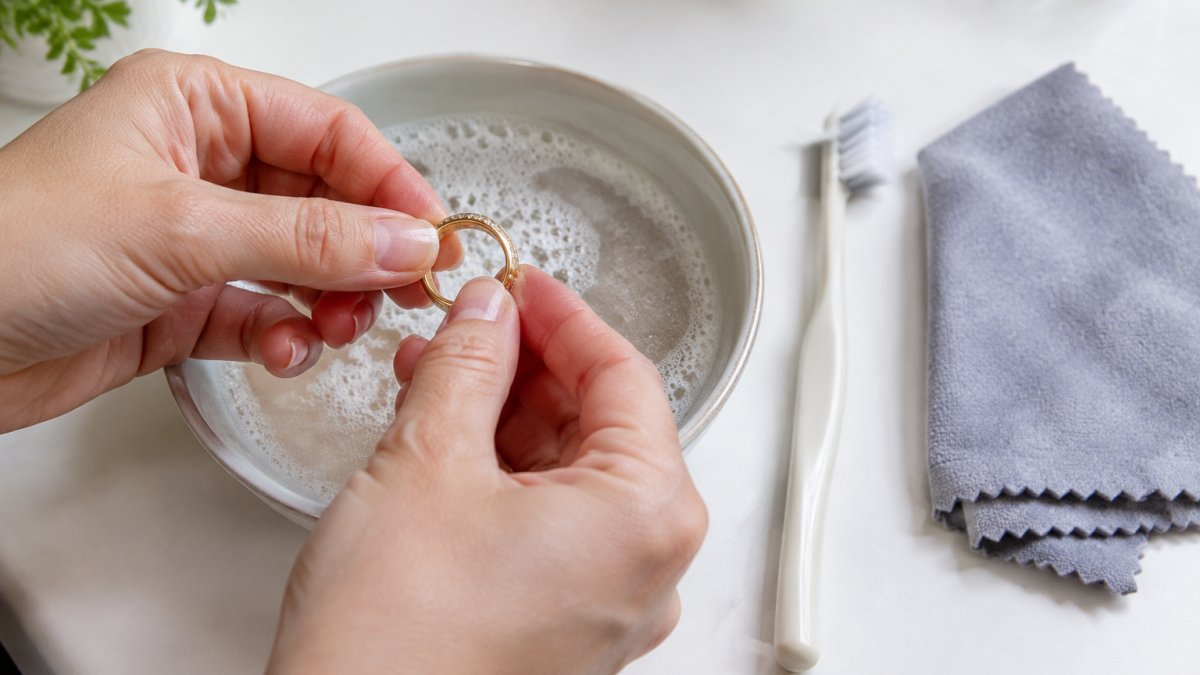
Soak, Brush, Rinse and Dry
- Fill a bowl with warm water and add a few drops of mild dish soap.
- Soak the piece for 10 to 15 minutes to loosen dirt and body oils.
- Brush gently with a soft-bristled toothbrush, working around settings and links.
- Rinse under warm running water, with the plug in.
- Pat dry with a lint-free microfiber cloth and leave to air dry fully.
The Gemological Institute of America advises against harsh household chemicals and warns that bleach can damage gold alloys. Gentle is the rule. Avoid scrubbing or aggressive rubbing, as stresses. A common mistake is brushing too hard on polished surfaces, which leaves fine scratches over time.
The safest home clean takes about ten minutes and follows four gentle stages in order.
| Step | What to do | Time or frequency |
|---|---|---|
| Soak | Warm water with a few drops of mild dish soap | 10 to 15 minutes |
| Brush | Soft-bristled toothbrush, working around settings and links | Gently, no scrubbing |
| Rinse | Warm running water, with the plug in | After brushing |
| Dry | Pat with lint-free microfiber cloth, then air dry fully | Until fully dry |
How to Clean Gold Jewellery With Washing-Up Liquid
Washing-up liquid is the easiest home option and works well on solid gold. The method for how to clean gold jewellery with washing-up liquid is the same soak, brush and rinse routine, using a few drops in warm water.
Keep it mild. Choose a gentle, unperfumed washing-up liquid over a heavy-duty degreaser. Strong detergents can strip oils and leave gold looking dull rather than bright.
A soapy solution does the real work. The soap lifts oils, and the soft brush clears debris from crevices. Rinse thoroughly afterwards, because dried soap residue dulls the luster. Then pat dry with a microfiber cloth.
How to Clean Gold Jewellery With Gemstones
Gemstone-set gold needs extra care, because not every stone tolerates water, heat or detergent. The same soak-and-brush method that works on plain gold can damage a porous or heat-sensitive stone. The key is to sort your stones before you clean.
Stones that should never be soaked: Pearls, opals, turquoise, coral, amber, lapis lazuli and malachite are porous or water-sensitive. Soaking can drive moisture into the stone, causing discolouration, cracking or a loss of lustre. For these, wipe with a barely damp cloth and dry immediately with a soft, lint-free cloth. Never use a brush on pearls or opals.
Stones that tolerate gentle soaking: Diamonds, sapphires, rubies and other hard stones are generally safe with the warm-water and mild-soap method. Use a soft brush around the setting, but avoid scrubbing the stone itself.
Stones that need a middle path: Emeralds are often treated with oils or resins to fill fractures, and soaking can strip that treatment or draw out the filler. Clean emeralds with a barely damp cloth and avoid heat. Similarly, treated gemstones, including heat-treated sapphires and fracture-filled diamonds, can be affected by detergents or ultrasonic cleaners. Treated gemstones need special care, so check how a stone was treated before you clean it.
Watch out: Glued or cemented settings can loosen in warm water, and a stone that falls out during cleaning is easily lost down the drain. Always put the plug in and work over a bowl.
For a deeper walkthrough on delicate settings, see our guide on how to clean diamond jewellery at home safely.
What Not to Use to Clean Gold Jewellery
Some everyday products do more harm than good, and knowing what to avoid protects your pieces. The biggest offenders are bleach, chlorine, ammonia-heavy cleaners, and anything abrasive, but the reasons matter as much as the list.
Here is what to keep away from gold:
- Bleach and chlorine, which can damage gold alloys. Even weak chlorine can pit gold alloys, so remove rings before cleaning the bathroom or swimming.
- Abrasive powders and pastes, which scratch polished surfaces.
- Toothpaste, which is too abrasive for regular use.
- Ultrasonic cleaners, which can loosen some settings.
- Paper towels, which leave lint and fine marks.
Watch out: Leaving a piece to soak overnight in a strong cleaner can dull the finish and loosen glued stones. And never mix cleaning agents, combining bleach with an acidic cleaner (such as vinegar or lemon juice) releases chlorine gas, which is hazardous to breathe and corrosive to the jewellery.
Gold Plating, Vermeil and Solid Gold: Why the Karat Matters
Not all gold is the same, and the karat changes how you clean it. Solid gold, plating and vermeil each behave differently, so match your method to the metal.
Karat is the measure of gold purity, expressed in parts of 24. Higher karat means more gold and a softer metal. Lower karat means more alloy metals mixed in.
- Solid gold (9ct, 14ct, 18ct) handles the soak-and-brush method well
- Gold plating is a thin gold layer over a base metal and needs the gentlest touch
- Vermeil is gold over sterling silver and should never be scrubbed hard
Plated and vermeil pieces need gentle handling. Avoid abrasive rubbing on the thin surface layer. Patina and oxidation are normal on older pieces and often add character, so do not scrub them away unless you want a bright finish.
How Often to Clean Gold Jewellery
How often to clean gold jewellery depends on how often you wear it. Pieces worn daily, like rings and chains, benefit from a quick clean every two to four weeks. Pieces worn occasionally need cleaning only before wear or storage.
A simple routine keeps gold looking its best:
- Wipe daily-wear pieces with a soft cloth after removing them
- Do a full soak-and-brush clean every few weeks
- Clean before storing anything for a long period
- Book a professional check once a year for settings and wear
Regular handling is when damage tends to happen, so if a chain or clasp ever breaks, our guide on how to repair a broken necklace chain step by step can help you decide your next step.
Choosing a Gold Jewellery Cleaner From Morgan Banks
A dedicated cleaner takes the guesswork out of home care, and we stock a small, trusted range at Morgan Banks. Each option suits a different routine.
The Connoisseurs Precious Jewellery Cleaner is available for regular cleaning of gold pieces. For a lighter, everyday option, the Connoisseurs Jewellery Foam Cleaner is available. If you want a simple option, the Connoisseurs Quick Jewellery Cleanser is also available.
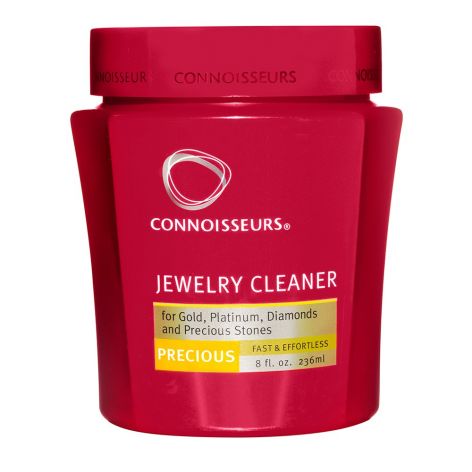
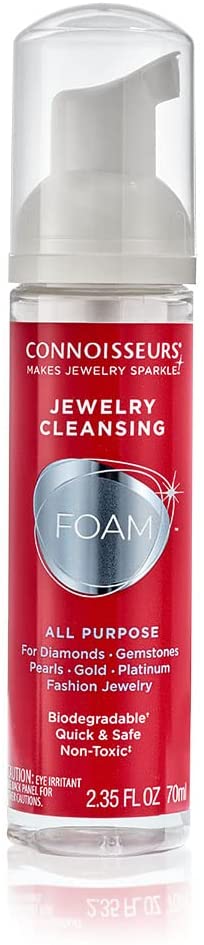
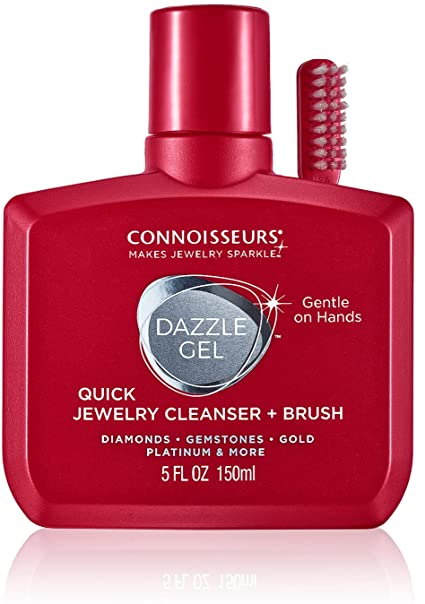
All three cost £10.00. A polishing cloth is available to finish the routine.
Caring for gold at home is simple once you have the right tools and a gentle routine. If you would rather trust a specialist, Morgan Banks offers a curated range of cleaners and polishing cloths, backed by fine jewellery expertise since 1935. Our team can help you choose the right cleaner for your pieces, whether solid gold or gemstone-set. Get started with Morgan Banks and keep your gold looking its best.
Frequently Asked Questions
What is the safest way to clean gold jewellery?
Warm water with a few drops of mild dish soap is the safest starting point for solid gold. Soak the piece for 10 to 15 minutes, work a soft-bristled toothbrush gently around settings and crevices, rinse under lukewarm water and pat dry with a lint-free cloth. Avoid bleach, chlorine and abrasive pastes, which can damage gold alloys. Pieces with gemstones or plating need a gentler approach, so check the setting before you soak.
Can you clean gold jewellery with washing-up liquid?
Yes. A couple of drops of washing-up liquid in a bowl of warm water makes an effective, gentle detergent for solid gold. Avoid highly perfumed or antibacterial varieties, and never apply the liquid neat to the metal. Soak briefly, brush softly, rinse thoroughly and pat dry. This method works well for plain bands and chains, but plated pieces and porous gemstones should be cleaned with a damp cloth instead of a full immersion.
Can you use baking soda or toothpaste to clean gold jewellery?
Skip both. Baking soda and toothpaste are mildly abrasive and can dull the surface of gold alloys, strip plating and scratch softer gemstones. They also leave residue in settings that is hard to rinse out. A mild dish soap solution plus a soft-bristled toothbrush lifts everyday debris without abrasion. For heavy tarnish or ingrained dirt, a formulated gold jewellery cleaner or a professional clean at a jeweller is the safer route.
How long should you soak gold jewellery?
Ten to fifteen minutes is enough for everyday grime. Longer soaking does not clean better and can loosen glue in some settings or affect porous stones. If the piece is heavily soiled, refresh the soapy solution and repeat a short soak rather than leaving it overnight. Always rinse and pat dry straight after soaking, and keep the piece away from the sink plug hole while you work.
