
Table of Contents
- What Do Watch Warranties Cover on a Pre-Owned Luxury Watch?
- Pre-Owned Watch Warranty Length: How Long Does Cover Actually Last?
- Manufacturer Warranty vs Retailer Guarantee: What's the Difference?
- Watch Warranty vs Insurance: Which One Protects You?
- How to Verify Warranty Coverage Before Buying a Pre-Owned Watch
- How to Make a Warranty Claim on a Pre-Owned Watch
- Frequently Asked Questions
Last Updated: October 14, 2026
What Do Watch Warranties Cover on a Pre-Owned Luxury Watch?
A pre-owned luxury watch warranty explained simply comes down to one question: who pays if the movement fails? Most cover protects you against manufacturing defects, not against wear and tear.
At Morgan Banks, we have sold previously enjoyed timepieces since 1935. Buyers assume "warranty" means "everything is covered." It does not.
A watch warranty is a written promise to repair or replace faults caused by the maker, not by the owner. It covers defects in materials and workmanship that existed when the watch left the factory.
Manufacturing Defects and Workmanship
Cover typically includes:
- Faulty movement parts that fail early
- Hands that come loose without impact
- Crown or stem failures from normal use
- Water resistance failing on a sealed, unopened case
These are rare in a quality Swiss watch, but they happen. A defect in materials means a component was flawed from day one. Workmanship means it was assembled incorrectly.
What Falls Outside Coverage
Exclusions are where most disputes start. Nearly every policy rules out:
- Accidental damage, drops and knocks
- Water damage from a crown left open
- Scratches, dents and worn straps
- Damage from unauthorised repair
- Normal ageing of gaskets and seals
Pre-Owned Watch Warranty Length: How Long Does Cover Actually Last?
Length depends entirely on who issued the cover. A new watch from an authorised dealer often carries a multi-year manufacturer warranty. A pre-owned piece usually carries far less, or none at all.
Here is the practical split:
| Cover Type | Typical Duration | Who Provides It |
|---|---|---|
| Manufacturer warranty | 2-5 years from original sale | The watch brand |
| Retailer guarantee | 6-24 months from your purchase | The seller |
| No cover | Expired or void | Nobody |
How Purchase Date Affects Remaining Coverage
The original sale date drives everything. A five-year warranty on a watch bought in 2023 runs out in 2028, no matter when you buy it second-hand.
So a 2022 Rolex sold to you in 2026 may have one year of factory coverage left. A 2015 model has none. Check the warranty card, the serial number and the original receipt before you commit.
Manufacturer Warranty vs Retailer Guarantee: What's the Difference?
These are two different promises, and buyers constantly mix them up.
A manufacturer warranty comes from the watch brand. It covers defects in materials and workmanship and is honoured at authorised service centres.
A retailer guarantee comes from the shop that sold you the watch. It covers what the retailer promises: authenticity, condition and mechanical soundness at the point of sale.
| Feature | Manufacturer Warranty | Retailer Guarantee |
|---|---|---|
| Issuer | The watch brand | The shop that sold it to you |
| Starts from | Original sale date | Your purchase date |
| Typical length | 2-5 years | 6-24 months |
| Covers | Defects in materials and workmanship | Authenticity, condition, mechanical soundness at sale |
| Remedy | Repair, or replacement if repair fails | Repair, replacement or refund per the written terms |
| Transferable? | Rarely | Depends on the seller's terms |
| Who you contact | Brand or authorised service centre | The seller |
| Proof needed | Warranty card, original receipt, matching serial | Seller's guarantee document and your receipt |
The key difference is who you chase when something goes wrong. With a manufacturer warranty, you deal with the brand.
When Both Apply
On a recently sold pre-owned piece, you may hold both at once. If the factory cover is still live and the fault is a manufacturing defect, claim on the manufacturer warranty first, because it costs the seller nothing and preserves your relationship with them.
Do not assume the retailer guarantee fills every gap the manufacturer warranty leaves. Most seller guarantees exclude the same things: accidental damage, water ingress from an open crown, and normal wear. Read both sets of terms side by side before you buy.
Statutory Rights Sit Alongside Both
If you bought from a trader, you also have statutory rights under the Consumer Rights Act 2015. Goods must be of satisfactory quality, fit for purpose and as described. If they are not, you can ask for a repair, replacement or refund depending on how long you have had the item and whether a repair is possible. These rights sit alongside any warranty, not instead of it. For watches bought privately, those protections largely disappear, which is another reason to buy from an established retailer.
Watch Warranty vs Insurance: Which One Protects You?
They cover completely different risks, and you usually need both.
Longines Golden Wing L3606.5 quartz watch →
A watch warranty covers faults. An insurance policy covers events. If your watch stops because of a failed movement, that is a warranty claim.
| Risk | Warranty | Insurance |
|---|---|---|
| Movement defect | Yes | No |
| Theft or loss | No | Yes |
| Accidental damage | No | Yes |
| Water ingress from a loose crown | No | Sometimes |
For a high-value luxury watch, a specialist policy is worth the premium. Standard home contents cover often caps single-item payouts well below what a good timepiece is worth. Check the single-item limit before you assume you are covered.
How to Verify Warranty Coverage Before Buying a Pre-Owned Watch
Verification takes ten minutes and saves years of argument. Work through this checklist before any money changes hands.
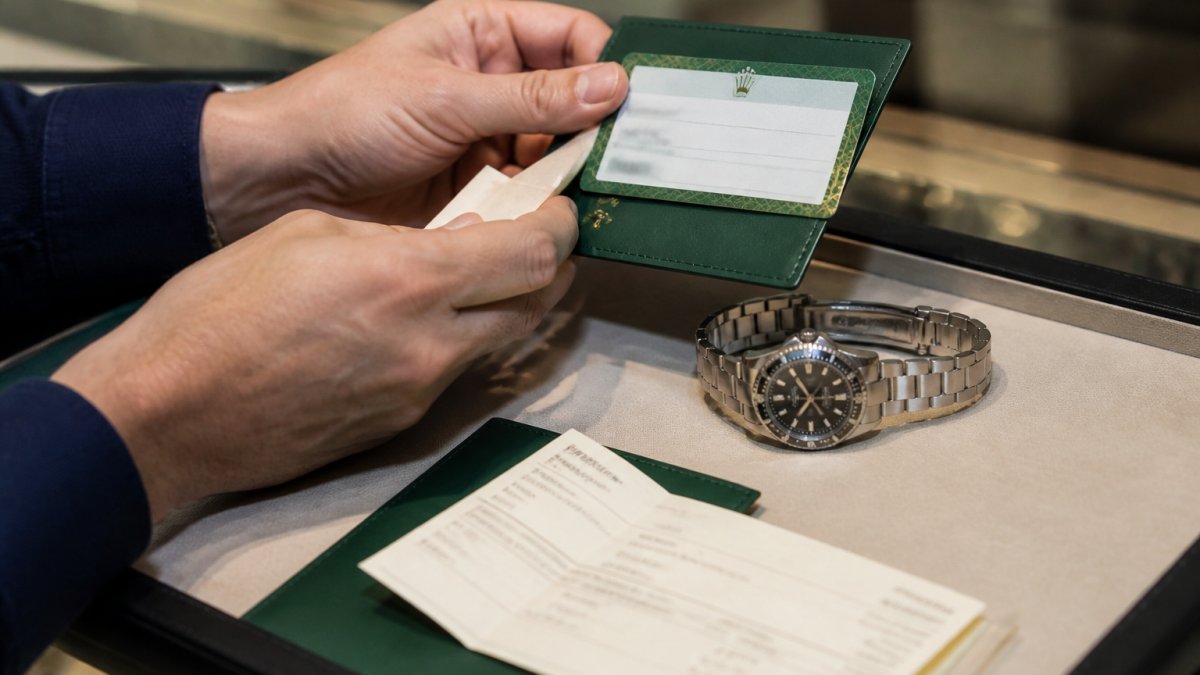
- Ask for the original purchase date in writing
- Confirm the warranty card matches the serial number on the case
- Check whether the card is stamped and dated by an authorised dealer
- Ask if the remaining factory coverage is transferable
- Get the seller's own guarantee terms in writing
- Confirm who handles repairs and where
- Ask what voids the seller's guarantee
How to Confirm Remaining Factory Coverage
A stamped warranty card is the starting point, not the finish line. To confirm what is actually left:
- Match the serial number. The number on the card must match the number engraved on the case, usually between the lugs or on the caseback. A mismatch means the card belongs to a different watch.
- Check the stamp and date. The card should carry the authorised dealer's stamp and a handwritten or printed sale date. An unstamped card is worth little, because the brand has no record of when cover began.
- Contact the brand's service centre. Give them the serial number and ask them to confirm the original sale date and whether cover is still active. Most brands will do this by email or phone. This is the only reliable way to know for certain.
- Ask about transferability. Some brands allow the remaining cover to transfer if the paperwork is complete and the change of ownership is registered. Others do not. Get the answer from the brand, not the seller.
- Check the service history. A watch that has been serviced by an unauthorised workshop may have had its cover voided. Ask for service receipts and check the workshop name against the brand's authorised list.
What to Do When Documentation Is Missing
A watch sold without its original receipt or stamped card is not necessarily a bad buy, but you must price the risk. Without proof of the original sale date, you cannot confirm any remaining factory cover, and most service centres will refuse a warranty claim. Treat the watch as having no manufacturer warranty and negotiate accordingly.
In that situation, the seller's own guarantee becomes the whole of your protection. Insist on written terms that state:
- What is covered (movement, authenticity, condition)
- How long the guarantee runs from your purchase date
- Who pays for shipping and diagnosis
- What remedy you get if a covered fault appears
- What voids the guarantee
Documentation and Proof of Purchase
Proof of purchase is the spine of any claim. Without it, you have a watch and a story. A complete set means:
- Original receipt or invoice
- Stamped warranty card
- Serial number matching the case
- Service history where available
A watch sold as "complete with box and papers" is worth more for a reason. Documentation proves the watch is what it claims to be, and it is the first thing any service centre asks for.
Warranty Transferability and Ownership Changes
Most manufacturer warranties are not transferable. They belong to the original buyer, and once the watch changes hands, the factory cover usually dies with the sale.
Some brands allow transfer if the paperwork is complete and the change is registered. Others do not, full stop. This is exactly why a seller guarantee matters on a pre-owned piece. When factory coverage is gone, the retailer's written guarantee is the only protection left.
How to Make a Warranty Claim on a Pre-Owned Watch
A clean claim starts with the paperwork you gathered before purchase.
- Stop wearing the watch. Further use can turn a covered fault into an excluded one.
- Gather your documents. Receipt, warranty card, guarantee terms and any service records.
- Contact the issuer first. That is the brand if factory cover remains, or the seller if you are claiming on their guarantee.
- Describe the fault plainly. "The watch loses two minutes a day" beats "it's broken."
- Do not open the case. Let the approved repairer do the diagnosis.
- Get the assessment in writing. Ask what is covered and what is not.
- Keep every email and receipt. If the claim is disputed, this is your evidence.
Most claims fail for one reason: missing paperwork or an unauthorised repair in the watch's past. Both are avoidable.
If you bought from a trader, you also have statutory rights. The Citizens Advice guidance on faulty goods explains what you can ask for when an item is not as described or not of satisfactory quality.
Buying a pre-owned luxury watch should feel exciting, not risky. At Morgan Banks, every previously enjoyed timepiece is checked before it reaches the cabinet, from the Longines Golden Wing at £495 to the rare Hublot MGM Geneve at £4,995.

Frequently Asked Questions
Does a pre-owned luxury watch still have its original manufacturer warranty?
It depends on the watch's age. Most luxury watch manufacturer warranties run for two to five years from the original sale date. If the pre-owned watch was first sold within that window and the warranty card is stamped and valid, remaining factory coverage may still apply. Once that period ends, any protection comes from the seller's own guarantee. Always ask to see the original warranty card and purchase documentation before buying.
How long does a pre-owned watch warranty last?
Pre-owned watch warranty length varies by seller. Some retailers offer a 12-month guarantee on previously enjoyed timepieces, while others provide 24 months. This seller guarantee typically covers manufacturing defects and movement faults but not accidental damage, loss, or theft. Ask the seller exactly what their warranty period is and what it includes before you commit to a purchase.
Is a retailer guarantee different from a manufacturer warranty?
Yes. A manufacturer warranty comes from the watch brand, such as Longines or Hublot, and covers defects in materials and workmanship from the original sale date. A retailer guarantee is offered by the shop selling the pre-owned watch and covers the timepiece for a set period from your purchase, giving you confidence the watch is in working order when it arrives.
What is not covered in a watch warranty?
Standard exclusions include accidental damage, water damage from improper use, loss, theft, normal wear and tear, and damage from unauthorised repairs. Routine maintenance such as battery replacement, gasket renewal, and periodic servicing are also excluded. If you need protection against loss or accidental damage, a separate insurance policy is the right route. Read the warranty terms carefully so you know exactly what is and is not covered.