
Table of Contents
- Why Verifying Pre-Owned Luxury Watch Authenticity Matters
- How to Check Watch Serial Number and Model Documentation
- Physical Inspection: Engravings, Bezel, and Case Details
- Examining Movement, Caliber, and Mechanical Function
- Signs of a Fake Luxury Watch You Cannot Ignore
- The Importance of Watch Provenance and Service Records
- Red Flags in Seller Behaviour and Digital Verification Tools
- Frequently Asked Questions
Last Updated: September 1, 2026
Why Verifying Pre-Owned Luxury Watch Authenticity Matters
Buying a pre-owned luxury watch is an investment that demands careful scrutiny. Counterfeit and replica timepieces flood the market, and the craftsmanship gap between genuine and fake has narrowed significantly. A fake Rolex or Breitling doesn't just cost you money; it undermines the entire value proposition of owning a luxury timepiece.
Systematic verification is entirely achievable for the informed buyer and involves multiple layers: checking serial numbers against manufacturer databases, examining physical construction with precision tools, assessing mechanical movement, and evaluating provenance.
How to Check Watch Serial Number and Model Documentation
The serial number is your first line of defence. Every genuine luxury watch carries a unique serial number engraved on the caseback or between the lugs, and manufacturers maintain detailed records of every timepiece produced.
Locate the serial number on the caseback or case between the lugs at 6 o'clock. The engraving should be deep, precise, and consistent with the era of manufacture. Shallow or uneven engraving is an immediate red flag.
Cross-reference the serial number against the manufacturer's official database. Rolex, Breitling, Omega, and other major brands provide verification methods. If a seller claims the watch was made in 2015 but the serial number corresponds to 2008 production, that indicates either a Franken-watch (assembled from parts of different timepieces) or deliberate misrepresentation.
Documentation matters equally. A genuine pre-owned luxury watch should come with original paperwork: warranty card, service records, and ideally the original box and papers. These documents include the serial number and model number, which must match the physical watch exactly. Mismatches suggest either forgery or component replacement.
Model number verification is often overlooked. The model number appears on the dial, caseback, and documentation. Cross-check it against official brand specifications to confirm it corresponds to the stated production year and variant.
Official Rolex serial number verification guidelines provide detailed information on interpreting production dates from serial numbers. Similar resources exist for Breitling, Omega, and other manufacturers.
Many sellers lack complete documentation, which isn't necessarily a red flag for older watches or those with unknown histories. However, the absence of any documentation should lower your confidence and justify a more intensive physical inspection or professional appraisal before purchase.
Physical Inspection: Engravings, Bezel, and Case Details
Physical inspection reveals the craftsmanship that separates genuine luxury watches from replicas. Counterfeiters struggle with the precision, materials, and finishing that define authentic timepieces.
Start with the caseback engraving. Genuine engravings are crisp, deep, and perfectly aligned. Use a loupe (jeweller's magnifying glass) to examine the engraving quality. Counterfeit engravings often appear shallow, uneven, or misaligned. Compare high-resolution images of authentic examples against the watch in question.
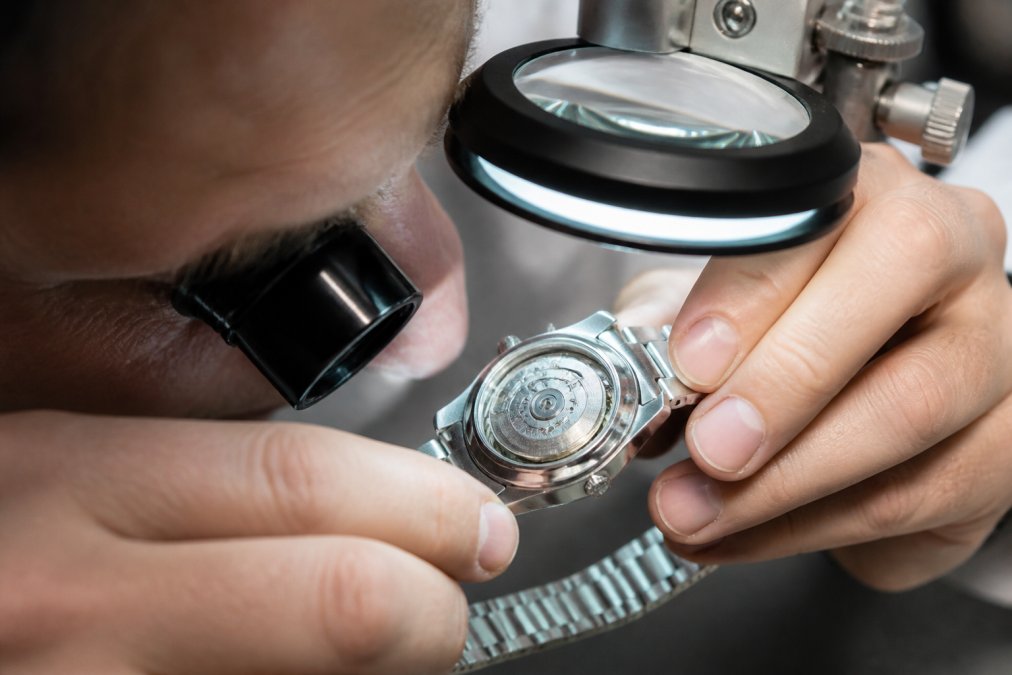
The bezel is critical. On watches with rotating bezels, the action should be smooth and precise with audible clicks at each position. The bezel insert should be flush with the case with no gaps or misalignment. Counterfeit bezels often sit slightly proud of the case or have visible gaps. The lume (luminescent material) on the bezel should match the dial lume in colour and application quality.
Case finishing reveals manufacturing standards. Brushed surfaces should show consistent directional lines, not random scratches. Polished surfaces should be mirror-smooth with no waviness. The case edges, especially where the case meets the lugs, should be sharp and well-defined.
The crown (winding mechanism) should operate smoothly with precise clicks when screwing and unscrewing. The crown logo should be crisp and properly aligned. Examine all case lines and transitions under bright light. Genuine watches show consistent, clean lines between components. The case should feel solid with no rattling or loose components.
Examining Movement, Caliber, and Mechanical Function
The movement, the internal mechanism that powers the watch, is where counterfeits most frequently fail. This requires horological knowledge to evaluate properly.
The movement caliber (specific internal mechanism design) should match the model number and production year. Different calibers have different characteristics, and mixing calibers between models indicates a Franken-watch. If you can access the movement through a display caseback, compare what you see against documented specifications for that caliber.
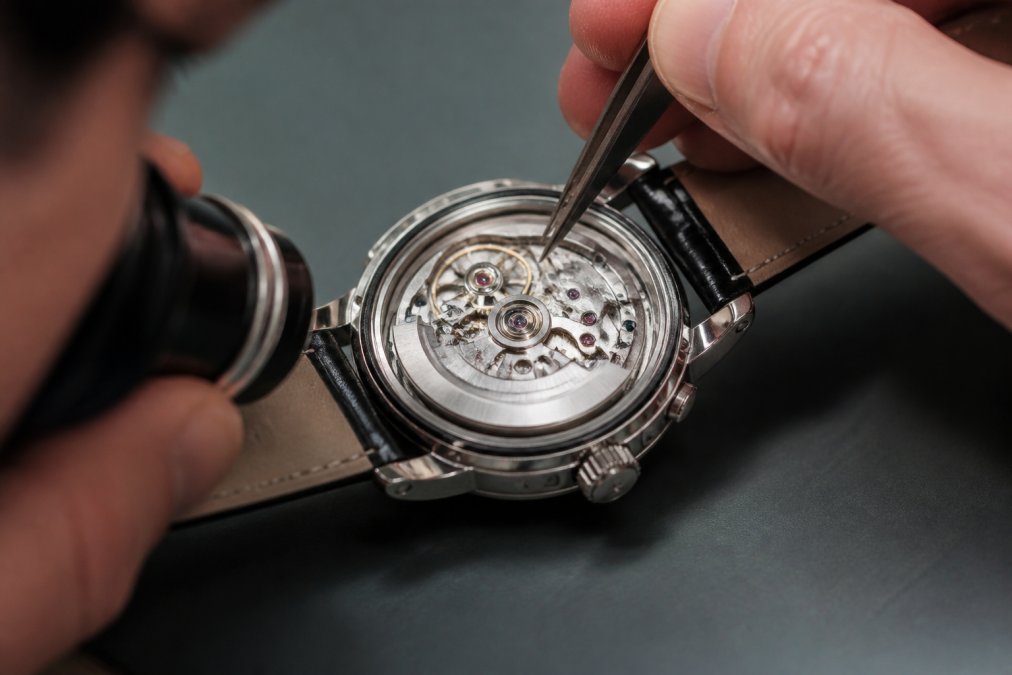
The ticking sound provides an immediate clue. Genuine automatic movements produce smooth, regular ticking, typically 4-8 ticks per second (peer-reviewed research). Counterfeit movements often tick unevenly or irregularly. Quartz movements should tick once per second with absolute regularity. Irregular ticking or grinding sounds indicate either damage or counterfeiting.
The sweep motion of the second hand reveals movement quality. Genuine automatic movements produce a smooth, sweeping motion rather than discrete ticks. Quartz movements produce regular, one-tick-per-second motion. If an automatic watch shows a ticking second hand, something is wrong.
Wind the crown and feel the resistance. Genuine movements wind smoothly with consistent tension. Counterfeit movements often wind roughly or with uneven resistance.
Check the date window (if present) for proper alignment and function. The date should change cleanly at midnight, not gradually throughout the evening. Misaligned or poorly printed dates are common on counterfeits.
Service records provide valuable context. A watch with documented service history from an authorised service centre is more likely genuine. If service records exist, they should match the watch's specifications.
Many buyers lack expertise to evaluate movement quality themselves. Commissioning a professional appraisal from a qualified horologist is worthwhile. The cost (typically £50-150) is cheap insurance against purchasing a counterfeit or Franken-watch.
Signs of a Fake Luxury Watch You Cannot Ignore
Certain red flags are deal-breakers. If you observe any of these, the watch is either counterfeit or too compromised to purchase.
Spelling errors on the dial or case are automatic disqualifiers. Counterfeiters sometimes misspell brand names or model designations. Even a single letter out of place indicates a fake.
Mismatched components are critical warnings. If the dial doesn't match the caseback engraving or the movement doesn't correspond to the model number, you're looking at a Franken-watch. These have no collector value and may not be reliable.
Poor lume application is common on counterfeits. The luminescent material should be applied evenly and match the dial's finish. Uneven lume or lume that doesn't glow consistently indicates either a counterfeit or poorly serviced watch.
Loose components or rattling inside the case suggest either a counterfeit movement or damaged genuine watch. A luxury timepiece should feel solid with no internal movement.
Incorrect materials are sometimes difficult to spot visually but become obvious under scrutiny. A watch claimed to be stainless steel should not show plating wear or corrosion patterns inconsistent with steel.
Dial printing quality should always be crisp and perfectly aligned. Blurry printing, misaligned text, or inconsistent font sizes indicate either a counterfeit or dial replacement.
The caseback should be perfectly clear (if a display caseback) or properly sealed. Any cloudiness, moisture, or debris inside suggests either a counterfeit or compromised seal.
The Importance of Watch Provenance and Service Records
Provenance, the documented history of ownership and service, separates a trustworthy pre-owned purchase from a risky gamble. A watch with clear provenance is easier to authenticate and more likely genuine.
Service records from authorised service centres are the gold standard. These documents confirm the watch was serviced by qualified technicians who verified its authenticity and specifications. Service records typically include the date of service, work performed, parts replaced, and the technician's signature or seal.
Original documentation (warranty card, box, and papers) adds significant value and confidence. These documents should include the serial number, model number, and production date. If documentation matches the physical watch exactly, that's a strong authenticity signal.
Previous ownership history matters. A watch with a clear chain of ownership is more trustworthy than one with unknown history. Ask the seller how they acquired the watch.
Auction house documentation carries weight. If a watch was sold through a reputable auction house, that institution conducted authentication before sale. Auction catalogues provide detailed descriptions and photographs for verification.
Dealer reputation is crucial. Buying from an established jeweller or watch dealer with a long trading history reduces risk significantly. Morgan Banks offers a curated collection of previously enjoyed luxury timepieces, with each watch authenticated and documented before sale. Reputable dealers authenticate every watch before offering it for sale and stand behind that authentication with guarantees.
Private sellers with no documentation or history should raise suspicion. If a seller cannot explain how they acquired the watch or provide supporting documentation, risk increases substantially.
The absence of provenance doesn't automatically mean a watch is fake, but it should justify either a lower price, professional appraisal, or both.
Red Flags in Seller Behaviour and Digital Verification Tools
Seller behaviour often reveals more than the watch itself. Certain patterns suggest either a counterfeit or a seller who hasn't properly authenticated their inventory.
Pressure to buy quickly is a classic red flag. Legitimate sellers understand that high-value purchases require time for inspection and verification. If a seller insists on immediate payment or threatens to sell to another buyer, they're likely rushing to offload a problematic watch.
Reluctance to provide detailed photographs or allow in-person inspection is suspicious. A seller confident in their watch's authenticity welcomes scrutiny. Requests for high-resolution photographs of the caseback, dial, movement, and documentation are reasonable and should be accommodated.
Vague descriptions or refusal to answer specific questions about the watch's history, service records, or specifications suggest either ignorance or deception. Legitimate sellers provide detailed information and can explain the watch's condition, any repairs, and its provenance.
Pricing significantly below market rates should trigger caution. If a watch is priced 20-30% below comparable listings, ask why. Legitimate reasons include a quick sale, minor cosmetic damage, or lack of original documentation.
Unwillingness to provide a return period or guarantee is risky. Reputable dealers offer return windows (typically 7-14 days) and authenticity guarantees. If a seller won't stand behind their watch, that's a sign they're not confident in its authenticity.
Digital verification tools can assist but shouldn't replace physical inspection. Some brands offer online serial number checkers, though reliability varies. Third-party apps claiming to authenticate watches through photographs are generally unreliable; authentication requires hands-on inspection and specialist knowledge.
Consumer protection guidance on online purchases outlines your rights when buying from online sellers.
Consider using a professional appraisal service if uncertain. Independent horologists or certified watch appraisers can examine the watch and provide a detailed authenticity report. This costs £50-200 but eliminates doubt and provides documentation for insurance purposes.
When buying pre-owned watches, prioritise sellers with established reputations, detailed documentation, and willingness to provide guarantees. Morgan Banks offers a curated collection of previously enjoyed luxury timepieces, with each watch authenticated and documented before sale. Our expert team can answer specific questions about any watch's provenance, service history, and specifications.
Verifying pre-owned luxury watch authenticity is entirely achievable if you follow a systematic approach. Start with serial number verification and documentation review, then progress to physical inspection using magnification tools. Examine the movement and mechanical function, watch for specific red flags, and prioritise provenance and seller reputation.
The investment in time and attention, or the modest cost of professional appraisal, protects you against counterfeit purchases and ensures you're acquiring a genuine timepiece with real value. Morgan Banks can guide you through this process, providing expert authentication and detailed documentation for every pre-owned luxury watch in our collection.
| Verification Step | What to Check | Red Flags to Watch |
|---|---|---|
| Serial Number & Documentation | Serial number engraving, warranty card, model number match | Shallow engraving, missing paperwork, mismatched numbers |
| Physical Inspection | Caseback engraving, bezel alignment, case finishing, crown operation | Uneven engraving, gaps in bezel, soft case edges, rough crown |
| Movement & Caliber | Ticking regularity, sweep motion, date window function, service records | Irregular ticking, grinding sounds, misaligned date, no service history |
| Component Consistency | Dial printing, lume quality, hallmarks, material authenticity | Spelling errors, poor lume, missing hallmarks, plating wear |
| Provenance | Service records, original documentation, ownership history, dealer reputation | No documentation, unknown history, reluctant seller, pressure to buy |
To maintain your pre-owned luxury watch in pristine condition, we recommend the [Connoisseurs Watch Cloth(/products/connoisseurs-watch-cloth) | morganbanks.co.uk/products/connoisseurs-watch-cloth] (£10.00), designed specifically for safe cleaning of luxury timepieces without damaging the caseback engraving or dial finish.
Frequently Asked Questions
How can I verify the serial number of a luxury watch?
Request the serial number from the seller and cross-reference it against the manufacturer's database or contact the brand directly. Authentic serial numbers follow specific formatting patterns and should match documentation like warranty cards and service records. Never purchase a watch without access to verify the serial number independently. Many counterfeit watches use sequential or generic numbers that fail brand verification.
What are the most common signs of a counterfeit luxury watch?
Look for poor-quality engravings with uneven depth, misaligned dials, loose components, and incorrect lume quality (the luminous coating on hands and markers). Counterfeit watches often have spelling errors on the dial, incorrect weight distribution, or movements that tick rather than sweep smoothly. The clasp mechanism should feel solid and precisely machined, not flimsy or rough. When in doubt, have a reputable jeweller inspect it before purchase.
Why is watch provenance important when buying pre-owned?
Provenance, the documented ownership history, proves the watch is genuine and hasn't been assembled from parts (a 'Franken-watch'). Service records, original documentation, and warranty cards establish authenticity and build confidence in your purchase. A watch with complete provenance typically commands higher value and comes with greater assurance of originality. Without provenance, you risk buying a watch with replaced or counterfeit components that compromise both authenticity and long-term value.
Can I get a watch authenticated by the manufacturer?
Yes, most luxury brands offer authentication services, though some charge fees and require the watch to be sent to their service centre. Many manufacturers can verify serial numbers, check service history, and inspect the movement for authenticity. A third-party appraisal from a certified horologist or established jeweller provides independent verification and can be used for insurance purposes. This is especially valuable for high-value pre-owned purchases where authenticity is critical.
This article was written using GrandRanker