
Table of Contents
- The Core Difference: Maintenance and Repair Explained
- What Luxury Watch Servicing Cost Actually Includes
- How Often to Service a Luxury Watch
- Repair Costs and When Fault-Based Work Becomes Expensive
- Watch Repair or Replace: Making the Right Decision
- Luxury Watch Maintenance: Prevention Saves Money Long-Term
- Manufacturer Service Versus Independent Watchmakers
- Cost Comparison: Routine Service Versus Deferred Maintenance
- Frequently Asked Questions
Last Updated: October 10, 2026
The Core Difference: Maintenance and Repair Explained
Luxury watch maintenance vs repair cost difference is fundamentally about prevention versus correction. Maintenance is scheduled, preventive work that keeps a watch running accurately and safely. Repair addresses specific faults that have already developed. Understanding this distinction matters because one costs significantly less than the other, and skipping maintenance often leads to expensive repairs down the line.
Owners who service watches regularly spend significantly less over a decade than those who wait until something breaks, which is why understanding the luxury watch maintenance vs repair cost difference is essential to long-term ownership. Maintenance is predictable; repair is not.
What Luxury Watch Servicing Cost Actually Includes
A luxury watch service is a sequence of inspections, cleanings, adjustments, and replacements designed to restore the movement to factory specification.
Routine service components
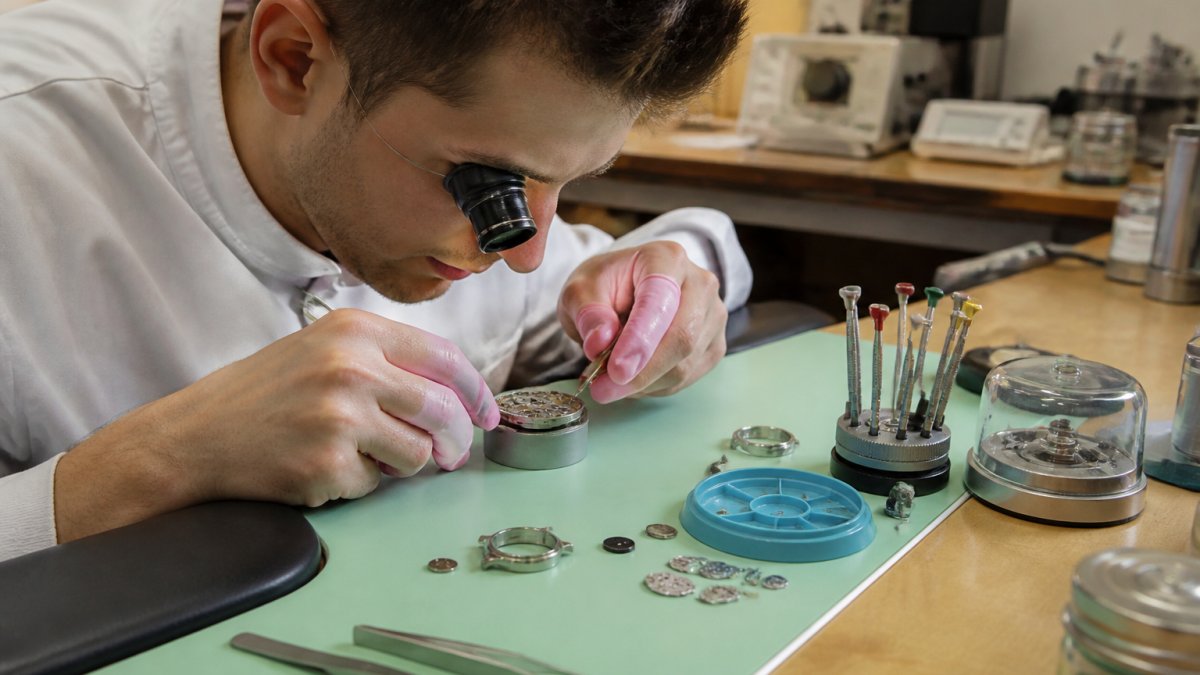
A standard service includes movement removal, complete disassembly, cleaning, inspection for wear, lubrication, reassembly, timing adjustment, and water resistance testing. The watchmaker examines each part under magnification, checking hairsprings, balance wheels, and escapements for damage. This process takes 20-40 hours of skilled labour, depending on movement complexity.
Routine service restores function through cleaning and adjustment without replacing parts unless visibly worn or damaged.
Full overhaul and parts replacement
A full overhaul includes everything in a routine service plus replacement of worn parts: mainsprings (£50-£150), jewels, gaskets, and seals. Replacing a complete set of jewels, gaskets, and worn pivots can add £200-£400 to the service cost.
The distinction matters because a routine service might restore a five-year-old watch to working order, while a ten-year-old watch may require a full overhaul with parts replacement.
How Often to Service a Luxury Watch
Most manufacturers recommend servicing every three to five years for watches in regular use. A watch worn daily in an office accumulates less wear than one worn during outdoor activities or sports.
Water-resistant watches exposed to salt water or extreme temperatures need more frequent servicing, dive watches every two years, dress watches every seven years.
Repair Costs and When Fault-Based Work Becomes Expensive
Repair addresses specific failures and is inherently unpredictable because the true cost only emerges after diagnosis. Understanding the diagnostic process, estimate validity, and authorization workflow is essential to avoiding surprise costs.
The diagnostic fee and inspection process
Diagnosis involves removing and disassembling the movement to identify failures. This inspection takes 2-6 hours and typically costs £30-£80 for straightforward work, up to £150 for complex movements.
Ask explicitly whether the diagnostic fee is credited against the repair cost, as this affects the true total.
The estimate and authorization step
After diagnosis, the watchmaker provides a written estimate. This estimate should itemize labour (hours and hourly rate), parts (with part numbers and costs), and any additional work (polishing, water-resistance testing, case refinishing). A detailed estimate might look like this:
- Movement disassembly and inspection: 3 hours × £40/hour = £120
- Mainspring replacement: £75 (parts) + £25 (labour) = £100
- Jewel replacement (2 units): £60 (parts) + £40 (labour) = £100
- Reassembly and timing: 2 hours × £40/hour = £80
- Water-resistance testing: £30
- Total estimate: £430
Estimates are typically valid for 30 days. Reputable watchmakers contact you before exceeding the estimate by more than 10-15% if additional damage is discovered.
Common repair scenarios and their costs
A broken mainspring costs £80-£200; a cracked balance wheel £150-£400. Water damage requiring multiple component replacements is far more expensive.
Movement complexity and labour charges
Labour costs scale with complexity. A simple three-hand automatic costs £150-£300 for routine service; a chronograph £400-£800; a tourbillon over £1,500.
Repairing complications is more expensive because fewer watchmakers are qualified, increasing both cost and turnaround time.
Hidden damage and cost escalation
Neglected watches often reveal secondary damage during disassembly: worn pivots damaging jewels, dried lubricant accelerating wear, or broken mainsprings damaging the gear train.
This is why estimates for neglected watches often increase after disassembly. A watch brought in for "stopped running" might initially estimate at £300 but cost £600 once the full extent of wear is visible. Reputable watchmakers will contact you with an updated estimate and ask for authorization before proceeding. Always confirm this policy before leaving your watch.
When repair cost exceeds value
If the repair estimate exceeds 40% of the watch's current market value, replacement often makes financial sense unless the watch has heritage value or irreplaceable sentimental significance. A watch worth £500 with a £250 repair bill is borderline; a watch worth £500 with a £800 repair bill is not economical to repair unless it has other reasons to keep it.
Watch Repair or Replace: Making the Right Decision
The decision to repair or replace depends on the watch's value, the cost of repair, and your attachment to the piece. A vintage Rolex worth £5,000 is worth repairing even if the service costs £800. A fashion watch worth £200 is not.
Consider the total cost of ownership. A luxury watch that costs £3,000 to purchase and £400 to service every five years over 30 years of ownership totals roughly £5,400 in direct costs. A watch that is never serviced and requires a £2,000 movement overhaul after ten years has cost more in a single repair than regular maintenance would have cost over the same period.
Luxury Watch Maintenance: Prevention Saves Money Long-Term
Prevention is the strongest argument for regular servicing. A watch serviced every four years accumulates roughly £1,600 in maintenance costs over 20 years. A watch serviced once at year ten because it has stopped running might cost £2,500 for a full overhaul with parts replacement.
The difference compounds. Neglected watches develop secondary damage. A worn pivot can damage the jewel that supports it. Dried lubricant can cause friction that accelerates wear. What started as a simple seal replacement becomes a movement overhaul.
Collectors who understand this reality treat servicing as insurance. The cost is modest relative to the value of the watch and the cost of major repair. At Morgan Banks, we advise clients that regular maintenance is the single most effective way to preserve both the function and the value of a luxury timepiece.
Manufacturer Service Versus Independent Watchmakers
The choice between manufacturer service and independent watchmakers involves more than price. Each path carries distinct trade-offs in cost, turnaround, parts access, warranty coverage, and long-term service history documentation.
Price and overhead structure
Manufacturer service centres typically charge 40-60% more than independent watchmakers for equivalent work. An official Rolex service might cost £400-£600; a skilled independent might charge £250-£400 for the same routine service. This difference reflects overhead (dedicated facilities, brand-certified training, corporate administration) and warranty backing.
For simple three-hand automatic movements, the price gap is the primary consideration. For complex watches, chronographs, annual calendars, tourbillons, the gap widens because fewer independent watchmakers have the expertise to service them safely.
Parts sourcing and authenticity
Manufacturer service centres source parts directly from the brand. They stock genuine components and can order proprietary parts (mainsprings, escapements, custom gaskets) that match factory specification exactly. This matters for water-resistant watches, where non-standard seals can compromise performance, and for vintage pieces, where incorrect parts can reduce value.
Independent watchmakers source from aftermarket suppliers. For common components (jewels, springs, pivots), aftermarket parts are often indistinguishable from originals and cost less. For brand-specific or proprietary parts, independent watchmakers may struggle to source them or must order through the manufacturer at a markup.
Warranty and liability
Manufacturer service includes a warranty, typically 12 months for mechanical watches. If a component fails within that period due to faulty workmanship or parts, the manufacturer replaces it at no charge. This warranty is backed by the brand's reputation and legal standing.
Independent watchmakers typically offer a shorter warranty (3-6 months) or none at all, depending on their business model. Some reputable independents offer 12-month warranties to compete with manufacturers. The warranty is only as good as the watchmaker's solvency and willingness to honour it; there is no corporate safety net.
Service documentation and resale value
Manufacturer service centres issue detailed service certificates that record the date, work performed, parts replaced, and warranty period. These certificates are valued by collectors and auction houses because they prove the watch has been maintained to factory standard.
Independent watchmakers issue receipts and may provide informal documentation, but the standard and format vary widely. Some maintain detailed service records; others provide minimal paperwork. When you sell or trade a watch serviced independently, potential buyers have no official proof of the work performed.
Turnaround time
Manufacturer service centres often have longer queues. A Rolex service can take 4-8 weeks because the centre handles high volume and maintains strict quality protocols. Independent watchmakers typically complete work faster, 2-4 weeks for routine service, because they operate smaller operations.
Expertise for complex movements
Not all independent watchmakers are equipped to service all watches. A watchmaker skilled in vintage Omega movements may lack experience with modern Patek Philippe complications. Manufacturer service centres employ specialists trained on the full range of the brand's movements, from entry-level automatics to minute repeaters.
Making the choice
Choose manufacturer service if: the watch is rare, complicated, or still under warranty; you plan to sell it and want documented service history; or you prioritize the security of a corporate warranty.
Cost Comparison: Routine Service Versus Deferred Maintenance
| Scenario | 5-Year Service Interval | 10-Year Service Interval | 15-Year Service Interval |
|---|---|---|---|
| Services required (20 years) | 4 routine services | 2 routine + 1 overhaul | 1 routine + 2 overhauls |
| Estimated total cost | £800-£1,200 | £1,200-£2,000 | £1,500-£2,800 |
| Movement condition after 20 years | Excellent | Good | Fair to poor |
| Risk of secondary damage | Very low | Moderate | High |
The table illustrates why regular servicing saves money. The cumulative cost of routine maintenance is lower than the cost of major repair, and the watch remains in better condition.
Luxury watch maintenance versus repair cost difference ultimately comes down to timing. Spend small amounts regularly, or spend large amounts infrequently. The choice affects not only your wallet but the long-term reliability and value of your timepiece. At Morgan Banks, we help collectors understand their watch's needs and develop a servicing schedule that protects both the investment and the enjoyment of owning a fine mechanical instrument. Contact us for guidance on your specific watch and its maintenance requirements.
Frequently Asked Questions
What is the difference between servicing and repairing a luxury watch?
Servicing (or maintenance) is preventive work performed on a healthy watch at regular intervals. It includes cleaning the movement, replacing worn seals, lubricating parts, and checking accuracy and water resistance. Repair addresses a specific fault: a broken spring, damaged gear, or loss of water resistance due to wear. Servicing costs less than repair because it prevents damage; skipping maintenance often leads to costlier repairs later. A routine service might cost £200-500, while repairing a damaged chronograph mechanism could exceed £1,000.
How often should a luxury watch be serviced?
Most luxury watch manufacturers recommend servicing every 3-5 years for automatic watches worn regularly. Watches exposed to moisture, magnetic fields, or heavy use may need servicing every 2-3 years. If a watch stops running or loses accuracy, it needs servicing immediately rather than waiting for the scheduled interval. Skipping maintenance shortens the watch's lifespan and increases the risk of expensive repairs. Your watchmaker can assess your watch's condition and recommend the appropriate interval.
Is routine watch maintenance cheaper than repairing a damaged watch?
Yes, significantly. A routine service costs a fraction of fault-based repair. Regular maintenance catches wear before it becomes damage: a worn seal can be replaced during servicing for minimal cost, but if ignored, it allows moisture into the movement, requiring extensive cleaning and parts replacement. Over a watch's lifetime, spending £300-500 every few years on maintenance is far cheaper than paying £1,500-3,000+ for major repairs caused by deferred maintenance. Think of it as insurance: small regular costs prevent large emergency costs.
Should I repair or replace a luxury watch with a fault?
Repair is usually the right choice unless the watch has no heritage value or the repair cost exceeds 60-70% of its current market value. Luxury watches, especially mechanical timepieces from established makers, retain value and can last generations with proper servicing. A vintage Rolex or Breitling is worth repairing because the watch holds its value and will function reliably afterward. However, if repair costs approach or exceed the watch's worth, replacement may be more practical. Always get a diagnostic estimate and repair quote before deciding.