
Last Updated: October 23, 2026
Quick Summary
To verify diamond certification, locate your report number on the certificate and the diamond's girdle, visit the issuing laboratory's official Report Check portal (such as GIA or IGI), enter your report number to confirm the grading details match, and inspect the physical diamond to ensure the laser inscription matches the certificate.
- The report number is a unique 8-10 digit code assigned by the laboratory and laser-inscribed on the diamond's girdle edge.
- GIA and IGI are the most widely recognized laboratories with dedicated online verification portals that return full grading reports in minutes.
- Physical verification using a 10x loupe to check the laser inscription on the diamond's girdle is essential to confirm the stone matches the certificate.
- Online verification confirms the report exists in the database but cannot guarantee the physical diamond in front of you is the one described.
- Mismatches between the online report and physical certificate, or between the certificate and laser inscription, indicate potential fraud and warrant immediate investigation.
Table of Contents
- Why Verifying Diamond Certification Reports Matters
- How to Find Your Diamond Report Number
- Step-by-Step: How to Verify Diamond Report Number Online
- How to Match Diamond to Certificate
- Understanding Diamond Grading Report vs Certificate
- EGL Certificate Check and Other Laboratory Verification
- What Online Verification Cannot Tell You
- Frequently Asked Questions
Why Verifying Diamond Certification Reports Matters
Buying a diamond without the ability to verify diamond certification is like purchasing a house without checking the title deed. You're accepting someone else's word about what you're getting. A diamond certification report, sometimes called a grading certificate, is your proof of authenticity and quality.
The stakes are high. Our comprehensive guide to engagement and wedding ring selection helps you make confident choices when purchasing certified diamonds. A certified diamond and an uncertified one can look identical to the naked eye, yet differ dramatically in price and resale value. Verification protects you from fraud, overpaying, and purchasing lab-grown diamonds when you think you're buying natural stones.
Major laboratories including GIA and IGI have dedicated online 'Report Check' portals to confirm grading details against archived databases This means you can verify your diamond's report in minutes from home. The process to verify diamond certification is straightforward once you know where to look and what to check. Below, we'll walk you through every step.
How to Find Your Diamond Report Number
Your diamond report number is the key that unlocks verification. Every certified diamond carries a unique identification number assigned by the issuing laboratory. This number appears on the physical certificate and is often laser-inscribed on the diamond's girdle, the outer edge of the stone.
To find your report number, look at the physical certificate first. The number typically appears in the top-right corner or along the top edge. It's usually 8-10 digits long. On the diamond itself, use a 10x loupe (a jeweller's magnifying glass) to examine the girdle. You'll see tiny text etched into the stone's edge. This laser inscription matches the report number on your certificate.
If the certificate is missing, ask the seller for a copy. Reputable dealers keep records of all certified stones they've sold. If they can't produce one, that's a red flag. The report number is your starting point for everything that follows.
:::pro-tip If you're buying from a jeweller like Morgan Banks, ask them to provide both the physical certificate and the report number in writing. This ensures you have what you need for verification before you complete your purchase.
Step-by-Step: How to Verify Diamond Report Number Online
Verifying your diamond's report is a three-step process: find the report number, visit the correct laboratory's website, and enter your details. Each major laboratory operates its own verification portal. The process takes about five minutes.
Start by identifying which laboratory issued your certificate. The lab name appears prominently on the certificate, usually at the top. The most common laboratories are the Gemological Institute of America (GIA) and the International Gemological Institute (IGI). Once you know the issuer, go to their official verification website.
Enter your report number into the search field. Some laboratories also ask for additional details like carat weight or colour grade to confirm you're looking at the correct stone. The system will return the full grading report, showing all documented specifications. Compare this online version with your physical certificate. They should match exactly.
| Step | Action | Time |
|---|---|---|
| 1 | Identify the issuing laboratory from your certificate | 1 minute |
| 2 | Visit the laboratory's official Report Check portal | 1 minute |
| 3 | Enter your report number and confirm details | 2 minutes |
| 4 | Compare the online report with your physical certificate | 1 minute |
Using the GIA Report Check Portal
The GIA Report Check portal is the most widely used verification tool in the world. GIA certificates are common for higher-value diamonds, particularly in engagement rings.
Visit the GIA's official Report Check website. You'll see a search box at the top of the page. Enter your report number, the ten-digit code from your certificate. GIA will ask you to confirm the carat weight. This secondary verification prevents someone from looking up a report number they don't own.
Once confirmed, the system displays the full grading report. You'll see the diamond's specifications: carat weight, colour grade, clarity grade, cut grade, and measurements. The report also includes a diagram showing the location of any inclusions or blemishes. Verify that every detail matches your physical certificate exactly. If anything differs, contact the seller immediately.
Using the IGI Online Verification Tool
IGI certificates are also widely trusted, particularly for diamonds sold through online retailers and specialty jewellers. The IGI verification process is similar to GIA's but with slightly different interface design.
Go to the IGI's official website and locate their report verification tool. Enter your report number in the search field. IGI may ask for additional information such as the diamond's shape or carat weight. Provide these details to confirm the stone's identity.
The IGI portal returns the complete grading report. Review the specifications carefully. IGI reports include colour grading, clarity assessment, cut evaluation, and Polish and Symmetry grades, details that affect both the stone's beauty and its value. Cross-reference everything with your physical certificate.
How to Match Diamond to Certificate
Verification doesn't end with an online database check. The final and most important step is confirming that the physical diamond in front of you matches the certificate in your hand.
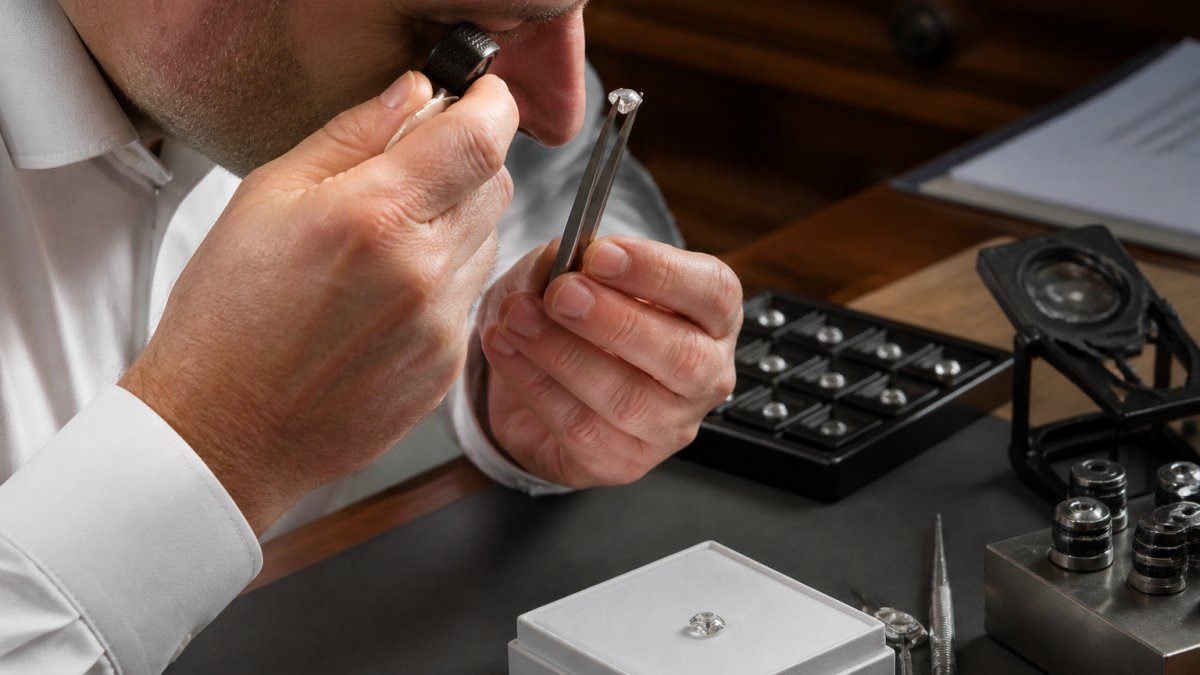
Use a 10x loupe to inspect the diamond's girdle. You should see the laser-inscribed report number etched into the stone's edge. This number must match the report number on your certificate exactly.
Next, verify the stone's physical characteristics against the documented grades. Learn more about what each clarity grade means for the stone's appearance. Hold the diamond up to light and look for inclusions.
Check the colour by comparing the diamond to a white background in neutral lighting. A D colour diamond appears colourless, while an E or F grade shows very slight colour only under magnification.
Measure the diamond if you have a jeweller's scale. The carat weight should match the certificate within 0.01 carats. Larger discrepancies suggest the wrong stone or a certificate error.
Platinum Pear Shaped Diamond Ring 1.02ct E SI1 GIA Certificate 100936156389 →
Understanding Diamond Grading Report vs Certificate
These terms are often used interchangeably, but they refer to the same document. A diamond grading report and a diamond certificate are identical, they're both official documents issued by a gemological laboratory that document a diamond's characteristics.
The report includes four main sections: identification information, grading results, additional comments, and security features. The identification section shows the report number, issue date, and diamond shape. The grading results detail the four Cs: carat weight, colour grade, clarity grade, and cut grade. Additional comments may note fluorescence or other observations.
Every IGI certificate includes a unique code for instant online report verification This security feature prevents fraud. The unique code ties the physical certificate to the laboratory's database. If someone tries to photocopy a certificate or use an outdated report, the online record will reveal the discrepancy.
Understanding your report's structure helps you spot inconsistencies. If the online database shows different grades than your physical certificate, that's a warning sign. If the report number on the certificate doesn't match the laser inscription on the stone, something is wrong.
When shopping for engagement rings like our Platinum Pear Shaped Diamond Ring 1.02ct E SI1 with GIA Certificate 100936156389, always request the full grading report. Review it before purchase.

EGL Certificate Check and Other Laboratory Verification
Beyond GIA and IGI, other laboratories issue diamond certificates. The European Gemological Laboratory (EGL) is one option, though less common than GIA or IGI. Each laboratory has its own verification portal and grading standards.
If your diamond carries an EGL certificate, visit the EGL's official website and locate their report verification tool. The process mirrors GIA and IGI: enter your report number, confirm identifying details, and review the returned grading report.
Other laboratories include the American Gemological Society (AGS) and various regional labs. Each operates independently with its own grading criteria and verification systems. The key principle remains the same: verify the report number online, then match the physical stone to the documented specifications.
Not all laboratories carry equal weight in the market. When selecting a diamond, consider working with ethical suppliers who maintain verifiable certifications. GIA and IGI certificates are most widely recognized and trusted by buyers and appraisers. A diamond with a GIA certificate typically commands higher resale value than the same stone with a less-known laboratory's certificate.
:::pro-tip If you're unsure which laboratory issued your certificate, check the certificate itself. The issuing lab's name and logo appear prominently. If you still can't identify it, contact your seller or bring the certificate to a local jeweller for confirmation.
What Online Verification Cannot Tell You
Online verification is powerful, but it has limits. Understanding what it can and cannot prove protects you from incomplete due diligence.
Online verification confirms that a report number exists in a laboratory's database and that the grading details match the certificate you hold.
Verification also cannot detect whether a diamond is natural or lab-grown unless the certificate explicitly states this.
Online verification doesn't assess the stone's beauty, brilliance, or sparkle. Grades like colour and clarity are technical measurements, not subjective assessments of how attractive a diamond appears.
Finally, online verification doesn't guarantee the seller's integrity. A fraudulent seller might present a legitimate certificate for a different stone than the one you're buying.
Physical verification is essential beyond digital checks, one must also verify that the physical diamond matches the report by checking the laser inscription on the girdle using a loupe This step transforms verification from a database lookup into a complete authenticity check.
Verifying a diamond certification report is your strongest defence against fraud and overpaying. Start by locating your report number on both the certificate and the stone's girdle.
At Morgan Banks, we stand behind every certified diamond we sell. Our team can walk you through this verification process and answer questions about any stone you're considering.
Frequently Asked Questions
How do I verify a diamond certification report online?
Visit the issuing laboratory's Report Check portal (GIA or IGI). Enter your unique report number and retrieve the archived record. The system will display the diamond's specifications, grading details, and confirm authenticity. Major laboratories including GIA and IGI maintain dedicated online verification portals where you can instantly confirm that the report information matches their database records.
What is the difference between a diamond grading report and a certificate?
A grading report details a diamond's characteristics (carat weight, colour, clarity, cut) assessed by a gemologist. A certificate is an official document issued by a gemological laboratory that includes this grading data plus a unique report number for verification. Both terms are often used interchangeably, but the certificate serves as the official proof of authenticity and grading.
Can I check an EGL certificate online?
Yes. Enter the report number on the EGL (European Gemological Laboratory) website to verify the certificate's validity and retrieve the diamond's grading details. Like GIA and IGI, EGL maintains an online database where you can confirm that the report number exists and matches the stone's specifications you're evaluating.
What should I do if my diamond's details don't match its report?
First, verify that you've entered the correct report number. If the number is correct but details differ, contact the issuing laboratory or the seller immediately. Mismatches may indicate a data entry error, a switched stone, or a fraudulent report. Physical verification using a loupe to check the laser-inscribed girdle number against the report number is essential to confirm the stone's identity.
