
Quick Summary
Swiss watches women buying guides start with the movement, size and budget. Under Swiss law, a watch is Swiss Made if at least 60% of its manufacturing costs occur in Switzerland. Choose quartz for low maintenance, measure your wrist before shopping, and set a budget first.
- Swiss Made requires at least 60% of manufacturing costs to occur in Switzerland.
- Quartz movements are accurate and low-maintenance, suiting everyday wear.
- Automatic movements wind from wrist motion and need periodic servicing.
- Measure your wrist just above the wrist bone and note the reading in centimetres.
- Check lug-to-lug length, not just case diameter, to avoid an oversized fit.
Table of Contents
- What Makes a Watch Genuinely Swiss Made
- Swiss Watch Movement Types: Quartz, Automatic and Mechanical
- How to Choose a Watch Size for Your Wrist
- Setting a Budget for Swiss Watches for Women
- The Best Swiss Watch Brands for Women
- How to Authenticate a Luxury Watch Before You Buy
- Booking a Fitting and Choosing Your Swiss Watch at Morgan Banks
- Frequently Asked Questions
What Makes a Watch Genuinely Swiss Made
Last Updated: November 11, 2026
Choosing a Swiss watches women buying guide starts with one question: what does "Swiss Made" actually guarantee? Under Swiss law, a watch carries the label only if at least 60% of its manufacturing costs occur in Switzerland (Swiss Government Ordinance on the Use of the Designation "Swiss Made"). For a fuller look at Swiss brand credibility and how to authenticate a piece, see Swiss brand watches guide. That is a cost threshold, not a promise that every part was made in Switzerland.
Peter George banks trading as Morgan Banks has sold fine jewellery and watches from Kendal, Cumbria since 1935. Buyers often assume "Swiss Made" means a hand-built movement from a Swiss workshop, but the label can also cover watches whose parts came from elsewhere.
For a buyer, the practical points are these:
- Check the movement and assembly. Ask where the movement is made and where the watch is assembled.
- Read the label, not the marketing. "Swiss movement" and "Swiss Made" are not the same claim.
- Expect some components to come from outside Switzerland. Commentators have argued the 60% rule reflects origin of cost rather than full Swiss manufacture (Mio Jewelry analysis of the Swiss Made rule).
Swiss origin is a sound starting point, but it is one filter among several. The sections below cover movement, size and budget.
Swiss Watch Movement Types: Quartz, Automatic and Mechanical
The movement decides how the watch keeps time, how often it needs attention and what it costs to run. Quartz movements use a battery and an electronic oscillator. They are accurate and low-maintenance, and most of the women's Swiss watches in our range use them.
Automatic movements are mechanical. They wind themselves from the motion of the wrist, so they need no battery but do need periodic servicing. Mechanical movements, wound by hand, suit collectors who value traditional craftsmanship.
For most buyers wearing a watch every day, quartz offers the best balance of accuracy and upkeep. Automatic suits someone who enjoys the mechanics and accepts a longer service cycle.
The three main movement types differ in power source, upkeep and suitability.
| Movement | How it runs | Best for |
|---|---|---|
| Quartz | Battery and electronic oscillator | Accuracy and low maintenance |
| Automatic | Winds from wrist motion, no battery | Enjoying the mechanics, longer service cycle |
| Mechanical | Wound by hand | Collectors valuing traditional craftsmanship |
How to Choose a Watch Size for Your Wrist
Fit matters more than most buyers expect. A watch that is too large looks heavy, overhangs the wrist and can catch on sleeves. One that is too small looks lost and can sit awkwardly on the wrist bone. Measuring carefully before you shop removes most of the guesswork.
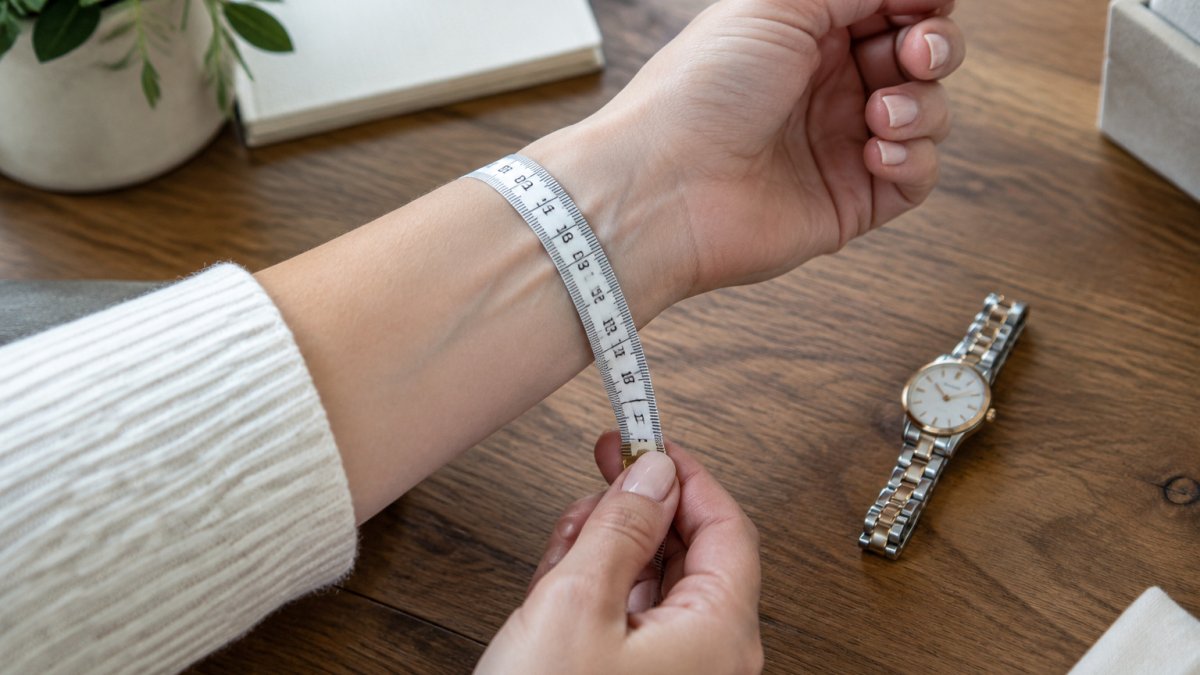
Measure your wrist correctly
Wrap a flexible tape measure or a strip of paper around your wrist just above the wrist bone, where a watch would normally sit. Keep it snug but not tight, and note the reading in centimetres. If you use paper, mark the overlap and measure it against a ruler. Repeat the measurement twice on different days, because wrist size can shift slightly with temperature and swelling.
As a rough guide, wrists under about 15 cm usually suit cases in the 26 mm to 33 mm range, while wrists between 15 and 17 cm can carry a 33 mm to 36 mm case comfortably. These are starting points rather than rules. Thin, flat wrists often wear a larger diameter better than round, fleshy wrists of the same circumference.
Lug-to-lug length matters as much as diameter
Case diameter describes width, but lug-to-lug length describes how far the case extends from the top lug to the bottom lug. A watch with a modest 33 mm diameter can still overhang a small wrist if its lugs are long, so the case looks oversized and the bracelet may sit off-centre. Check the lug-to-lug figure in the product specifications and compare it with your wrist width. Where the lugs curve down to hug the wrist, the watch usually sits more comfortably than a flat-lugged design with the same measurements.
Case thickness and proportion
Thickness affects comfort and how a watch sits under a cuff. A slim case, often under 9 mm, slides easily under sleeves and suits dress watches. A thicker case gives a sportier look but can feel bulky on a narrow wrist. Balance thickness against diameter: a wide, thin case and a narrow, thick case can occupy the same visual space, yet feel quite different to wear.
Worked examples
A buyer with a 14.5 cm wrist and fine-boned hands will usually find a 26 mm to 30 mm case with short lugs more balanced than a 36 mm sports model. A buyer with a 17 cm wrist can wear a 36 mm to 38 mm case if the lug-to-lug length stays within the width of the wrist. Our Doppio Stainless Steel 33 mm, with its 33 mm case and fine mesh bracelet, suits many average wrists, though the bracelet's adjustment range should be checked against your measurement before you buy.
Watch out: a bracelet that is too long cannot be fixed by a tight clasp, so confirm that links can be removed before you commit to a size.
Setting a Budget for Swiss Watches for Women
Budget shapes every other decision. Prices vary widely, so set a range before you shop.
Our current women's Swiss watches include:
- Mondaine EVO2 26 mm red leather watch (MSE.30210.LC): £245.00. Water-resistant to 26 metres and backed by a two-year international warranty.
- Doppio Stainless Steel 33 mm: £269.00. Quartz movement, 5 ATM water resistance.
- Mondaine Evo 2 Watch Pink Dial Mesh Bracelet: £259.00.
- Edox Royal Lady Chronograph 10018 3: £1,000.00, clearance pricing. It uses the Edox Cal. 101 movement, based on the Ronda 5040.B, and has sapphire glass.
Our women's Swiss watches currently range from £245.00 to £1,000.00, so a clear budget helps you narrow the field.
What Ownership and Servicing Really Cost
The purchase price is only the start. Ask any seller what servicing involves and what it costs before you buy, and factor those figures into your budget from day one. You can also learn how long a pre-owned luxury watch will last before you commit.
The Best Swiss Watch Brands for Women
Many brands make respected Swiss watches for women, from classic dress watches to sporty chronographs. The right brand depends on your style and how you plan to wear the watch.
Mondaine suits buyers who want clean, readable design. Edox suits those who want a dressier piece with a chronograph. Doppio suits a feminine dial with subtle detail.
How to Authenticate a Luxury Watch Before You Buy
Authentication matters in the pre-owned market. Check the following before committing:
- Serial numbers and documentation. Ask for original papers and confirm the serial number matches the case back.
- Build quality. Examine the crown, clasp and bracelet links for consistent finishing.
- Seller reputation. Buy from sellers who inspect and describe each watch in detail.
If anything about the watch or the seller feels uncertain, walk away.
Booking a Fitting and Choosing Your Swiss Watch at Morgan Banks
Once you have set a budget and settled on a size and movement, the next step is to try the watch on. You can talk through fit, strap and value with us before you decide. You can explore our current range of women's Swiss watches to compare options before you visit.
For the best fit, come in with your wrist measurement and your budget. We will help you narrow the options. Visit us in Kendal or get in touch to discuss your choice of Swiss watch.
Frequently Asked Questions
What should I look for when buying a Swiss watch?
Start with the movement, case size and materials, then check the Swiss Made label. At least 60% of a watch's manufacturing cost must occur in Switzerland to qualify. Consider how you will wear it: a quartz model suits everyday use with low maintenance, while an automatic movement suits buyers who enjoy traditional mechanics. Check a retailer's returns policy and warranty terms before you pay.
How can I tell if a watch is Swiss made?
Look for the words 'Swiss Made' or 'Swiss' on the dial or movement. The label is legally tied to the 60% production cost rule, so a genuine Swiss Made watch has had most of its manufacturing cost carried out in Switzerland. Check the caseback and movement for markings, and ask the seller for the model's documentation. Be aware that the label reflects where costs were incurred, not that every component was made in Switzerland.
Are Swiss watches worth the price?
Swiss watches vary widely in price. Retail examples include the Doppio Stainless Steel 33 mm at £269.00 and the Edox Royal Lady Chronograph at £1,000.00 on clearance. Value depends on how you will use the watch, how long you plan to keep it and the servicing it will need. A reliable quartz model may suit daily wear, while a mechanical piece often carries more emotional and resale value.
How do I choose the right watch size for my wrist?
Measure your wrist circumference with a soft tape, then compare it to the case diameter and lug-to-lug length of the watch. Smaller wrists generally suit cases between 26 mm and 33 mm, while the lug-to-lug length matters more for fit than diameter alone. Check the sizing options before you buy.
