
Table of Contents
- What Makes a True Luxury Watch Alternative?
- Seiko Prospex: The Best Luxury Watch Investment Under £1,200
- Pre-Owned Luxury Timepieces: Availability Without the Waitlist
- Dress Watch Alternatives with Heritage and Horological Prestige
- Luxury Watch Maintenance Tips for Long-Term Ownership
- Sport and Dive Watch Alternatives: Technical Comparison
- Frequently Asked Questions
Last Updated: September 25, 2026
What Makes a True Luxury Watch Alternative?
Luxury watch alternatives deliver the technical substance of a high-end watch, an in-house movement, solid build quality, lasting value, without the inflated premium and waiting lists of the most famous names. Most buyers searching for luxury watch alternatives to Rolex are really asking: which watches give the same ownership experience for less?
Movement Quality and In-House Calibres
An in-house calibre is a movement designed and built by the watchmaker itself, rather than bought in from a third-party supplier, which usually means better long-term parts availability.
Case Diameter, Water Resistance and Build Quality
Case diameter decides whether a watch wears well or feels like a brick. Anything between 39mm and 42mm suits most wrists.
Seiko Prospex: The Best Luxury Watch Investment Under £1,200
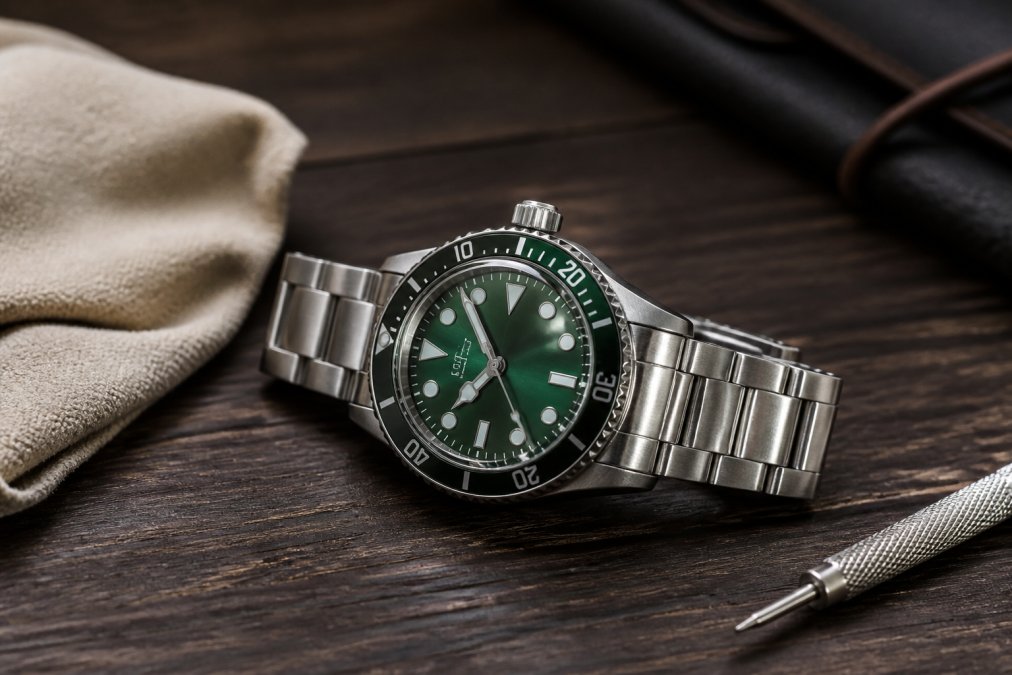
| Model | Price | Case | Water Resistance | Movement |
|---|---|---|---|---|
| Prospex 'Turtle' | £379 | Turtle case | 200m | Automatic |
| Prospex 'Alpinist' SPB121J1 | £650 | 39.5mm | 20 bar | 6R35 automatic |
| PADI King Turtle LE | £650 | Turtle case | 200m | Automatic |
| Speedtimer Solar 1969 | £640 | 39mm | 10 bar | Solar |
| SPB117J1 Prospex Land | £690 | 39.5mm | 200m | 6R35 automatic |
| Speedtimer 'Go Large' SSC911P1 | £660 | 41.4mm | 10 bar | Solar |
| SPB187J1 1968 Re-Interpretation | £1,060 | 42.0mm | 20 bar | 6R35 automatic |
| SPB297J1 Glacier | £1,110 | 40.5mm | 20 bar | 6R35 automatic |
The 6R35 Movement and 70-Hour Power Reserve
The 6R35 is Seiko's in-house automatic calibre and the reason these watches hold up as investment-grade alternatives: twenty-four jewels, stop-seconds, and a 70-hour reserve.
Pre-Owned Luxury Timepieces: Availability Without the Waitlist
Pre-owned luxury timepieces solve the biggest frustration in watch buying: the waitlist. Popular steel sports models from the major Swiss houses can carry multi-year queues at retail, and many buyers never reach the front. Buying pre-owned skips the queue, you see the actual watch, know the price, and take it home the same day.
The Three Purchasing Channels, Compared Honestly
Authorised dealer (retail). You get the full manufacturer warranty, box and papers, and a documented service history from day one. The trade-off is availability: in-demand references can mean years of waiting, and some dealers only sell desirable steel models to buyers with existing purchase history. For an alternative brand that isn't allocation-constrained, retail is usually the simplest route and safest for resale.
What to Verify Before You Buy Pre-Owned
A pre-owned purchase is only as good as the inspection behind it. The checks that matter most:
- Movement condition and service history. Ask when it was last serviced and by whom. A watch with no service history and a decade of daily wear is a service bill waiting to happen.
- Case and bracelet condition. Over-polishing rounds off case edges and thins lugs. Bracelet stretch on older pieces is expensive to correct.
- Dial and hand originality. A refinished or replaced dial changes the watch's identity and value.
- Box, papers, and warranty card. For modern references, the card matters for servicing and resale.
- Water resistance testing. Gaskets age. A watch rated to 200m when new may not be watertight today.
The Warranty Question Nobody Asks
Manufacturer warranties on mechanical watches typically run from the original purchase date, not the date you buy pre-owned. A three-year-old watch bought second-hand may have only a fraction of its cover left, or none. Before you buy, establish in writing what warranty the seller is providing and whether the manufacturer will still honour the original card, especially on grey-market purchases.
Dress Watch Alternatives with Heritage and Horological Prestige
Heritage and prestige in watchmaking come from continuity, not advertising. A design in production for decades, refined rather than replaced, carries a credibility a new launch cannot buy.
Seiko Prospex ‘Alpinist’ SPB121J1 →
Luxury Watch Maintenance Tips for Long-Term Ownership
Purchase price is the number every buyer focuses on. It is also the smallest number in the total cost of owning a mechanical watch. Service intervals, parts availability, and the cost of fixing years of neglect determine whether an alternative is a bargain or a money pit.
Service Intervals: What the Schedule Actually Looks Like
A mechanical movement needs periodic servicing to replace dried lubricants before they cause wear. The commonly cited interval is every five to seven years for a watch in regular use, though the honest answer depends on the movement, climate, and how the watch is worn.
- A watch that stops running is not a watch that needs less servicing. Lubricants dry out whether the watch runs or not. A piece left stopped in a drawer for years can seize, and freeing a seized movement costs more than a routine service.
- "If it's keeping time, leave it alone" is a false economy. By the time accuracy drifts, wear has usually already started. A scheduled service is cheaper than a rebuild.
What a Service Actually Costs, and Why It Varies
Service pricing depends on three things: the movement, the brand's parts policy, and whether the work is done by the manufacturer or an independent watchmaker.
- Manufacturer service is the safest route for a watch still under warranty or one you intend to resell, because it comes with a documented service record. It's also usually the most expensive, and turnaround can run to weeks or months.
- Independent watchmakers can be significantly cheaper and often faster, and many are highly skilled. The trade-off: some brands restrict parts supply to their own service networks, limiting what an independent can do, particularly on newer in-house calibres.
- Parts availability is the hidden variable. A movement with a long production run and a wide service network is cheap to maintain for decades. A short-run or discontinued calibre becomes a problem the moment a specific component fails.
The Habits That Protect Both Accuracy and Resale Value
- Service on schedule, not on failure. Waiting until the watch stops running usually means more worn parts and a larger bill.
- Keep it away from magnets. Laptops, speakers, and phone cases can magnetise a movement and cause it to run fast. A demagnetisation is quick and cheap; ignoring the problem is not.
- Rinse after saltwater. A dive watch rated to 200m still benefits from a fresh-water rinse after the sea. Salt sits in the caseback threads and crown gaskets.
- Check gaskets before swimming. Water resistance depends on rubber seals that age. Have them tested when the watch is serviced.
- Store it running, or wind it monthly. A watch that sits stopped for years can develop dried lubricants and seized parts.
- Keep the box, papers, and service receipts. On resale, documented history is worth real money, often more than the cost of the service itself.
Why This Matters More on an Alternative Than on a Rolex
A Rolex holds value partly because its service network is vast, parts are made for decades, and buyers trust the provenance. An alternative only holds value if the same conditions apply. Before you buy, ask three questions: how long has this movement been in production, can it be serviced independently, and are parts still supplied? If any answer is unclear, the purchase price is not the real price.
Sport and Dive Watch Alternatives: Technical Comparison
Sport and dive watches are where the technical differences between alternatives become measurable. Three specs decide everything: water resistance, movement type, and case size.
| Priority | Best Choice | Price | Why |
|---|---|---|---|
| Best overall value | Prospex 'Alpinist' SPB121J1 | £650 | 39.5mm, 20 bar, 6R35 |
| Best dive heritage | SPB187J1 1968 Re-Interpretation | £1,060 | Everest lineage, 42.0mm |
| Best for smaller wrists | SPB297J1 Glacier | £1,110 | 40.5mm, super-hard coating |
| Best no-maintenance option | Speedtimer SSC911P1 | £660 | Solar, no battery changes |
| Best collector piece | PADI King Turtle LE | £650 | Limited edition, 200m |
Frequently Asked Questions
What is the best alternative to Rolex for investment?
For investment potential under £1,200, the Seiko Prospex range offers strong value retention. Models like the SPB187J1 at £1,060 and the SPB297J1 at £1,110 feature in-house 6R35 automatic movements with 70-hour power reserves, sapphire crystal and stainless steel cases. These specifications typically hold value better than fashion watches. Limited editions such as the PADI 60th Anniversary King Turtle at £650 also tend to appreciate due to restricted production numbers.
Are there high-end watch alternatives that do not have long waitlists?
Yes. Pre-owned luxury timepieces and Seiko Prospex models are available immediately without the waitlists common with Rolex sports models. The Seiko Prospex Turtle at £379 and the Speedtimer Solar Chronograph at £660 can be purchased directly. Pre-owned pieces offer instant availability, though you should buy from a trusted specialist who verifies authenticity and provides warranty coverage.
Is it worth buying a pre-owned luxury watch instead of a new Rolex?
Pre-owned luxury timepieces often make more financial sense. A new Rolex carries a retail price plus potential waitlist delays, while a pre-owned Seiko Prospex or similar timepiece delivers comparable build quality at a fraction of the cost. Pre-owned watches have already absorbed initial depreciation, and models with in-house movements and sapphire crystal tend to hold value well. Always request service history and authenticity documentation.
What luxury watch maintenance tips should I follow?
Service your automatic watch every 5 to 7 years to maintain accuracy and power reserve. Avoid wearing mechanical watches during high-impact activities. Rinse stainless steel bracelets with fresh water after exposure to salt or sweat. Store watches in a dry, temperature-stable environment. For dive watches with screw-down crowns, ensure the crown is fully tightened before water contact. These habits protect movement quality and preserve resale value over time.
How do Seiko Prospex movements compare to Rolex in terms of value?
Seiko's in-house 6R35 automatic movement offers a 70-hour power reserve, 24 jewels and accuracy of -15/+25 seconds per day. While Rolex movements achieve tighter chronometer tolerances, the Seiko 6R35 delivers reliable performance at under £1,200. The SPB117J1 at £690 includes sapphire crystal, 200m water resistance and a screw-down crown, matching many specifications found in far more expensive luxury watches.