
Table of Contents
- How Remote Bespoke Ring Design Works
- Starting Your Ring Design Consultation
- Understanding Custom Ring Cost
- Choosing Diamonds, Gemstones, and Metals
- Ring Sizing for Online Orders
- Engagement Ring and Wedding Band Design
- Delivery, Insurance, and Aftercare
- Frequently Asked Questions
Last Updated: October 12, 2026
How Remote Bespoke Ring Design Works
Creating a bespoke ring design remotely is straightforward thanks to modern communication tools and established design practices. At Morgan Banks, we've guided couples through this process, transforming their vision into a handcrafted piece.
The remote bespoke ring design process follows a structured path: your designer learns your preferences, creates sketches or digital renderings, refines the design through feedback, then crafts your ring to specification.
Initial consultation and design brief
Your journey begins with a video or phone consultation covering your vision, budget, and timeline, where your designer learns what matters most to you, whether that's a specific stone shape, metal preference, or meaningful design element.
During this consultation, you'll typically cover:
- Your inspiration and style preferences
- Budget range and any flexibility
- Stone choices (diamonds, gemstones, lab-grown options)
- Metal preference (platinum, 9ct gold, 18ct gold)
- Timeline for completion
- Any special requirements or engravings
Your designer then prepares a design brief summarising these details, which becomes the reference point for all subsequent work. Many also ask for reference images or descriptions of rings you admire to bridge the gap between what you imagine and what gets created.
Design sketches and approval stages
Once your brief is finalised, your designer creates initial sketches or digital renderings from multiple angles, usually 2-3 concept variations showing different interpretations of your preferences.
You'll review these designs and provide feedback on band width, stone positioning, setting style, or alternative stone cuts.
Once you approve a design, your designer creates a detailed technical drawing or 3D rendering showing exact measurements and specifications.
Crafting and quality checks
After design approval, your bespoke ring moves into the workshop, where your designer or goldsmith hand-crafts it, setting stones with precision and finishing every detail by hand.
Quality checks happen at multiple points: the metal is tested for purity, stone settings are verified for security, and the finish is inspected for imperfections.
Once complete, your ring undergoes final inspection before being carefully packaged for delivery. This stage typically takes 4-12 weeks depending on design complexity and workload.
Starting Your Ring Design Consultation
Preparing for your first consultation ensures the conversation is productive and your designer understands your vision.
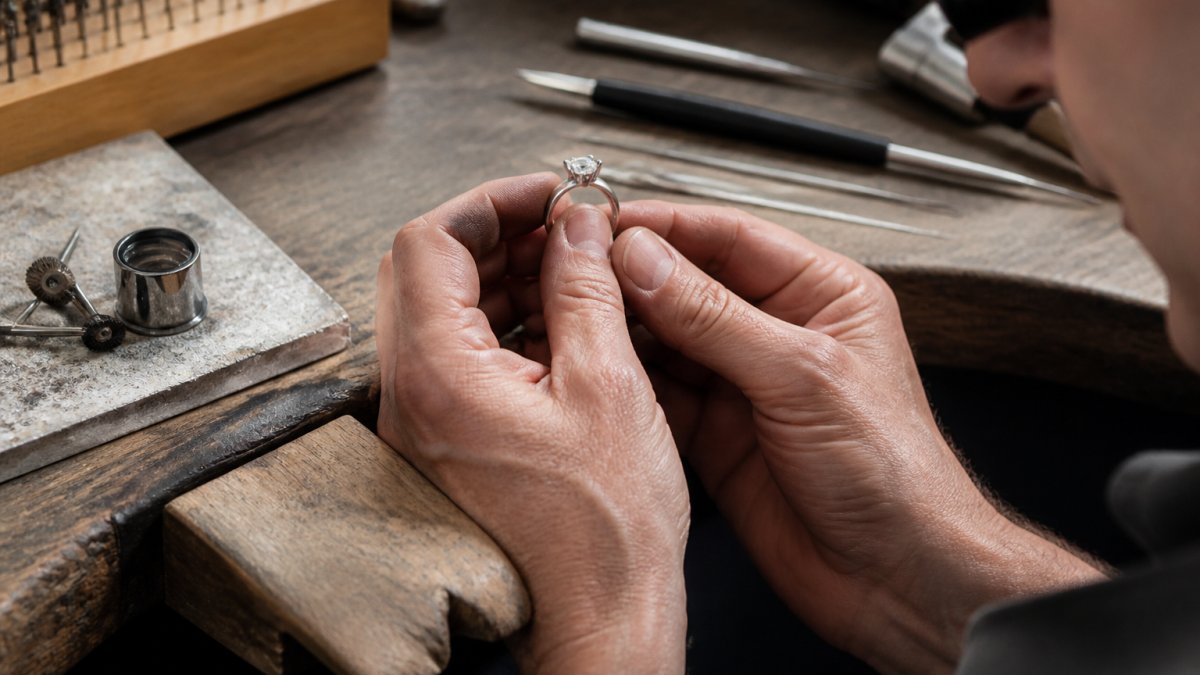
What to prepare before your first meeting
Gather inspiration before your consultation. This might include:
- Photos of rings you love (from Instagram, Pinterest, jewellery websites)
- Descriptions of your style (classic, modern, vintage, minimalist)
- Any family heirlooms or sentimental pieces you'd like to incorporate
- Your budget range
- Preferred metals and stone types
- Any lifestyle considerations (active job, frequent hand washing, preference for lower settings)
Thinking through these details beforehand prevents vague conversations and helps your designer ask the right follow-up questions. If you're designing an engagement ring, discuss whether the wedding band will be worn together and whether you want them to coordinate.
Working with a jewellery designer remotely
Remote collaboration works best when communication is clear and regular. Expect detailed questions about your vision, lifestyle, and concerns, answer thoroughly, as they're gathering information to create something you'll genuinely love wearing.
Most remote consultations happen via video call, email, or both. Video calls let you show reference images in real time, while email lets you document decisions and share detailed feedback.
Throughout the design process, ask questions freely.
Understanding Custom Ring Cost
Bespoke ring pricing depends on multiple factors, and understanding these helps you budget accurately.
Factors that affect pricing
The primary cost drivers for a bespoke ring are:
Stone selection. A lab-grown diamond typically costs less than a natural diamond of similar size and quality. Within natural diamonds, price increases significantly with carat weight, colour grade, and clarity grade, a 1.00ct D colour VS1 diamond costs substantially more than a 1.00ct J colour SI2 diamond.

Metal choice. Platinum is more expensive than gold, and 18ct gold costs more than 9ct because it contains more pure gold.
Design complexity. A simple solitaire setting costs less than an intricate three-stone design with detailed band work. Custom engraving, filigree work, or unusual stone arrangements add to the final price.
Payment stages and budgeting
Most bespoke ring commissions follow a staged payment structure:
| Payment Stage | Typical Timing | What's Included |
|---|---|---|
| Deposit | Upon design approval | Secures your design slot and begins sourcing materials |
| Mid-payment | Before crafting begins | Covers material costs and workshop time |
| Final payment | Upon completion | Due before delivery |
A common structure is 50% deposit, 25% mid-payment, and 25% final payment, though this varies by jeweller. This staged approach protects both parties: the jeweller doesn't invest in materials until you've committed, and you don't pay in full until the ring is complete.
Discuss payment flexibility during your initial consultation. Some jewellers offer payment plans, which can make a bespoke piece more accessible. Morgan Banks provides transparent pricing to accommodate different budgets.
Choosing Diamonds, Gemstones, and Metals
Your stone and metal choices define both the appearance and longevity of your ring.
Diamond and gemstone selection
Natural diamonds, lab-grown diamonds, and gemstones each have distinct characteristics.
Natural diamonds carry the prestige of geological rarity and come with certification from grading laboratories like the GIA or IGI, specifying carat weight, colour grade, clarity grade, and cut quality, the "Four Cs" that determine price.
When selecting a stone, prioritise cut quality and clarity over carat weight. A well-cut 0.90ct diamond often looks larger and brighter than a poorly cut 1.00ct diamond.
Gemstones like sapphires, emeralds, and rubies offer colour and individuality but are generally softer than diamonds, so they suit rings worn occasionally rather than daily. If you love a coloured gemstone for an engagement ring, discuss durability with your designer, who can recommend protective settings that minimise damage.
Platinum 3 stone Oval Lab Grown Diamond Ring 1.6ct D vvs →
Precious metal options and durability
Platinum is the most durable precious metal for rings: dense, resistant to wear, and secure for stones.
18ct gold contains 75% pure gold and 25% alloy metals, making it durable enough for daily wear in yellow, white, or rose gold.
9ct gold is an economical choice if budget is a primary concern, but expect to have your ring refinished or re-plated more frequently. For an engagement ring worn daily, 18ct gold or platinum is the better investment.
Ring Sizing for Online Orders
Accurate sizing is critical when ordering a ring remotely, and several reliable methods exist.
Accurate sizing methods without visiting in person
The most reliable approach is to have your ring size professionally measured at a local jeweller. Many high street jewellers offer free sizing services, measuring your finger in minutes and removing all guesswork.
If visiting a jeweller isn't practical, order a plastic ring sizer online.
Another option is to borrow a ring that fits you well and have your designer measure its internal diameter. This works if you have an existing ring that fits perfectly.
Resizing and adjustments after delivery
If your ring arrives and doesn't fit perfectly, most jewellers offer free resizing within a set period, typically 30 days. This is standard practice, as remote sizing sometimes requires minor adjustment.
Resizing a bespoke ring is straightforward: your jeweller cuts the band, adds or removes a small section of metal, and re-solders it seamlessly.
Resizing after the warranty period costs a modest fee depending on metal and complexity, far less than the cost of the original ring.
Engagement Ring and Wedding Band Design
Many couples design both their engagement ring and wedding band together to ensure they coordinate beautifully.
Bespoke engagement ring design
Your engagement ring is the centrepiece, so this is where you express your personal style. Whether you prefer a classic solitaire, a three-stone design, or something entirely unique, your designer can create it.
Consider how your engagement ring will look alongside your wedding band. Some couples choose bands that sit flush for a seamless look, while others prefer bands that sit slightly apart so each ring stands alone. Discuss this during your design consultation so your designer can plan accordingly.
Morgan Banks offers several engagement ring options, including the Platinum 3 stone Oval Lab Grown Diamond Ring 1.6ct D vvs at £2,250, which combines ethical sourcing with timeless elegance. For those preferring natural diamonds, the 18ct Yellow Gold 1.00ct Oval cut Diamond Ring at £9,350 offers a striking statement piece.

Matching wedding bands and coordinating sets
Your wedding band should complement your engagement ring without competing for attention.
Metal consistency matters: a platinum engagement ring with a white gold band creates a noticeable colour difference that some find jarring, so matching metals ensures a cohesive look.
The Platinum and Yellow Gold Wedding Ring at £1,995 offers versatility for mixed-metal designs, while the 9ct White & Yellow Gold Wedding Band at £750 provides an accessible option for coordinated sets.

Delivery, Insurance, and Aftercare
Once your bespoke ring is complete, proper handling and care ensure it remains beautiful for decades.
Secure shipping and insurance options
Your jeweller will ship your ring via a tracked, insured courier service depending on value and location.
Before signing for delivery, inspect the package for visible damage, then open it carefully and examine your ring in good lighting. Most jewellers include a jewellery box and care documentation.
Consider adding your ring to your home insurance policy once it arrives. Jewellery insurance covers theft, loss, and damage, especially important for engagement and wedding rings that are often irreplaceable emotionally.
Warranty, returns, and ongoing maintenance
Most bespoke rings come with a warranty covering craftsmanship.
If you're unhappy with your ring upon delivery, discuss returns. Most jewellers offer returns or exchanges, though custom-made pieces typically cannot be refunded once work has begun.
Ongoing maintenance keeps your ring looking pristine.
You can clean your ring at home with warm soapy water and a soft brush, but professional cleaning ensures thorough results.
Creating a bespoke ring remotely lets you design a piece that's uniquely yours without geographical limitations.
Frequently Asked Questions
How does the remote bespoke ring design process work?
The process begins with a consultation where you discuss your vision, preferences, and budget. Your designer creates sketches or 3D renderings for your approval before any metalwork begins. You'll review and approve designs remotely, request revisions as needed, and receive updates throughout crafting. Once complete, your finished ring is securely delivered to your door. This remote approach means you never need to visit in person, though video consultations help ensure your designer fully understands your ideas.
What should I budget for a bespoke ring?
Bespoke ring costs vary widely based on precious metal choice, diamond or gemstone quality, and design complexity. For example, a platinum three-stone lab-grown diamond ring starts at £2,250, while an 18ct yellow gold single-stone option begins at £9,350. Payment is typically staged: a deposit to secure your commission, a balance on approval of the design, and final payment before delivery. Discuss your budget openly with your designer so they can suggest materials and designs within your means.
How do I ensure my ring fits perfectly when ordering remotely?
Accurate sizing is essential for remote orders. Your jeweller will provide a ring sizing guide or recommend visiting a local jeweller to have your finger measured professionally. Many designers also offer complimentary resizing within a set period after delivery if the fit isn't perfect. Provide your size in writing and confirm it before crafting begins. If you're unsure, err slightly larger, resizing down is easier than sizing up for some designs.
What makes bespoke rings different from ready-made options?
Bespoke rings are handcrafted to your exact specifications, reflecting your personal story and preferences. You choose every detail: metal type, stone selection, setting style, and finishing touches like engraving. This customisation creates a truly unique piece that ready-made jewellery cannot match. While bespoke pieces typically cost more than mass-produced alternatives, the quality, craftsmanship, and emotional significance often justify the investment as a lifetime treasure.