
Table of Contents
- Start With the Reference Number and Provenance
- How to Authenticate a Pre-Owned Rolex: Case, Dial, Movement and Bracelet
- Rolex Certified Pre-Owned vs Used Rolex: Which Route Suits You?
- Questions to Ask When Buying a Used Rolex
- Your Pre-Owned Rolex Buying Checklist
- Red Flags and Common Pitfalls to Avoid
- Frequently Asked Questions
Last Updated: October 12, 2026
Start With the Reference Number and Provenance
Buying a pre-owned Rolex rewards patience and punishes haste. The single most useful thing you can do before you ever handle the watch is identify its reference number and trace where it came from. At Morgan Banks, we've helped collectors across Cumbria find authenticated pre-owned watches since 1935, and the pattern never changes: the buyers who ask about provenance first are the ones who avoid the expensive mistakes.
A Rolex reference number is the alphanumeric code, typically four to six digits, engraved between the lugs at the 12 o'clock position, that identifies the exact model and generation of a watch. It tells you the case size, the material, the movement family and the production era, all before you look at a single photograph.
That number is your anchor. Everything else, the dial, the bracelet, the box, the paperwork, is checked against it.
Rolex's official guide to model reference numbers
Why the Reference Number Comes Before Anything Else
Most authentication mistakes happen because a buyer falls in love with the dial and works backwards. Flip that order.
The reference number lets you verify that the watch in front of you is even the model being advertised. A "Submariner" with the wrong case proportions, or a "Datejust" with a bezel that never shipped on that reference, is a mismatch you can spot in seconds once you know the code. It also sets the benchmark for the movement inside, the crystal type, and the bracelet style that should be fitted.
If a seller can't or won't provide the reference number clearly, treat that as your first red flag. Genuine sellers expect the question.
How to Authenticate a Pre-Owned Rolex: Case, Dial, Movement and Bracelet
Authentication is a layered process. Some checks take minutes and need nothing more than your eyes and a loupe. Others require a watchmaker to open the caseback and inspect the movement. Knowing which is which saves you time and stops you relying on a single feature to make a decision.
External Checks You Can Do in Minutes
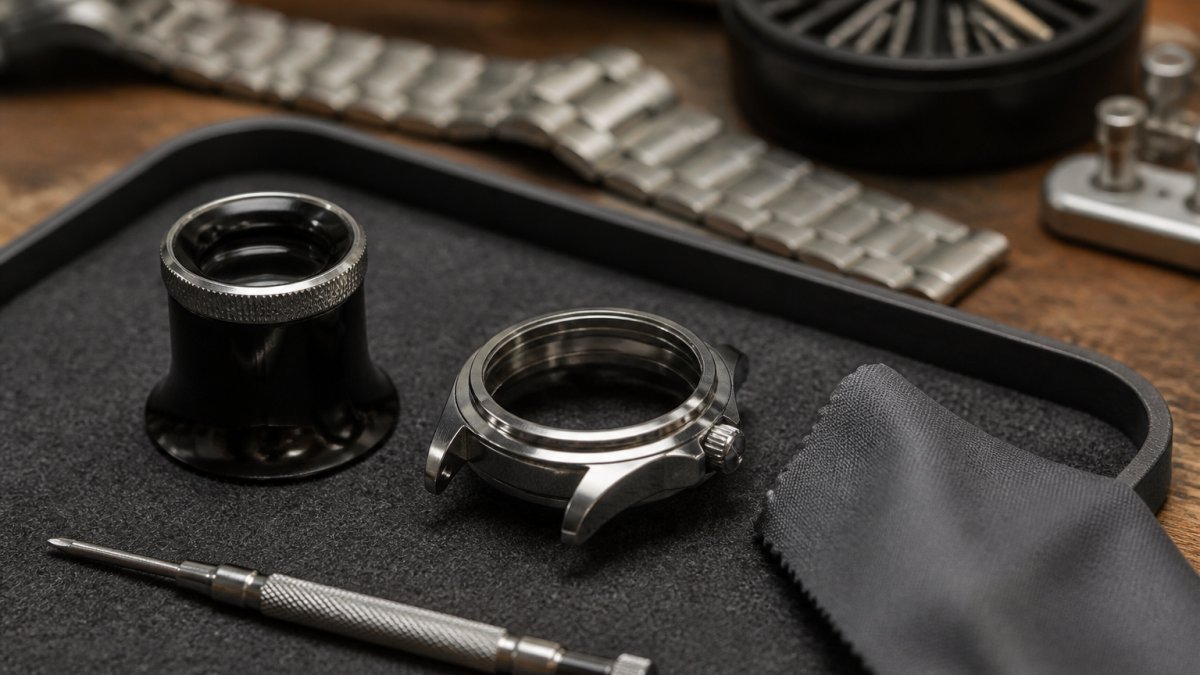
Start with the case and lugs. Genuine Rolex cases have sharp, well-defined lug profiles and even polishing. Over-polished lugs look soft and rounded, which is a sign of heavy wear or refurbishment rather than a fake, but it affects value either way.
Move to the dial. Look at the printing under magnification: genuine text is crisp, evenly spaced and applied cleanly. Check the cyclops lens over the date, which should magnify the date clearly and sit flush against the crystal. Examine the bracelet for the correct end links, clasp markings and the quality of the finishing on the inner clasp.
Internal Checks That Need a Watchmaker
The movement is where counterfeits most often fall down, and it's the one area you cannot properly assess without opening the watch. A qualified watchmaker can confirm the movement family, check the finishing on the rotor and bridges, and verify that the serial and reference numbers correspond to the movement inside.
This is also where a service history matters. A watch that has been serviced by an authorised centre will usually carry documentation, and that paperwork supports both authenticity and condition.
| Check | Who Can Do It | What It Confirms |
|---|---|---|
| Reference and serial numbers | You, with a loupe | Correct model and era |
| Dial printing and cyclops | You, with a loupe | Original or replacement dial |
| Case and lug profile | You, visually | Wear and polishing history |
| Bracelet and clasp markings | You, with a loupe | Correct fitment and finishing |
| Movement and finishing | A watchmaker | Genuine internals and servicing |
Rolex Certified Pre-Owned vs Used Rolex: Which Route Suits You?
Rolex Certified Pre-Owned is a programme in which authorised dealers sell pre-owned Rolex watches that have been authenticated, serviced and issued with a guarantee by Rolex itself. A "used Rolex" bought privately or through a general dealer carries no such backing, which is why the two routes attract very different buyers.
The certified route costs more, and that premium buys certainty: verified authenticity, a service, and a warranty. The open market route can offer better value and access to older or rarer references, but the burden of verification sits entirely with you.
For a first pre-owned purchase, the certified path removes most of the risk. For an experienced collector chasing a specific reference, the open market is where the interesting watches live, provided you do the checks properly.
Questions to Ask When Buying a Used Rolex
The questions you ask tell you as much about the seller as the answers do. A reputable seller will welcome them; a hesitant one won't.
Ask for the full reference and serial number, and whether the watch has been serviced and by whom. Ask whether the dial, hands, bezel or bracelet have been replaced, and whether the watch has been polished. Ask about the original box and papers, and whether the watch has ever been reported lost or stolen.
Finally, ask about the return policy and any guarantee in writing. A seller confident in the watch will put their terms on paper.
guidance from the Chartered Trading Standards Institute on your consumer rights
Your Pre-Owned Rolex Buying Checklist
Use this checklist before you commit. Print it, or keep it on your phone and work through it methodically.
- Reference number confirmed and matches the advertised model
- Serial number checked against the reference
- Case and lugs inspected for over-polishing
- Dial printing, hands and cyclops examined under magnification
- Bracelet end links, clasp and finishing verified
- Movement inspected by a qualified watchmaker
- Service history and documentation reviewed
- Box and papers checked, but not relied upon alone
- Watch checked against lost or stolen registers
- Return policy and guarantee confirmed in writing
Red Flags and Common Pitfalls to Avoid
Certain signals should stop a purchase outright. A seller who won't allow an independent inspection, a price that sits far below the market for that reference, and mismatched numbers between the case and the paperwork are all reasons to walk away.
A common mistake is buying a watch that has been heavily polished to look "new." It photographs well and hides wear, but it permanently removes metal from the case and reduces both authenticity and long-term value. Another is accepting a verbal guarantee. Get everything in writing, including the return window.
The real difference between a good pre-owned purchase and a bad one comes down to verification. Do the checks, ask the questions, and let a watchmaker see the movement.
Finding a pre-owned Rolex you can trust shouldn't feel like a gamble, and with the right checks it doesn't have to. Morgan Banks has been a fine jeweller in Kendal since 1935, offering a curated collection of previously enjoyed luxury timepieces alongside our bespoke jewellery and brands such as Thomas Sabo, ChloBo and BOSS. Our team guides you through authentication, provenance and condition, and our newsletter subscribers receive 5% off their first purchase. Get started with Morgan Banks and choose your next watch with confidence.
Frequently Asked Questions
How can you tell if a pre-owned Rolex is genuine?
Start with the reference and serial numbers engraved between the lugs and on the rehaut, then check the dial text for clean, evenly spaced printing. Weigh the watch in your hand: solid gold models feel noticeably heavier than plated fakes. Look at the cyclops magnification, the laser-etched coronet at 6 o'clock, and the smooth sweep of the seconds hand. A qualified watchmaker should open the caseback to confirm the movement, because cosmetic checks alone cannot authenticate a pre-owned Rolex.
Should a pre-owned Rolex come with its box and papers?
Box and papers add confidence and resale value, but a watch without them is not automatically a bad buy. The original warranty card confirms the reference, serial and date of first sale, which matters most for newer models. Older pieces often lost their paperwork decades ago. If papers are missing, factor that into what you pay and ask the seller for written confirmation of the reference number and service history instead.
How can I check the service history of a pre-owned Rolex?
Ask for service receipts or a watchmaker's invoice showing the date, work carried out and parts replaced. Rolex does not publish a public service database, so documentation is the only reliable record. If no paperwork exists, budget for a full service soon after purchase. A watch running fast, slow or stopping overnight usually signals that a service is overdue, and a pre-owned Rolex buying checklist should always include this question.
Does a pre-owned Rolex hold its value?
Many stainless steel sports models have held value well over the long term, but this is not guaranteed and varies by reference, condition and completeness. Gold and gem-set pieces often depreciate more from new. Treat a pre-owned Rolex as a watch you will enjoy wearing first, and a store of value second. Buying at a fair market price from a reputable dealer gives you the best chance of retaining value if you later sell or trade.
What questions should I ask when buying a used Rolex?
Ask for the exact reference number, year of production, whether the dial, bezel or bracelet have been replaced, and whether the watch has been polished. Request the service history in writing, confirm the warranty period offered by the seller, and check the returns policy. Also ask if the watch has been pressure-tested for water resistance. A dealer who answers these clearly and in writing is far easier to trust than one who avoids specifics.
Is a Rolex Certified Pre-Owned watch worth the extra cost?
Rolex Certified Pre-Owned watches are authenticated and serviced by Rolex-approved partners and come with a two-year international guarantee. That certainty costs more than a comparable watch bought privately. If you value provenance, a formal warranty and a recognised resale channel, the premium can be justified. If you are experienced and willing to arrange your own authentication and servicing, a well-documented used Rolex may suit you better.