
Table of Contents
- Understanding the 4 Cs: Diamond Quality Fundamentals
- How to Choose a Diamond Engagement Ring
- Precious Metal Guide for Wedding Rings
- Ring Sizing, Comfort Fit and Finger Anatomy
- Matching Wedding Bands to Engagement Rings
- Bespoke Jewellery Design Process
- Ethical Sourcing, Certification and Long-Term Care
- Lifestyle Considerations and Future-Proofing Your Ring
- External Sources & Further Reading
- Frequently Asked Questions
Last Updated: September 2, 2026
Understanding the 4 Cs: Diamond Quality Fundamentals
The foundation of any diamond engagement ring rests on understanding carat weight, colour grade, clarity standards, and cut quality. These four factors determine both the visual beauty of a stone and its lasting value.
Carat weight measures a diamond's mass, with one carat equal to 200 milligrams. A two-carat diamond costs significantly more than two one-carat stones of equal quality due to non-linear pricing. Colour grade ranges from D (colourless) to Z (light colour), with D-J grades preferred for engagement rings. Clarity assesses imperfections, graded from Flawless to Included. Most diamonds contain inclusions invisible to the naked eye; SI1 clarity often offers excellent value without visible flaws. Cut quality is the most impactful criterion. A well-cut diamond reflects light brilliantly, creating coveted sparkle. Round brilliant cuts remain most popular because their 58 facets maximise light return.
How to Choose a Diamond Engagement Ring
Selecting a diamond engagement ring involves balancing personal preference, budget, and long-term wearability.
Carat Weight and Personal Budget
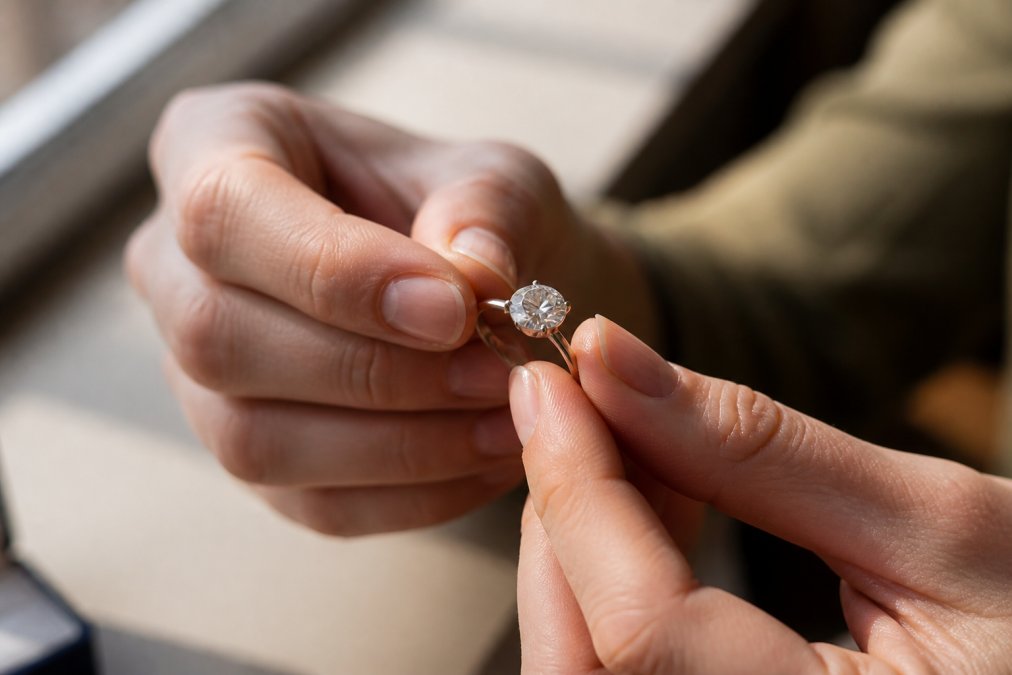
Carat weight shouldn't dictate your entire budget. A smaller stone with superior cut and colour often outperforms a heavier stone with mediocre qualities. Set a realistic budget before shopping. At Morgan Banks, we work with couples across all price ranges, from our 9ct Yellow Gold Diamond Bridal Set at £675 to platinum solitaires exceeding £7,750. Prioritise cut quality first, then allocate remaining budget to colour and clarity based on your preferences.

Cut Quality and Light Performance
Cut quality determines how a diamond performs under light, exhibiting brilliance (white light reflection), fire (colour dispersion), and scintillation (sparkle pattern). Round brilliant cuts remain the industry standard because their 58 facets return maximum light to the viewer's eye. Other cuts, cushion, oval, emerald, and radiant, offer distinct aesthetics but may show colour or inclusions more readily. Examine the diamond under various lighting conditions: natural daylight, office fluorescent light, and evening candlelight.
Colour Grade and Clarity Standards
Colour and clarity work together to determine visual purity. For engagement rings worn daily, SI1 clarity (Slightly Included 1) represents excellent value; most inclusions are invisible without magnification. Colour grades D-F are truly colourless and command premium prices. G-J grades are near-colourless and often indistinguishable from higher grades to the unaided eye, particularly when set in white gold or platinum. Consider the setting's influence on perceived colour. Yellow gold and rose gold can mask slight yellow tints. White gold and platinum demand higher colour grades (D-H) to avoid visible warmth.
Precious Metal Guide for Wedding Rings
The metal you select affects durability, maintenance requirements, resizing possibilities, and overall aesthetic.
Platinum: Durability and Prestige
Platinum is the most durable precious metal for fine jewellery, with density approximately 60% greater than 18k gold. It resists scratching better than gold and won't wear away over decades of daily wear. Platinum's white colour requires no rhodium plating, eliminating the maintenance burden of re-plating every few years. Platinum commands premium pricing due to its rarity and working difficulty. Our Platinum Diamond Ring with centre stone .30ct and shoulders .10ct costs £1,725, whilst similar designs in 18k gold cost considerably less.

Gold: 18k, 9ct and Rhodium Plating
18k gold contains 75% pure gold mixed with alloy metals for strength, offering excellent balance between purity and durability. 9ct gold contains 37.5% pure gold and is more durable than 18k but appears slightly paler. White gold requires rhodium plating, a thin coating that achieves its bright white colour. Rhodium plating wears away with regular wear and requires re-plating every 3-5 years. Yellow gold and rose gold don't require plating, making them lower-maintenance choices. Our 9ct Yellow Gold Diamond Bridal Set at £675 showcases how 9ct gold offers excellent value without sacrificing durability.
Palladium: A Modern Alternative
Palladium is a white precious metal similar to platinum in appearance but lighter in weight and more affordable. It shares platinum's durability and doesn't require rhodium plating. Palladium's main limitation is availability; fewer jewellers work with it, and resizing requires specialists experienced with the metal.
Ring Sizing, Comfort Fit and Finger Anatomy
Accurate ring sizing is essential for comfort and security. Finger size fluctuates throughout the day and across seasons, and band width affects perceived fit. Ring size in the UK is measured alphabetically from A (smallest) to Z (largest), with half sizes available. The most reliable sizing occurs in the afternoon when fingers are at normal size.
Comfort fit refers to a slightly rounded inner surface that reduces friction against the finger. Traditional flat-inner bands can feel tight during extended wear. However, comfort fit bands cannot be resized as easily because the rounded interior requires specialist equipment.
Matching Wedding Bands to Engagement Rings
Your wedding band should complement your engagement ring aesthetically and sit flush against it without gaps or movement.
Stackable Rings and the Stacking Trend
The stacking trend, wearing multiple thin rings together, has transformed how couples approach wedding bands. Rather than selecting a single band to pair with an engagement ring, many now choose stackable rings that can be worn together or separately depending on occasion. Stackable rings work best when designed as a coordinated set with consistent band widths and metal finishes.
Metal Compatibility and Setting Styles
Your wedding band's metal must match your engagement ring's metal to avoid visual jarring. Setting style influences band selection. Solitaire settings pair well with simple, straight bands. Halo settings benefit from curved or contoured bands that follow the halo's shape. Pavé settings pair beautifully with matching pavé wedding bands for visual continuity.
Bespoke Jewellery Design Process
Commissioning a bespoke engagement or wedding ring offers complete creative control and the assurance that your ring is entirely unique.
From Concept to Finished Ring
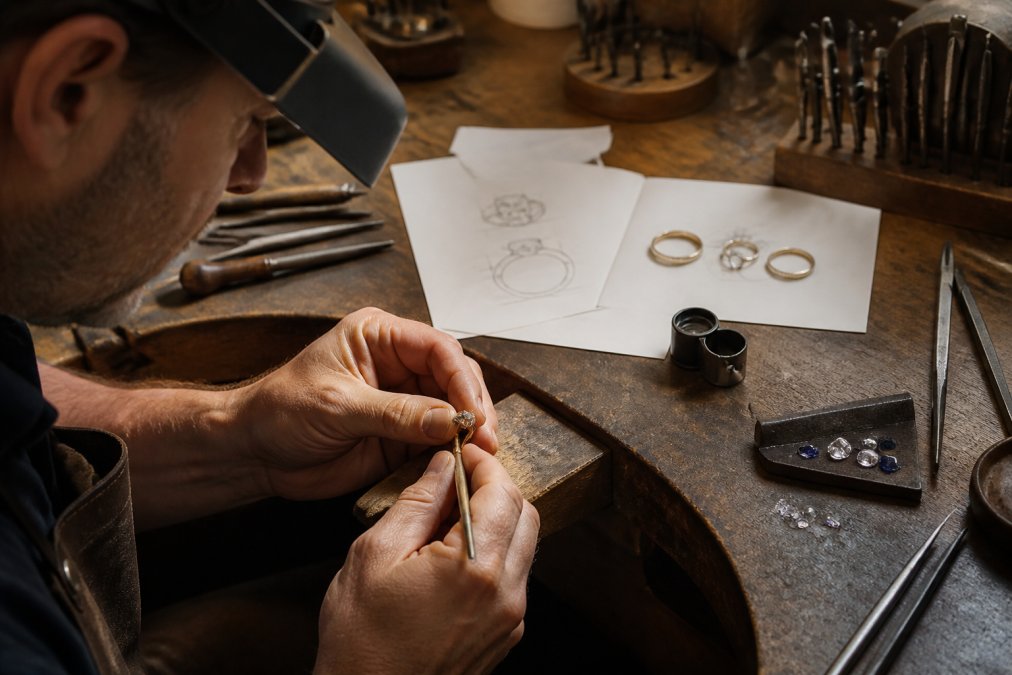
The bespoke process begins with an initial consultation where you discuss your vision, budget, and timeline. Your jeweller then creates sketches or digital renderings showing your design from multiple angles. Once approved, the jeweller sources materials, which can take 2-4 weeks depending on stone availability. Actual crafting typically requires 4-8 weeks, depending on complexity. Throughout crafting, skilled jewellers perform multiple quality checks to ensure the ring meets your approved design and quality standards.
Remote Consultation and Sketches
For couples not local to Kendal, remote consultations are increasingly standard. Video calls allow you to discuss your vision whilst viewing sketches and design options in real time. Digital renderings can appear different from finished rings due to lighting and material properties. Discuss these limitations with your jeweller upfront.
Ethical Sourcing, Certification and Long-Term Care
Ethical sourcing and proper certification ensure your ring holds its value and aligns with your values. Long-term care preserves its beauty for generations.
Conflict-Free Diamonds and Hallmarking
Conflict-free diamonds are stones certified to originate from sources that don't finance armed conflict. The Kimberley Process Certification Scheme tracks diamonds from mine to retail. At Morgan Banks, we source diamonds from reputable suppliers with documented ethical practices. Hallmarking is a legal requirement in the UK for precious metals. A hallmark confirms the metal's purity and the jeweller's identity. All our rings carry proper UK hallmarks.
Insurance, Appraisal and Maintenance
Fine jewellery should be insured against loss, theft, and damage. Obtain a professional appraisal from a certified gemologist independent of the jeweller who sold you the ring. Appraisals typically cost £50-£150 and are valid for 3-5 years. Maintenance preserves your ring's beauty. Gold and platinum rings should be professionally cleaned annually. Rhodium-plated white gold should be re-plated every 3-5 years. Store your ring safely when not wearing it.
Lifestyle Considerations and Future-Proofing Your Ring
Your engagement and wedding ring will accompany you through decades of life. Selecting a design and metal that withstand your lifestyle ensures lasting satisfaction and value. Consider your daily activities. If you work with your hands, gardening, sports, manual labour, you need a durable setting that protects the stone. Bezel settings, where the diamond is surrounded by metal, offer more protection than prong settings. Halo settings provide additional security by surrounding the centre stone with accent diamonds or metal.
Think about future flexibility. Would you prefer to wear your engagement ring and wedding band together permanently, or would you prefer to remove them for certain activities? Stackable designs offer this flexibility. Metal durability matters for long-term wear. Platinum and 18k gold withstand decades of daily wear without significant degradation. The "stacking trend" offers future-proofing advantages by allowing you to add or remove rings as your preferences evolve.

Selecting an engagement and wedding ring is a deeply personal decision that balances aesthetics, practicality, and long-term value. The guidance you've explored here addresses the technical foundations, understanding the 4 Cs, evaluating precious metals, and considering lifestyle factors, that distinguish a ring you'll treasure from one you'll eventually regret.
At Morgan Banks, we specialise in guiding couples through bespoke jewellery design, sourcing ethically certified diamonds, and crafting rings built to last generations. Our team has been helping couples in the North of England find their perfect rings since 1935. We offer expert consultations, whether remote or in-person, and a curated selection of precious metals and stones to match your vision and budget. Explore our collection of engagement rings, from our 9ct Yellow Gold Diamond Bridal Set at £675 to our platinum solitaires, and discover how bespoke design transforms your ring from a purchase into a heirloom. Get started with a consultation today and receive a 5% discount on your first purchase when you subscribe to our newsletter.
External Sources & Further Reading
For couples seeking deeper knowledge on diamond certification and ethical sourcing, the Kimberley Process Certification Scheme provides information on conflict-free diamond standards. The Gemmological Association of Great Britain offers resources on gemstone grading and professional appraisals. For understanding UK precious metal hallmarking requirements, the UK Hallmarking Council provides official guidance on metal purity standards and certification marks that protect your investment.
Frequently Asked Questions
What are the 4 Cs of diamond quality in fine jewellery?
The 4 Cs stand for carat weight, colour grade, clarity, and cut quality. Carat measures diamond weight; colour grades range from D (colourless) to Z (light colour); clarity assesses internal inclusions on a scale from FL (flawless) to I (included); cut quality determines how well the diamond reflects light. All four influence price and appearance. A well-cut diamond with good clarity and colour will sparkle more than a larger stone with poor cut quality.
How do I choose between platinum, 18k gold and palladium for an engagement ring?
Platinum is the most durable and hypoallergenic, making it ideal for daily wear and sensitive skin, though it costs more. 18k gold (75% pure gold) offers warmth and traditional appeal at a lower price point, though it's softer. Palladium is lighter than platinum, hypoallergenic, and more affordable, making it a modern choice for those wanting durability without the platinum price tag. Consider your lifestyle, budget, and metal allergies when deciding.
What is the bespoke jewellery design process, and can it be done remotely?
The bespoke design process begins with a consultation to understand your vision, style preferences, and budget. You'll review sketches or 3D models before production starts, allowing you to approve the design. Many bespoke jewellers, including those in fine jewellery specialists, offer remote consultations via email, video calls, and detailed imagery, so you don't need to visit in person multiple times. Once approved, the craftsperson creates your ring by hand. Remote clients typically visit once for final fitting and collection, though shipping options may be available.
How do I ensure my wedding band complements my engagement ring?
Match the metal type, width, and setting style of your wedding band to your engagement ring for visual harmony. If your engagement ring has a solitaire setting, a simple band works well; for halo or pavé settings, a contoured or stackable band may fit better without gaps. Consider the 'stacking' trend if you want multiple bands together. Visit a jeweller to try combinations in person, or request 3D renderings if designing bespoke rings. Grain-set or bezel-set diamonds on the band can echo your engagement ring's style.
What is the difference between off-the-shelf and bespoke engagement rings?
Off-the-shelf rings offer immediate availability, lower cost, and predictable design. Bespoke rings are custom-made to your exact specifications, allowing complete creative control, unique designs, and the ability to select specific diamonds and metals. Bespoke pieces typically cost more due to handcrafting and personalisation. Choose bespoke if you want a one-of-a-kind ring that reflects your vision; choose off-the-shelf for convenience and budget-conscious shopping.
How should I care for my fine diamond jewellery to ensure longevity?
Clean your ring regularly with warm soapy water and a soft brush to remove dirt and restore sparkle. Avoid exposing it to harsh chemicals, extreme heat, or impact during sports or manual work. Have it professionally inspected annually to check for loose stones or worn prongs. Store it safely in a padded box when not wearing it. Rhodium plating on white gold may fade over time and require replating. Consider jewellery insurance to protect against loss or damage. Regular maintenance preserves both beauty and structural integrity.
What ring size should I choose if I'm planning a surprise proposal?
If you don't know the exact size, aim for a size 6 or 7 as a safe average starting point for most people, then plan to have it resized after the proposal. Alternatively, borrow a ring the person wears on their ring finger and have a jeweller measure it discreetly. Some bespoke jewellers offer sizing rings or temporary bands so the proposal can happen without waiting for the final ring. Resizing is straightforward for most metals. Always prioritise the moment over perfect fit on day one.
What certifications and ethical sourcing should I look for when buying a diamond?
Look for diamonds certified by the Gemological Institute of America (GIA) or similar reputable laboratories, which verify the 4 Cs and authenticity. Seek conflict-free or ethically sourced diamonds from suppliers adhering to the Kimberley Process or similar standards. Check that the metal carries UK hallmarking (a statutory requirement for precious metals sold in the UK), confirming purity and quality. Reputable fine jewellery specialists provide documentation and appraisals. Ask your jeweller about their sourcing practices and request certification papers before purchase to ensure transparency and peace of mind.
This article was written using GrandRanker