
Last Updated: November 5, 2026
Quick Summary
Yes, finger size pregnancy changes are common and usually temporary, driven by hormones, extra blood and fluid retention. There is no fixed size increase or set week, so swelling varies from person to person and often peaks in the third trimester. Most fingers settle back within weeks to a few months after birth.
- Take rings off at the first sign of tightness, not when they are already stuck.
- Finger size can shift about a quarter size over a normal day, and pregnancy makes that swing bigger.
- Test your rings weekly from 20 weeks; a ring that leaves a mark needs to come off.
- Wait at least three months after delivery before booking any ring resizing.
- Contact your midwife the same day for sudden swelling with headache, blurred vision or flashing lights.
Table of Contents
- Why Finger Size Changes During Pregnancy
- Swollen Fingers During Pregnancy: What to Expect
- When to Take Rings Off During Pregnancy
- Is the Change Permanent? Ring Size After Pregnancy
- How to Measure Ring Size at Home
- Safe Alternatives to Your Engagement Ring
- Warning Signs to Discuss with Your Midwife
- Choosing a Ring That Adapts with You
- Frequently Asked Questions
Why Finger Size Changes During Pregnancy
What about finger size pregnancy changes? Yes, they often happen, and the cause is a mix of hormones, extra blood and fluid.
Swelling and fit vary from person to person. There is no fixed size increase and no set week when it happens. A ring-sizing guide notes that a single expected size change should not be assumed (Ringsizely on ring size during pregnancy).
Hormones, Fluid and Blood Volume
Three things drive the change:
- Progesterone relaxes blood vessel walls, so fluid pools more easily.
- Relaxin loosens connective tissue, which can affect how joints and knuckles feel.
- Blood volume rises during pregnancy, adding pressure to small vessels in the hands and feet.
The result is edema: mild swelling caused by fluid retention. It shows up most in the fingers, ankles and face, and it tends to build through the day.
Swollen Fingers During Pregnancy: What to Expect
Swollen fingers during pregnancy are common and usually harmless. Most people notice it more in the third trimester, when blood volume and weight gain peak.
Finger size can also shift by about a quarter size over a normal day, due to circulation, body temperature and fluid retention (HiHolden on why ring size changes).
Watch for a ring that turns freely in the morning but feels snug by evening. That pattern is the clearest early signal.
When to Take Rings Off During Pregnancy
Take your rings off at the first sign of tightness, not when they are already stuck. A wedding band or engagement ring that digs in can restrict circulation, and a finger that swells further can make removal painful. The earlier you act, the easier it is.
Use this simple check:
- Slide the ring over the knuckle with mild resistance only.
- Look for a red mark or dent left on the skin.
- Try removing it in the evening, when swelling peaks.
- If it takes soap or cold water to get it off, stop wearing it.
Watch out: leaving a tight ring on "until the weekend" is how most stuck-ring appointments start. Remove it early and wear it on a chain instead.
How to Remove a Stuck Ring Safely
If a ring will not come off, do not pull. Pulling makes the finger swell more. Work through these steps in order:
- Raise your hand above your head for a few minutes to let fluid drain away from the finger.
- Apply cold, a bag of frozen peas wrapped in a tea towel for 10 minutes can reduce swelling enough to free the ring.
- Lubricate with washing-up liquid, hand cream or cooking oil. Twist gently rather than pulling.
- Use dental floss if the ring is past the knuckle. Thread one end under the ring, wrap the floss tightly around the finger from the ring towards the tip, then unwind the floss while pushing the ring up and over the knuckle.
- Seek help if the finger changes colour, feels numb, or the ring will not move after 30 minutes. Contact your midwife, GP or nearest minor injuries unit. Do not wait for a routine appointment.
A ring that has been stuck for hours can cause tissue damage. The NHS on ring removal advice recommends seeking urgent help if a ring cannot be removed and the finger is swollen or painful.
Why Early Removal Matters
Swelling in pregnancy is not linear. A ring that fits at 20 weeks may be impossible to remove at 28 weeks. Fingers often swell most in the third trimester, when blood volume peaks. Removing rings earlier in pregnancy can help avoid the problem.
If you are unsure, test your rings weekly from 20 weeks. A ring that spins freely is fine. One that leaves a mark needs to come off.
What to Do with Your Rings Once They Are Off
- Wear on a chain, a sturdy clasp is essential. Check it weekly.
- Store safely, keep rings in a labelled box, not a pocket or handbag.
- Consider a silicone ring, a cheap, flexible alternative for daily wear.
- Ask a jeweller about a temporary adjuster, a sizing bead or ring guard can make a loose ring wearable without a full resize.
If you need to resize later, wait until at least three months after birth. Our guide to ring resizing explains the process.
Is the Change Permanent? Ring Size After Pregnancy
For most people, the change is temporary. Queensmith describes pregnancy-related swelling and fluid retention as temporary and very rarely permanent (Queensmith on wearing rings during pregnancy).
Ring size after pregnancy usually settles within weeks to a few months. Some sources suggest finger size can fluctuate for six months to a year before reaching a new baseline (Gemiros on postpartum ring sizing).
Waiting at least three months after delivery before booking any resizing is generally sensible.
A Realistic Postpartum Timeline
Finger size often follows this pattern:
- First 2 weeks: Swelling can remain or even increase due to postpartum fluid shifts and IV fluids if you had an epidural or caesarean. Do not resize now.
- Weeks 2-6: Swelling begins to reduce as blood volume normalises. Rings may start to feel looser, especially in the morning.
- Months 2-3: Most people see a significant reduction. This is the earliest point to consider resizing, but only if the ring is consistently loose.
- Months 3-6: Finger size may continue to fluctuate with weight changes, breastfeeding hormones and sleep patterns. Wait if you are still seeing daily swings.
- 6-12 months: For a minority, fingers settle at a different size permanently. This is more likely if you gained a significant amount of weight or had pre-eclampsia.
Watch out: booking a resize at six weeks postpartum is a common mistake. Your hands may still be larger than your pre-pregnancy size, and a ring sized then may become too loose later.
When to Seek Professional Resizing
Wait at least three months after delivery, and ensure your weight has been stable for four weeks. If you are breastfeeding, note that hormones can keep joints and fluid levels fluctuating. Waiting until you have finished breastfeeding before a final resize is often suggested.
If your ring is too loose to wear safely, a temporary ring guard can be a sensible alternative to resizing.
What If My Ring Still Doesn't Fit?
If your ring is still too tight after six months, see your GP. Persistent swelling can have a range of causes, so it is worth discussing with your GP. If it is too loose, a jeweller can resize it down once your weight has been stable for some time.
For most people, the change is temporary. Plan for a three-month wait, and you will avoid unnecessary resizing.
How to Measure Ring Size at Home
Measure in the evening, when your hands are at their largest, and check twice on different days. You need a strip of paper, a ruler and a pen.
- Wrap the paper around the base of the finger, just above the knuckle.
- Mark where the paper overlaps.
- Lay it flat and measure the length in millimetres. This is your finger circumference.
- Measure the knuckle size too. The ring must clear it.
- Compare both figures against a ring size chart.
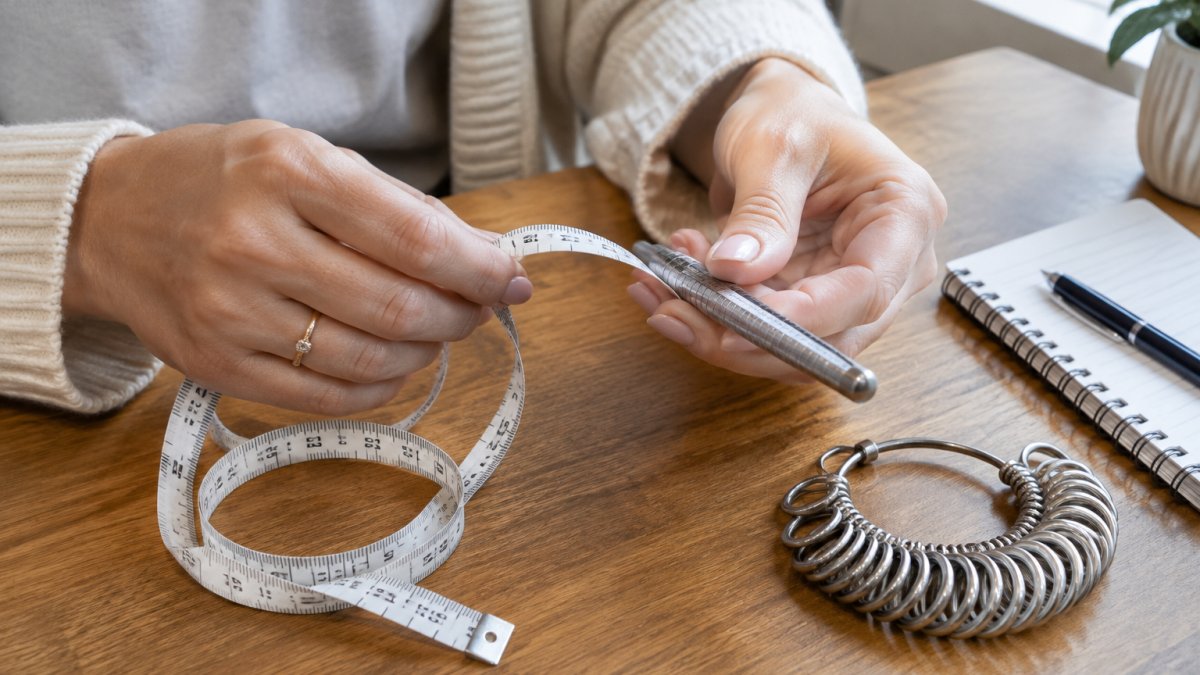
For the full method, including how to convert millimetres to a ring size, see our guide on how to measure ring size at home.
Safe Alternatives to Your Engagement Ring
A silicone ring is the practical swap for daily wear. It flexes with swollen hands, costs little, and comes off easily if something goes wrong.
Other options:
- Ring guard: a small insert that tightens a loose band without resizing.
- Necklace: thread the ring onto a chain and keep it close.
- Adjustable or open-shank designs: easier to loosen as hands change.
- Temporary resizing: a jeweller can add a sizing bead, then remove it later.
If you would rather wear a different piece for a while, you can browse our engagement rings for styles that suit everyday wear.
Warning Signs to Discuss with Your Midwife
Mild swelling is normal. Sudden swelling is not, and it needs a call, not a Google search.
Contact your midwife or maternity unit the same day if you notice:
- Sudden swelling of the hands, face or feet
- Swelling with a bad headache, blurred vision or flashing lights
- Pain under the ribs on the right side
- Feeling very unwell, dizzy or short of breath
These can be signs of preeclampsia, a condition that needs medical assessment. Guidance from the NHS on preeclampsia symptoms sets out what to look for. Do not wait for a routine appointment.
Choosing a Ring That Adapts with You
Some designs cope with body changes better than others. A slightly wider band can spread pressure, and a comfort-fit interior can slide on more easily. Metal choice also matters: platinum holds its shape well, while white gold is lighter. Our comparison of platinum vs white gold rings breaks down the trade-offs for a diamond setting.
If you are planning ahead, our guide to eco-friendly engagement rings for women covers options built to last through changes in size and taste.
Morgan Banks has been a fine jewellers since 1935.
| Situation | What to do | When |
|---|---|---|
| Ring feels snug in the evening | Remove and wear on a chain | Same day |
| Ring will not come off | Raise hand, apply cold, use soap; seek help if stuck | Immediately |
| Hands settled after birth | Book a resizing consultation | 3+ months postpartum |
| Sudden swelling with headache | Contact your midwife | Same day |
Frequently Asked Questions
Do fingers get bigger during pregnancy?
Yes, many women notice their fingers become larger during pregnancy. Fluid retention, increased blood volume and hormonal changes can cause swelling, and fingers can become noticeably larger as pregnancy progresses. However, there is no fixed amount or timetable, and individual experiences vary widely. The change is usually temporary, and your ring size after pregnancy often returns to its pre-pregnancy baseline within weeks or months, though it can take up to a year for some.
When should I take my rings off during pregnancy?
There is no set week to remove your rings. The right time is when they start to feel tight or leave marks on your skin. Swelling can happen suddenly, so check your rings daily from the second trimester onwards. If you feel any constriction, remove them before they become stuck. If a ring is already tight, try the dental floss method or visit a jeweller for safe removal. Never force a ring over a swollen knuckle.
Will my ring size go back to normal after pregnancy?
For most women, ring size does return to normal, but the timeline varies. Some notice a difference within weeks of giving birth, while others find it takes six months to a year for fluid retention to settle completely. Hormonal changes, weight fluctuations and relaxin levels all play a part. If your rings still feel loose or tight after a year, consider having them resized by a professional jeweller to ensure a comfortable fit.
Can I resize my ring during pregnancy?
It is not advisable to resize your rings during pregnancy because finger size can continue to change. Permanent resizing could leave you with a ring that is too large after birth. Instead, use temporary solutions such as a ring guard, a silicone ring or wear your ring on a chain. If you need a professional resize, wait until at least six months after giving birth when your finger size has stabilised.
Pregnancy changes hands, and rings should change with them, not fight them. If your band no longer fits the way it did, bring it to us and we will help you find the right size, the right metal and the right fit for the months ahead. Get started with Morgan Banks and wear a ring that feels comfortable from the first trimester to long after.
