
Table of Contents
- Why Bespoke Jewellery Design Creates Pieces You'll Actually Wear
- The Custom Jewellery Design Process: From First Sketch to Final Polish
- Understanding Bespoke Engagement Ring Cost and Budgeting
- How Long Does Custom Jewellery Take? Timelines and Lead Times
- Remodelling Heirloom Jewellery: Giving New Life to Sentimental Pieces
- How to Choose the Right Gemstones and Precious Metals
- The Benefits of Custom-Made Jewellery Over Off-the-Shelf Pieces
- Conclusion
- Frequently Asked Questions
Last Updated: October 4, 2026
Why Bespoke Jewellery Design Creates Pieces You'll Actually Wear
Most jewellery sits in a box because it was never quite right. Bespoke jewellery design starts with you rather than a display case, which is why commissioned pieces get worn weekly instead of saved for occasions.
There is a practical argument too. Off-the-shelf rings are sized to averages, set with stones chosen for a price bracket, and finished in bulk. A bespoke commission inverts all three: you choose the metal, stone, setting style and proportions, and a jewellery maker builds the piece around those decisions.
The result fits properly, suits your style, and carries meaning no catalogue piece can match. Below, we break down the bespoke process, honest budgeting, realistic lead times, and the technical language designers use.
The Custom Jewellery Design Process: From First Sketch to Final Polish
A jewellery commission runs through four stages: consultation, concept sketch, CAD rendering, and handcrafting in the workshop. Most clients find it more collaborative and far less intimidating than the word "bespoke" suggests.
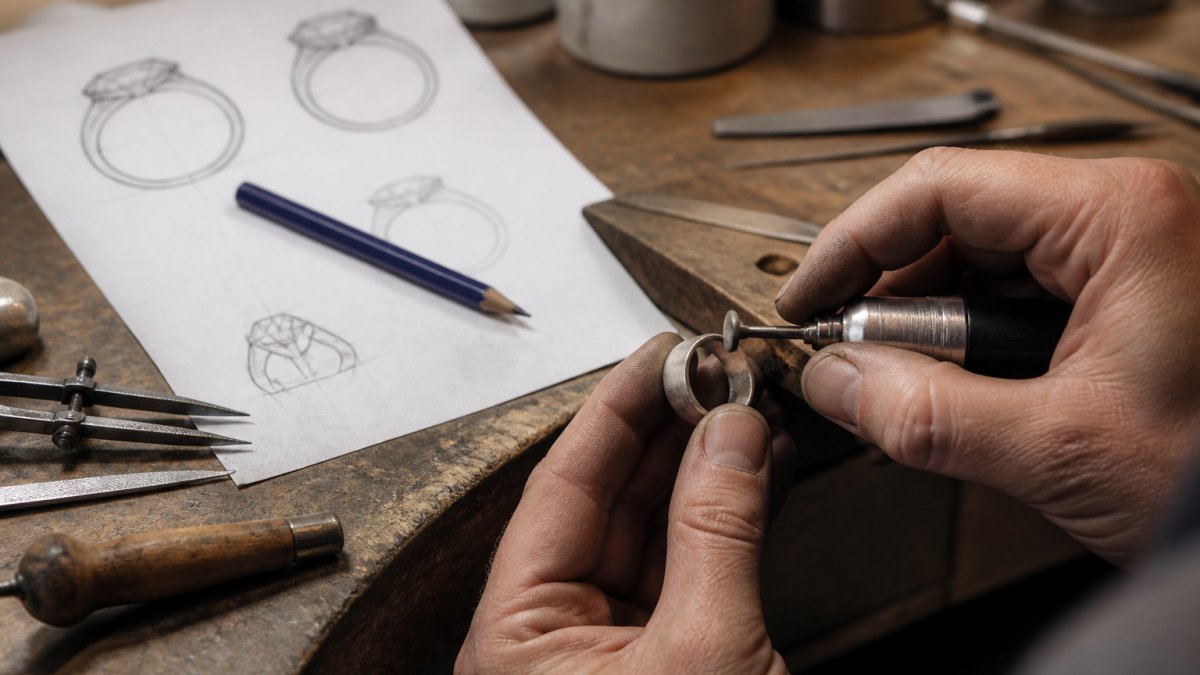
The Design Consultation: What to Expect
The design consultation is a conversation, not a sales pitch. You will discuss budget, occasion, personal style, and any existing pieces you love or want to redesign. Bring photographs, measurements, and an open mind. If you are not local, this stage works over video call with ring sizers posted to you.
Concept Sketches and CAD Rendering: Visualising Your Piece
Concept sketches are freehand drawings that capture the shape and feel of a design. CAD rendering turns that sketch into a precise three-dimensional model you can rotate and view from every angle before any metal is cut, so yes, you will see exactly what the finished piece looks like before work begins.
The Jewellery Workshop: Handcrafting Your Commission
Handcrafting begins once you approve the CAD rendering. A jewellery maker casts or hand-builds the piece, sets the stones, and polishes the finish.
Understanding Bespoke Engagement Ring Cost and Budgeting
Bespoke engagement ring cost is driven by four variables: metal choice, gemstone selection, setting complexity, and design hours. There is no single price, which is why we quote after the consultation.
What Bespoke Jewellery Actually Costs: Price Bands by Complexity
These are typical starting points for a UK commission, guides, not quotes. The final figure depends on your stone and the hours your design takes.
| Complexity level | Typical starting range | What you get |
|---|---|---|
| Simple band or pendant | £450 - £900 | Single metal, no centre stone or a small stone, minimal setting work |
| Stone-set ring | £900 - £2,500 | Centre stone plus shoulder stones, standard claw or bezel setting |
| Detailed commission | £2,500 - £6,000 | Hand-set pavé, channel work, sourced centre stone, multiple CAD revisions |
| High-complexity piece | £6,000+ | Large or rare centre stone, intricate setting, extended design time |
Where the Money Goes: A Worked Example
Take a commission with an 18ct gold band, a 0.5ct lab-grown diamond, and a simple four-claw setting. The metal might account for a few hundred pounds, the stone a similar amount, and design and handcrafting the rest. Swap in a natural diamond of the same size and clarity and the stone line can multiply several times over while metal and labour barely move. This is why we ask about your priorities before your budget.
| Cost driver | What pushes it up | How to manage it |
|---|---|---|
| Precious metals | Platinum costs more than 18ct gold | Choose 18ct gold or recycled silver |
| Centre stone | Size, clarity, origin, natural vs lab-grown | Prioritise cut over carat; consider lab-grown |
| Setting style | Hand-set pavé and channel work | Simpler settings reduce labour |
| Design hours | Complex CAD revisions | Arrive with clear references |
Budget Management: How to Spread the Cost
Most commissions are paid in stages: a deposit at consultation to secure workshop time, a second payment when you approve the CAD rendering, and the balance on collection. Ask at the first meeting, a good jewellery maker will set out the schedule in writing before any work begins.
For a sense of entry-level pricing on finished pieces, our Thomas Sabo collection starts at £85 for the Silver Solitaire Ring With White Zirconia, which gives a useful reference point for stone-set silver work.

How Long Does Custom Jewellery Take? Timelines and Lead Times
Custom jewellery generally takes four to eight weeks from approved design to finished piece, though complex commissions with sourced stones can run longer.
- Consultation and brief: one to two weeks
- Concept sketches and revisions: one to two weeks
- CAD rendering and approval: one week
- Stone sourcing, if required: two to six weeks
- Handcrafting, setting and polishing: two to four weeks
- Final quality check and collection: a few days
If you are working towards a proposal date, tell us at the first meeting. Reverse-engineering the timeline from a deadline is far easier than rushing a setting at the end.
Remodelling Heirloom Jewellery: Giving New Life to Sentimental Pieces
Remodelling heirloom jewellery means reusing the stones and metal from an inherited piece to create something new while preserving its sentimental value. It solves a genuine problem: a ring you love but never wear because it does not suit your hand or style.
Thomas Sabo Silver band ring with white zirconia and engraving →
The process starts with an assessment of what can be salvaged. From there it follows the same path as any bespoke commission: sketch, CAD rendering, then handcrafting into a new setting style.
How to Choose the Right Gemstones and Precious Metals
Gemstone selection comes down to four Cs: cut, colour, clarity and carat. Cut matters most because it determines how light moves through the stone. Colour and clarity matter next, and carat is the one most people fixate on and the one that matters least to how a stone actually looks on the hand.
Natural, Lab-Grown or Simulant: What the Difference Means for You
- Natural diamond: mined, graded on the four Cs, carries resale value and a documented origin.
- Lab-grown diamond: chemically and optically identical to a natural diamond, typically a fraction of the price, and increasingly the default choice for clients who want size without the premium.
- Zirconia and other simulants: visually similar at a distance, far cheaper, softer, and not intended to last decades in daily wear.
Precious Metals: How They Behave in Daily Wear
- Platinum: dense, naturally white, and the most durable choice for everyday rings. It develops a soft patina rather than scratching visibly, and it does not need re-plating.
- 18ct gold: warmer colour, slightly softer, easy to repair and resize. Available in yellow, white and rose. White gold is rhodium-plated.
- 925 sterling silver: affordable and versatile, ideal for statement pieces and gifts. It tarnishes and is softer than gold, so it suits occasional wear better than a daily ring.
- Recycled silver and recycled gold: identical in quality to newly mined metal with a lighter environmental footprint. Ask for the assay mark and the refiner's name if provenance matters to you.
Ethical Sourcing and Sustainability: Questions Worth Asking
Ask directly:
- Where do your stones originate, and can you show me the chain of custody?
- Are your diamonds Kimberley Process certified, and are they natural or lab-grown?
- Is your gold or silver recycled, and who refines it?
- Do you offer Fairtrade or Fairmined gold?
Reputable suppliers will answer without hesitation. The British Jewellery and Giftware Federation guidance on responsible sourcing sets out the standards members are expected to meet, and the Kimberley Process Certification Scheme is the international baseline for rough diamond trade. If a supplier cannot answer these questions, treat that as information in itself.
Technical Terms You Will Hear in a Consultation
Knowing these before you sit down makes the process faster and gives you more control over the outcome.
- CAD rendering: a precise three-dimensional computer model of your design that you can rotate and view from every angle before any metal is cut.
- Wax carving: a hand-carved wax model of the piece, used either as a design check or as the master for casting. Some workshops still prefer it to CAD for organic shapes.
- Lost-wax casting: the process of turning a wax or printed model into metal by surrounding it in plaster, burning out the wax, and pouring molten metal into the cavity.
- Claw setting: the classic prong setting that holds a stone with metal claws, maximising light entry.
- Bezel setting: a metal rim that encircles the stone, more protective and more contemporary in look.
- Pavé: many small stones set close together so the surface appears paved with light.
- Channel setting: stones set in a groove between two metal walls, flush with the surface.
- Hallmarking: the UK assay office mark confirming the metal's purity. Every piece over the legal weight threshold must carry one.
If you want a diamond-look piece without diamond pricing, our Thomas Sabo Silver Band Ring with White Zirconia at £100 shows how well a hand-set zirconia pavé performs in recycled silver.

The Benefits of Custom-Made Jewellery Over Off-the-Shelf Pieces
Custom-made jewellery gives you a one-of-a-kind piece built to your measurements, taste and budget rather than a mass-produced item sized to an average. That difference shows up in three places: fit, longevity and meaning.
Fit is the most immediate: a ring made to your exact size and finger shape sits correctly and does not spin. Longevity follows from materials and setting work.
Where off-the-shelf wins is speed and price transparency. A branded piece from a collection such as Thomas Sabo, ChloBo or BOSS is available immediately at a fixed price. Bespoke asks for patience and a consultation. If you need a gift this week, buy from a collection.
Conclusion
The hardest part of a jewellery commission is not the design or the making, it is committing to a decision when you cannot yet hold the finished piece. That uncertainty is exactly what the sketch and CAD stages exist to remove.
At Morgan Banks, we have handled bespoke commissions, engagement ring design and heirloom redesign since 1935, alongside our collection of fine jewellery and previously enjoyed luxury watches. Our team guides you from first sketch to final polish, with expert advice on gemstone selection, precious metals and setting styles at every stage. Explore our Thomas Sabo Silver Angular Ring at £149 to see the standard of finish we work to, or get started with Morgan Banks and commission a piece made only for you.

Frequently Asked Questions
How much does it cost to have a bespoke engagement ring designed and made?
The cost of bespoke engagement ring design varies based on the complexity of the design, the precious metals used, and the gemstones selected. We offer a transparent pricing structure during your design consultation, so you understand the costs before any work begins.
How long does it take to design and create a bespoke piece of jewellery?
The timeline for a bespoke commission typically ranges from 4 to 8 weeks. This includes the initial design consultation, creating concept sketches, producing a CAD rendering for your approval, sourcing gemstones and metals, and the handcrafting process in our jewellery workshop. Complex designs or those requiring specific gemstone sourcing may take longer. We provide a clear timeline during your consultation.
Can I use my own heirloom gemstones for a bespoke design?
Absolutely. Remodelling heirloom jewellery is a meaningful way to preserve sentimental value while creating a piece you will wear. Our design team can assess your gemstones and precious metals, then work with you to design a new setting or piece that incorporates them. This process, known as restyling, allows you to honour family history while creating a one-of-a-kind piece that suits your personal style.
How do I find a reputable bespoke jewellery designer?
Look for a jeweller with a long-standing reputation, such as Morgan Banks, established since 1935. A reputable designer will offer a transparent design consultation, show you concept sketches and CAD renderings before you commit, and provide clear information on pricing, timelines, and sourcing. Ask about their experience with bespoke commissions and view examples of their artisan craftsmanship to ensure their style aligns with your vision.