
Last Updated: November 1, 2026
Quick Summary
The steps for how to sell a luxury watch in the UK are to gather the box and papers, check the condition, value it using recent sold prices, compare routes such as dealers, auctions and private sales, prepare the watch and then agree the offer and payment terms carefully. Get at least two quotes before committing.
- Gather the original box, warranty card and receipt, since a complete set attracts stronger offers.
- Value your watch using recent sold prices rather than asking prices, which often overstate the real value.
- Get at least two quotes, as a specialist dealer and an auction house can value the same watch very differently.
- Check whether an offer is final or subject to inspection, and what fees it is net of.
- Use bank transfer to an account in your own name, and never send the watch before payment has cleared.
Table of Contents
- Step 1: Check Your Watch and Gather Its Papers
- Step 2: Work Out What Your Luxury Watch Is Worth
- Step 3: Compare the Best Places to Sell a Luxury Watch
- Step 4: Prepare the Watch for Sale
- Step 5: Ship or Hand Over the Watch Safely
- Step 6: Negotiate the Offer, Fees and Payment Terms
- Booking a Valuation for Your Watch at Morgan Banks
- Frequently Asked Questions
Selling a luxury watch in the UK is simpler when you know the steps. This guide on how to sell a luxury watch in the UK walks through each step, from preparing your watch to agreeing payment, and done well the process protects the price you get and keeps the sale safe.
Most of the value sits in the paperwork, the condition and the choice of route. Each of those is covered below, in the order you will need them.
Step 1: Check Your Watch and Gather Its Papers
Before you contact anyone, collect everything that came with the watch. The box, the papers and the warranty card all help the buyer trust the item and can affect the offer.
Why box and papers affect the price
Buyers pay more for a complete set. A watch with its original box and papers is easier to verify, so it usually attracts stronger offers.
- Original box and inner packaging
- Warranty card and guarantee papers
- Receipt or proof of purchase
- Any spare links, tools or service records
What to check before you list it
Look over the watch carefully and note anything that could affect its value. Be honest about scratches, dents and any recent servicing.
- Check the serial and reference numbers match the papers
- Confirm the watch runs and keeps time
- Note any replaced parts or polished cases
- Photograph the dial, case back and clasp
Step 2: Work Out What Your Luxury Watch Is Worth
Valuation is where most sellers lose money. A clear view of the market helps you judge any offer you receive.
Using reference numbers and recent sold prices
Start with the reference number, usually found on the case back or the papers. When you work out how to sell a luxury watch in the UK, search that reference and look at prices that have actually sold, not just asking prices. Sold prices show what buyers really pay.
Why asking prices overstate the real value
Many listings sit well above what the watch will fetch. A higher asking price rarely means a higher sale price. Treat asking prices as a ceiling, not a benchmark.
Step 3: Compare the Best Places to Sell a Luxury Watch
Each route trades speed against price, and the right choice depends on how quickly you need the money, how much effort you can put in and how much risk you can carry. The table below sets out the practical differences so you can compare like for like before you commit.
| Route | Likely price | Fees and costs | Speed | Effort and risk |
|---|---|---|---|---|
| Specialist dealer or buyer | Below private market, often 10-25% under a strong private sale | None to you; the dealer's margin is built into the offer | Same day to a few days | Low; the dealer carries authentication and resale risk |
| Local jeweller or pawnbroker | Lowest of the routes, sometimes well under trade value | None to you, but the margin is wider | Same day | Low; suitable only if speed matters more than price |
| Auction house | Variable; strong for rare or collectible references, weaker for common models | Seller's commission, typically a percentage of the hammer price, plus lotting and photography fees; check the terms before consigning | Weeks to months | Moderate; you pay fees whether or not the lot sells, and the reserve may not be met |
| Private sale or marketplace | Usually the highest gross price | Listing fees, payment processing fees, shipping and insurance | Days to weeks | High; you handle viewings, buyer questions, payment security and after-sale disputes |
| Online quote service | A guide price only until the watch is inspected | None to quote, but the final offer can be adjusted after inspection | Days | Low to moderate; read the quote terms and any deduction policy |
A few practical points sit behind that table.
- Get at least two quotes. A specialist dealer and an auction house will value the same watch differently, and the gap is often large enough to justify the extra calls.
- Ask what the offer includes. A dealer's figure is usually net of their margin, while an auction result is gross of commission. Compare what actually reaches your bank account.
- Match the route to the watch. Common references in strong condition usually sell fastest through a specialist dealer. Rare, vintage or highly collectible pieces can do better at auction, where competitive bidding can push the price above a single dealer's offer.
- Check the quote validity. Most offers are time-limited and conditional on inspection, so do not treat a headline figure as a guaranteed price.
- Consider a part-exchange. Some dealers will take your watch against a new purchase, which can be simpler than a straight sale if you are buying again.
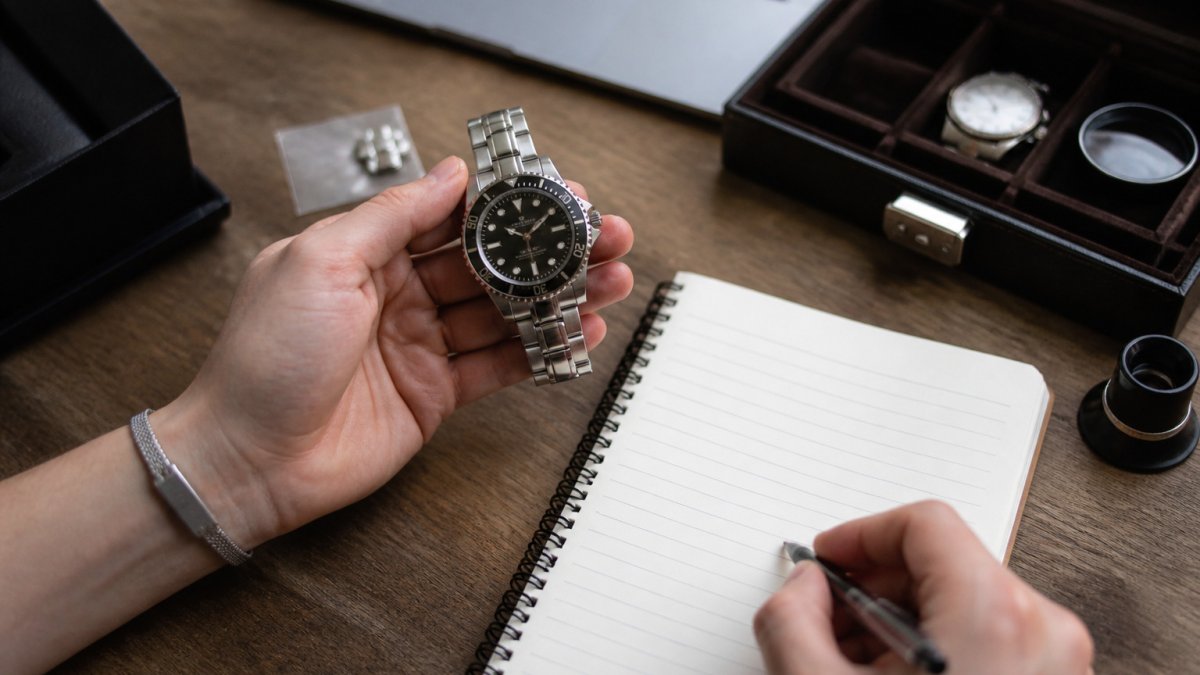
Step 4: Prepare the Watch for Sale
Presentation changes how a buyer sees the watch. Clean, complete and running well usually means a better offer.
Clean the case and bracelet gently, avoiding harsh chemicals. Check the crown, clasp and strap for wear. Fit a fresh battery if it is a quartz model, and set the correct time and date.
Hublot MGM Geneve Automatic 1581.2 on Hublot bracelet 36mm →
Be careful with servicing. A full service does not always add its cost back to the price, so ask a specialist before spending money. Simple cleaning and a battery change are often enough.
Step 5: Ship or Hand Over the Watch Safely
Protect the watch from the moment it leaves your hands. Use tracked, insured delivery and keep proof of postage. Packing it well matters as much as the courier you choose.
Wrap the watch in a soft pouch, then place it in a padded box so it cannot move. Declare the full value for insurance, and never send it without tracking.
If you hand it over in person, agree the meeting place and bring a second person if you can. Ask for payment before the watch leaves your hands.
Step 6: Negotiate the Offer, Fees and Payment Terms
An offer is only as good as its terms. The headline figure can shrink after inspection, and the payment method matters as much as the price. Read every offer closely before you accept it.
What to check in the offer
- Is the figure final or subject to inspection? Many buyers reserve the right to revise the offer once the watch is in hand. Ask what would trigger a deduction and by how much.
- What is included? Confirm whether the offer is net of commission, shipping, insurance or authentication fees, and whether those costs fall on you or the buyer.
- How long is the quote valid? Offers are usually time-limited, so diarise the expiry date.
- What happens if the buyer disagrees with your description? Establish the process for resolving a dispute before the watch leaves your hands.
Identity and proof of ownership
Reputable buyers will ask you to confirm your identity and your right to sell the watch. This is normal and protects both sides. Expect to provide photo identification and, where possible, proof of purchase, service records or other evidence linking you to the watch. If you inherited the watch or received it as a gift, explain the circumstances and provide whatever documentation you have. A buyer who does not ask any questions is a buyer to be wary of.
Payment security
- Bank transfer to an account in your own name is usually the safest choice for a private sale. Confirm the funds have cleared before the watch leaves your hands.
- Avoid cheques unless they have fully cleared, and be cautious with payment links or requests to move money through a third party.
- For in-person sales, meet in a safe place, bring a second person if you can, and complete the payment before handing over the watch.
- Keep a written record of the agreed price, the payment method and the date of handover.
Tax and record-keeping
Selling a personal watch is not usually a taxable event, but the position can be different if you sell frequently, buy to resell, or the watch was held as an investment. Keep records of the original purchase, any service costs and the sale price. If your circumstances are unusual, take advice from a qualified accountant rather than relying on general guidance.
Guidance on buying and selling securely
Booking a Valuation for Your Watch at Morgan Banks
If you want a clear opinion before you choose a route, Morgan Banks can review your watch and give you an honest view of its value.
Frequently Asked Questions
Do I need the box and papers to sell a luxury watch?
No, but they usually affect the price. A watch with its original box and papers generally attracts more buyers and a stronger offer, because the buyer can confirm the model and reference and see that the set is complete. A watch without them can still sell well if it is in good condition and the reference number can be verified. Check the case back and movement for the reference, and tell the buyer clearly what is missing before you agree a price.
How can I sell a luxury watch safely?
Use a seller with a clear valuation process, written offer terms and a traceable payment method. Avoid accepting payment you cannot verify, and never send a watch before the agreed payment terms are confirmed. Where you ship the watch, use insured, tracked delivery and keep the receipt. Ask for an inspection report or authentication confirmation in writing, and read how the seller handles disputes before you hand over the watch.
What is the best way to sell a luxury watch?
The best route depends on how quickly you need the money and how much effort you want to put in. A dealer or a trusted jeweller offers speed and certainty, though the offer will usually be below market value. A private sale or an online marketplace can achieve a higher price but takes longer and involves more admin, including handling buyer enquiries and payment risk. Comparing two or three written valuations is the most reliable way to decide.
How long does it take to sell a luxury watch?
A dealer valuation and payment can often be completed within days once the watch has been received and inspected. Private sales and marketplace listings vary widely, from a few days for a sought-after model in excellent condition to several weeks or longer for a niche reference. Allow extra time for shipping, inspection and payment clearance. Pricing the watch realistically from the start is the factor that most affects how quickly it sells.
