
Table of Contents
- How to Clean Thomas Sabo Jewellery: Step-by-Step
- Thomas Sabo Jewellery Care Instructions
- How to Use a Thomas Sabo Jewellery Cleaning Cloth
- How to Clean Stone Jewellery: Diamonds, Gemstones and Pearls
- What Not to Use on Thomas Sabo Jewellery
- Thomas Sabo Jewellery Refurbishment and Professional Care
- How to Store Thomas Sabo Jewellery to Prevent Tarnishing
- Conclusion
- Frequently Asked Questions
Last Updated: October 17, 2026
How to Clean Thomas Sabo Jewellery: Step-by-Step
Learning how to clean Thomas Sabo jewelry properly starts with one rule: gentle beats aggressive every time. Thomas Sabo pieces mix sterling silver, enamel, gemstones and pearls, so the method you choose must suit the material. At Morgan Banks, we've sold and cared for branded jewellery since 1935.
Here is the safe routine we recommend for most silver Thomas Sabo pieces:
- Fill a bowl with warm water and a drop of mild dish soap.
- Soak the piece for two to three minutes, no longer.
- Brush gently with a soft toothbrush, paying attention to crevices.
- Rinse under clean warm water.
- Dry thoroughly with a soft, dry cloth.
- Leave it out to air for ten minutes before storing.
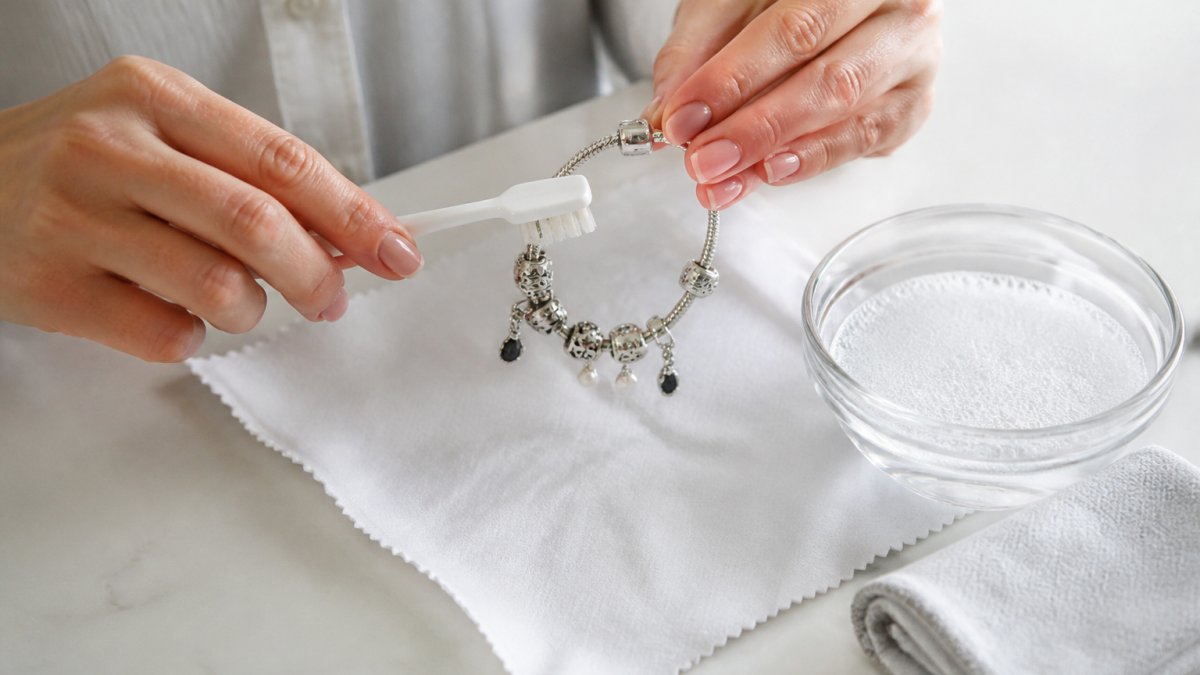
The soak loosens soap residue, makeup residue and skin oils. The brush lifts dirt from links and settings. Skip the soak and you'll scrub harder than you should, which is where scratches begin.
Thomas Sabo Jewellery Care Instructions
Thomas Sabo jewellery care instructions come down to three habits: clean gently, dry fully, and store dry. Most tarnish on silver charms and bracelets traces back to moisture trapped in a box, not to the piece itself.
Follow these care rules:
- Put jewellery on last, after perfume and makeup.
- Take it off first, before swimming, showering or cleaning.
- Wipe each piece with a soft cloth after wearing.
- Keep chains fastened to stop them tangling.
- Store pieces separately in a dry pouch or lined box.
Silver reacts with sulphur in the air, which is why discoloration appears even on unworn pieces. A guide to sterling silver care from the responsible jewellery trade body makes the same point: prevention costs nothing, restoration costs money.
How to Use a Thomas Sabo Jewellery Cleaning Cloth
A Thomas Sabo jewellery cleaning cloth is the safest everyday tool you own. Most are impregnated microfibre cloths, treated with a gentle polishing agent. Use them dry, and use them often.
Here's how to do it:
- Take the dry cloth and wrap it around the piece.
- Rub with light pressure for twenty to thirty seconds.
- Turn to a clean section of cloth for the final polish.
- Never wash the cloth, as water strips the treatment.
- Retire it once it looks grey or feels stiff.
The impregnated cloth restores shine and lifts light tarnish without any liquid. For heavier tarnish, follow with a silver polishing cloth, then buff with a plain soft cloth. Keep the treated cloth for silver only. Pearls and gemstones need a plain, untreated microfibre cloth.
How to Clean Stone Jewellery: Diamonds, Gemstones and Pearls
How to clean stone jewellery depends entirely on the stone and the setting, not on the brand name. Thomas Sabo pieces combine hard stones, soft organic gems, enamel and glued settings in the same collection, so a single method will eventually damage something. The table below is the quick reference; the notes underneath explain the mechanism so you can judge a piece you are unsure about.
| Stone or setting | Method | Avoid |
|---|---|---|
| Diamonds | Warm water, mild soap, soft brush | Chlorine, harsh cleaners |
| Hard gemstones (sapphire, ruby, amethyst, cubic zirconia) | Warm water, soft brush, quick rinse | Long soaks, heat, sudden temperature change |
| Pearls | Damp soft cloth only, dry immediately | Water soaks, ultrasonic baths, perfume |
| Opals, turquoise, malachite and other porous stones | Dry soft cloth only | Any water, oil or cleaner |
| Enamel | Soft dry cloth, brief damp wipe if needed | Solvents, sharp brushes, ultrasonic baths |
| Glued settings | Dry cloth, brief damp wipe | Soaking, ultrasonic cleaners, heat |
Why the differences matter. Diamonds are hard but they hold grease and skin oils readily, which dulls the surface and the pavilion facets; a soft brush behind the stone lifts that film without touching the metal. Hard gemstones tolerate water but many are heat-sensitive or have inclusions that can crack with sudden temperature change, so use lukewarm water and rinse quickly rather than soaking. Pearls are soft, porous and held by silk or nylon thread that weakens in water, so a damp cloth followed by immediate drying is the only safe routine. Porous stones such as opal and turquoise absorb water and oils, which can change their colour permanently, so keep them dry. Enamel is glass fused to metal; it is brittle and can chip at the edges, and solvents can dull the surface, so a dry cloth is the default.
Step-by-step for a diamond or hard-stone piece:
- Close the sink plug or work over a bowl lined with a soft cloth so a dropped stone cannot disappear.
- Fill a bowl with lukewarm water and one drop of mild washing-up liquid.
- Soak for two to three minutes only.
- Brush gently with a soft toothbrush, working behind the stone and around the setting where residue collects.
- Rinse under clean lukewarm water, holding the piece in a sieve if it is small.
- Dry with a soft, dry cloth and leave to air for ten minutes before storing.
Step-by-step for pearls:
- Wipe with a damp, soft cloth, no soap unless the manufacturer states otherwise.
- Dry immediately with a plain dry cloth.
- Never submerge a pearl bracelet or strand; the thread absorbs water and stretches.
- Store flat, away from direct sunlight and heat.
Step-by-step for enamel and oxidised details:
- Use a soft, dry cloth only; a brief damp wipe is acceptable on enamel if the piece is not glued.
- Do not brush oxidised areas, the dark patina is a deliberate finish and abrasion removes it permanently.
- Keep solvents, acetone and alcohol away from enamel.
If a stone moves in its setting, stop cleaning and have it checked before wearing it again, a loose stone can be lost during a routine wash.
What Not to Use on Thomas Sabo Jewellery
Harsh cleaning agents cause more damage than dirt ever will, and the damage is usually permanent. The list below explains not just what to avoid but why, so you can recognise the risk in an unfamiliar product.
- Chlorine and bleach. Chlorine attacks the alloy in sterling silver and pits the surface; it also weakens solder joints and spring mechanisms in clasps. Never wear jewellery in a pool or hot tub, and never clean with bleach-based bathroom sprays.
- Abrasive household cleaners. Cream cleaners and scouring powders contain particles harder than silver or gold plating. They scratch polished surfaces and wear away thin plating in a single session.
- Toothpaste. It is mildly abrasive and leaves a dull haze on polished metal over time. It is not a substitute for a jewellery polishing cloth.
- Boiling water. Sudden heat can crack stones, loosen glue and warp thin enamel. Lukewarm water is the ceiling.
- Paper towels and kitchen roll. The fibres are stiff enough to scratch soft metals and can catch on claw settings.
- Ultrasonic cleaners on pearls, opals, enamel or glued stones. Vibration loosens settings and drives water into porous materials.
- Solvents, acetone and alcohol on enamel. They dull the glassy surface and can soften the bond at the edges.
- Silver dip on oxidised or plated pieces. Dips dissolve tarnish but also strip intentional dark patina and can attack thin rhodium or gold plating.
Plating and patina deserve their own warning. Many Thomas Sabo pieces use rhodium plating for a bright white finish or gold plating for warmth. Both are microns thin, and every abrasive polish removes a little of the layer. Polish plated pieces sparingly with a soft, untreated cloth and stop as soon as the shine returns. Oxidised details, the darkened recesses on some charms and chains, are a deliberate design feature, not dirt. Abrasive polishes and silver dips remove that contrast permanently, and it cannot be restored at home.
A simple test before trying any product: read the label for the words abrasive, chlorine, ammonia or solvent. If any appear, keep it away from jewellery. If you would not use it on your skin, do not use it on your jewellery.
Thomas Sabo Jewellery Refurbishment and Professional Care
Thomas Sabo jewellery refurbishment is the right call when home cleaning stops working. Deep tarnish, worn plating, loose stones and scratched surfaces need a jeweller's eye, not a stronger cleaner.
Book professional care when you notice:
- Tarnish that returns within days of cleaning.
- Clasps that feel loose or catch.
- Stones that move in their settings.
- Plating that looks patchy or dull.
- Enamel that has chipped or cracked.
A professional clean includes an expert inspection of settings, clasps and links. Restoration can re-polish silver, re-plate worn finishes and tighten stones. For pieces with sentimental value, in-house restoration preserves the original character far better than replacement.
At Morgan Banks, our team handles high-value repairs and refurbishment. If a piece needs more than a cloth can give, bring it in and we'll assess it honestly. You can read guidance on jewellery repair and restoration standards from the trade association before you book anything.
How to Store Thomas Sabo Jewellery to Prevent Tarnishing
Storage decides how often you'll need to clean. Silver tarnishes faster in humid air and in contact with sulphur, so a dry, sealed home for each piece makes a real difference.
Our storage checklist:
- Store each piece in its own soft pouch or lined compartment.
- Keep chains fastened to prevent tangling.
- Add a silver tarnish strip to the box.
- Keep jewellery away from bathrooms and kitchens.
- Store pearls flat and away from direct sunlight.
- Check stored pieces every few months.
Avoid storing silver in newspaper or rubber bands. Both release sulphur and speed up discoloration. A simple jewellery box with a lid, kept in a dry room, does the job well.
Conclusion
Keeping Thomas Sabo pieces looking their best takes minutes, not hours. Gentle cleaning, a treated cloth and dry storage handle most of the work. When a piece needs more, professional care protects your investment.
If you'd rather leave it to experts, Morgan Banks offers expert inspection and in-house restoration, backed by our heritage as fine jewellers since 1935. We also stock Thomas Sabo and can advise on care for anything you buy from us. Get in touch with our team and we'll help you keep every piece looking its best.
Frequently Asked Questions
Can I use a jewellery cleaning cloth on Thomas Sabo jewellery?
Yes, a jewellery-cleaning cloth is one of the safest tools for Thomas Sabo pieces. Use an impregnated microfibre cloth for silver and a dry soft cloth for stones. Gently rub the metal to remove tarnish and restore shine, but avoid the cloth on pearls or glued settings.
How do I clean a tarnished Thomas Sabo bracelet?
For a tarnished silver bracelet, mix a few drops of mild dish soap in warm water. Soak the bracelet for five minutes, then brush gently with a soft toothbrush, rinse well and dry thoroughly with a soft cloth. For light tarnish, a silver polishing cloth often works without water. Avoid abrasive cleaners that can scratch the surface.
Can Thomas Sabo jewellery be refurbished?
Many Thomas Sabo pieces can be refurbished by a professional jeweller. Light scratches can be polished out, tarnish removed and settings checked. Deep scratches or worn plating may need specialist restoration. A jeweller can assess the item and advise whether cleaning, polishing or part replacement is the best route. Always ask for an inspection before work begins.
How should I store Thomas Sabo jewellery to prevent tarnishing?
Store each piece separately in a soft pouch or lined jewellery box to prevent scratches. Keep silver away from moisture and sulphur-rich environments, such as rubber bands or certain papers. A tarnish-inhibiting strip in the box helps. Remove jewellery before showering, swimming or applying perfume to reduce residue and tarnish build-up.