
Table of Contents
- The 2026 Shift: Why Heirloom Jewellery Is Being Remade, Not Stored
- Remodelling Inherited Jewellery: What It Actually Means
- Jewellery Redesign: A Step-by-Step Process from Consultation to Collection
- Using Old Gemstones in New Jewellery: What Works and What Doesn't
- Redesigning an Old Engagement Ring: Modernising Without Losing the Meaning
- Costs, Timelines and What Pushes the Quote Up
- Risks, Limitations and When to Leave a Piece Alone
- Frequently Asked Questions
Last Updated: October 6, 2026
The 2026 Shift: Why Heirloom Jewellery Is Being Remade, Not Stored
Heirloom jewellery remodelling is the practice of taking inherited or sentimental pieces and rebuilding them into new, wearable designs while keeping the original stones and metal. It has moved from a niche request to one of the most common commissions.
The reason is simple. A growing number of people own beautiful pieces they never wear. A grandmother's brooch sits in a drawer. A mother's ring is the wrong size, the wrong style, or both. Storing these pieces feels like a waste. Selling them feels like a betrayal. Remodelling offers a third path.
That tension between sentiment and practicality is the whole story of 2026. People want jewellery they can wear daily without losing the family history attached to it. This guide explains why the trend has taken hold, what remodelling actually involves, what it costs, and when you should leave a piece exactly as it is.
Remodelling Inherited Jewellery: What It Actually Means
Remodelling inherited jewellery means reworking an existing piece into a new design. The original gemstones and precious metals are kept, but the setting, shape, or format changes.
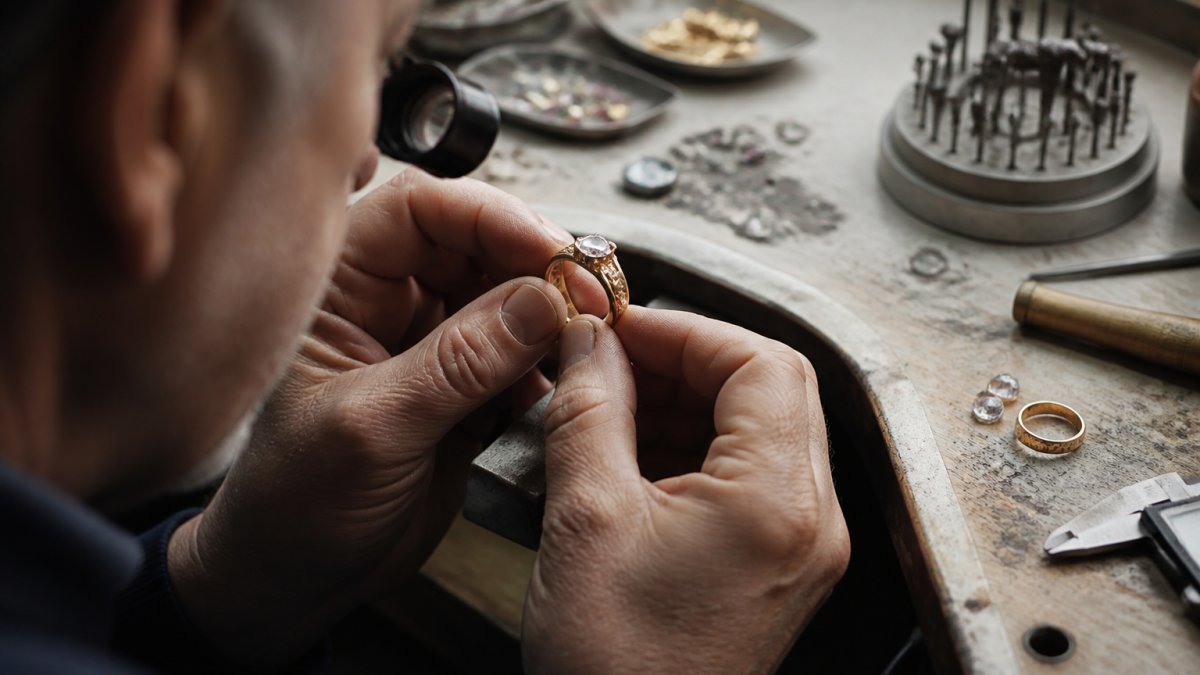
It is not the same as a repair. A repair restores a piece to how it looked before. A remodelling project changes what the piece is. A brooch becomes a pendant. Three old rings become one stackable band. A heavy Victorian setting becomes a slim contemporary claw.
Resetting, Restyling and Repurposing
The three terms get used loosely, so here is how we separate them:
- Resetting: The stone stays, the mount changes. Most common for diamonds in dated or worn settings.
- Restyling: The overall look is modernised. Metal colour, finish, and proportions all shift.
- Repurposing: The piece becomes something else entirely. Earrings into a pendant, a tie pin into a ring.
Most projects combine at least two of these.
Jewellery Redesign: A Step-by-Step Process from Consultation to Collection
Jewellery redesign follows a set sequence: consultation, design, approval, making, and collection. Most projects take several weeks from first meeting to finished piece.
Here is how the process runs, step by step:
- Consultation. Bring the piece in. We assess the stones, the metal, and the condition. We also ask what you want to wear and when.
- Design brief. You describe the look you want. We sketch options and talk through what will and will not work with your stones.
- Approval. You see the design before any work starts. Nothing is cut or melted until you sign off.
- Making. The piece is built by hand. This is the longest stage.
- Collection. You inspect the finished piece and take the remaining original materials home with you.
What to Ask Before You Commit
Ask these questions before you agree to anything:
- Will I see a design or model before work begins?
- What happens to the metal and stones you do not use?
- Is the original piece insured while it is with you?
- What is the timescale, and what could delay it?
- What is the policy if I do not like the finished piece?
Using Old Gemstones in New Jewellery: What Works and What Doesn't
Using old gemstones in new jewellery works best with diamonds, sapphires, and rubies. These stones are hard enough to survive removal from an old setting and re-clawing into a new one.
Softer stones are a different matter. Opals, pearls, emeralds, and turquoise can chip or crack during removal, and they do not always tolerate heat from a torch. If a stone is fragile, we usually design around it rather than reset it.
| Stone | Reset Risk | Best Approach |
|---|---|---|
| Diamond | Low | Reset freely into new settings |
| Sapphire, ruby | Low to medium | Reset with care; check for old chips |
| Emerald | Medium to high | Avoid heat; design around the stone |
| Opal, pearl | High | Keep original setting where possible |
Two practical points matter. First, old cuts are not flaws. An old mine or rose cut diamond has a warmth that modern brilliant cuts lack. Second, worn claws are a common failure point on inherited pieces. If a claw has thinned, it needs rebuilding before the stone goes anywhere near a new mount.
Redesigning an Old Engagement Ring: Modernising Without Losing the Meaning
Redesigning an old engagement ring is a common remodelling request. The stone carries the meaning. The setting is usually what dates it.
The usual approach is to keep the centre stone and rebuild everything around it. A heavy yellow gold mount becomes a slim white gold or platinum claw. A cluster setting becomes a solitaire. A wide band becomes a fine one that stacks with a wedding ring.
What most people get wrong is assuming a full rebuild is the only option. Sometimes a smaller change can be effective. Polishing the metal, replacing worn claws, and thinning the shank can transform how a ring looks without touching the stone at all.
Costs, Timelines and What Pushes the Quote Up
Remodelling is priced per job. A jeweller will break the quote into its parts so you can see where the money goes and where you can make choices.
A remodelling quote is built from four components:
- Labour. The hours to unset stones, assess them, build the new mount, set the stones, and finish the piece. This is usually the largest line.
- New metal. Any gold, platinum, or palladium added beyond what is reclaimed from your piece. Priced by weight at the day's metal rate plus a making charge.
- Stone setting. Charged per stone and by setting type. A single claw setting is straightforward; pavé, channel, and invisible settings are slower and priced accordingly.
- Design and administration. Sketches, CAD renders, condition reports, and insurance paperwork. Some workshops absorb this into the labour line; others itemise it.
What Actually Moves the Number
Four variables drive most of the variation between quotes:
- How much new metal is needed. Reusing your existing gold or platinum keeps the metal line low. Adding a full new band in platinum can add a significant amount on its own.
- Setting complexity. A solitaire claw is a straightforward setting to build. A halo, a three-stone with tapered shoulders, or a full pavé band multiplies the setting hours.
- Stone condition. Stones that need re-polishing, re-cutting, or claw rebuilding before they can be reset add labour and risk.
- Hand finishing. Hand engraving, milgrain, and hand-applied textures are slow, skilled work and priced as such.
Timelines
Timelines follow the same logic. A simple reset of a single stone into a stock mount can be measured in days once the design is approved. A full rebuild with new metal, hand-cut settings, and hand finishing is measured in weeks. The variables that extend a timeline are the same ones that extend a quote: complex settings, fragile stones needing careful removal, and any hand work.
Two things reliably delay projects, and neither is the jeweller's fault:
- Late design changes. Once metal is cut, a change of mind means starting the mount again.
- Undisclosed stone issues. A chip or fracture found during unsetting has to be dealt with before the new piece can be built.
The practical approach is to ask for a written quote that separates labour, metal, and setting, and to ask what would change each line. That way you can decide where to spend and where to save before anything is cut.
Risks, Limitations and When to Leave a Piece Alone
Some pieces should not be remodelled. Understanding why helps you judge whether your piece is one of them.
The Risks, and Why They Happen
- Stone damage on removal. Old settings grip stones with claws that have often thinned or work-hardened over decades. Unsetting a stone means prising those claws back, and a stone with an existing chip or feather can propagate a fracture under that pressure. This is why a written condition report before any work starts is not optional.
- Heat damage. Soldering and annealing bring a torch close to the stones. Diamonds, sapphires, and rubies tolerate this well. Emeralds, opals, pearls, turquoise, and many treated stones do not, and can crack, craze, or discolour. The workaround is to build the mount around the stone and set it last, or to use cold-join techniques.
- Loss of provenance. A maker's mark, a hallmark, or an original engraving can carry value and meaning that a new mount destroys. Once a piece is melted, that history is gone.
- Sentimental mismatch. If a piece means something to you because of exactly how it looks, changing it can quietly destroy the thing you were trying to preserve.
When Preservation Beats Remodelling
Leave a piece alone, or have it conserved rather than remodelled, if:
- It has real antique or collectable value in its current form, and an auction house or specialist valuer has confirmed that.
- The maker's mark or hallmark is a material part of its worth.
- The stones are too fragile to remove safely, and the design cannot be built around them.
- The sentimental value sits in the object itself, not just the materials.
Conservation is the middle path. A conservator stabilises a piece, cleans it, and preserves it as-is, rather than rebuilding it. That is the right call for pieces with museum or auction interest, and for pieces where the original craftsmanship is the point.
The Limits of the Craft
Beyond risk, there are hard limits. Some designs cannot be built from the stones you have, because the proportions do not work or the stone shapes will not sit together. Some metals do not mix well in the same piece. Some settings will not hold a stone of a different shape without a full rebuild. A good jeweller will say so rather than force it.
The right call is usually obvious once you have talked it through with an expert. If a jeweller tells you a piece is better left as it is, believe them.
Frequently Asked Questions
Why is heirloom jewellery remodelling popular in 2026?
Three forces are converging. First, sustainability: reusing existing gold and gemstones avoids the environmental cost of new mining, and clients increasingly ask about provenance. Second, wearability: inherited pieces often sit in boxes because the design feels dated, and remodelling turns them into jewellery people actually wear. Third, personalisation: a redesigned piece carries both family history and the wearer's own taste, which off-the-shelf jewellery cannot match.
Can old jewellery be redesigned with its original gemstones?
Yes, in most cases. Diamonds and coloured gemstones can be removed, cleaned, re-polished and reset into a new mount. The main variables are the condition of the stone and whether its shape suits the new design. A jeweller will inspect for chips, abrasion or previous repairs before quoting. Some stones, particularly softer ones like opals or emeralds, need a protective setting to survive daily wear.
How much does jewellery remodelling cost?
Pricing depends on the metal weight, the complexity of the design, the setting work, and whether new stones are added. A simple reset may be less complex than a full redesign with a new shank and hand-cut claws. Because every piece is different, most jewellers quote after seeing the item and discussing the design. Ask for a written estimate that breaks down metal, labour and any new materials before you approve the work.
How long does it take to remodel a piece of jewellery?
A straightforward reset can take several weeks. A bespoke redesign with a new mount, hand-finished settings and engraving typically runs several weeks, depending on the workshop's schedule and whether a wax or CAD model needs approving first. If you are working towards a specific date, such as an anniversary or wedding, mention it at the consultation so the jeweller can plan the bench time.