
Table of Contents
- What Makes an Engagement Ring Setting Durable?
- Bezel vs Prong Setting Durability: The Core Trade-Off
- 1. Bezel Setting: Maximum Stone Protection
- 2. Flush Setting: The Sleek, Snag-Free Option
- 3. Channel Setting: Securing Side Stones
- 4. Claw Setting: A Classic with a Strong Grip
- 5. Gypsy Setting: The Ultimate Low-Profile Choice
- 6. Tension Setting: Bold Design with Structural Needs
- How to Choose the Most Durable Engagement Ring Metal
- Maintenance and Repair: Protecting Your Setting for Life
- Frequently Asked Questions
Last Updated: September 6, 2026
Choosing an engagement ring is an emotional decision, but the 7 best engagement ring settings for durability come down to cold, hard engineering. A diamond may be the hardest natural material, but the metal holding it determines whether it stays secure through decades of daily wear (mineralseducationcoalition.org). At Morgan Banks, we have crafted and repaired fine jewellery since 1935. This guide breaks down the most durable engagement ring settings, what makes them strong, and where each one falls short.
An engagement ring setting is the metal framework that holds your gemstone in place. The most durable settings protect the stone from impact, resist snagging on clothing, and maintain their structural integrity over years of wear. Before you fall in love with a particular look, you need to understand how the setting interacts with your lifestyle, your choice of metal, and the shape of your centre stone.
What Makes an Engagement Ring Setting Durable?
A durable setting resists three specific threats: impact, abrasion, and metal fatigue. Impact comes from knocking the ring against hard surfaces, which can crack a stone or bend a prong. Abrasion comes from everyday contact with keys, gym equipment, and handbags, which wears down metal over time. Metal fatigue is the gradual weakening of thin prongs from repeated flexing, often invisible until a stone goes missing.
The setting height plays a major role. A low-profile setting sits closer to your finger, reducing the use that can snap prongs on impact. Band thickness matters just as much: a 2mm band offers far more structural integrity than a delicate 1.2mm alternative. The most durable engagement ring settings combine a protective rim or substantial prongs with a band thick enough to support the head of the ring without bending.
Bezel vs Prong Setting Durability: The Core Trade-Off
The single biggest decision you will make is bezel vs prong setting durability. A bezel setting surrounds the entire circumference of the stone with a thin metal rim, offering maximum protection. A prong setting, including claw settings, holds the stone with four to six metal fingers, leaving most of the stone exposed. The bezel wins on protection; the prong wins on light performance, allowing more brilliance to reach the eye.
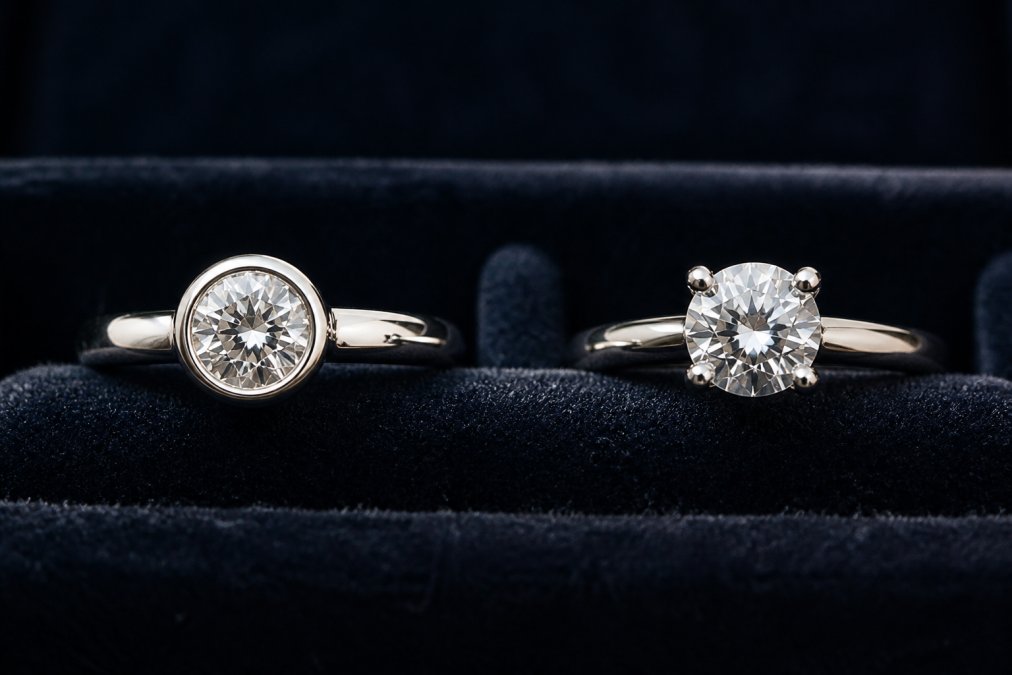
For an active lifestyle, the bezel is the safer choice because it eliminates snagging entirely. The protective rim absorbs impacts that would otherwise bend a prong. Prong settings, by contrast, expose the stone's girdle and corners, making them vulnerable to chipping if knocked. However, prongs are easier for a jeweller to repair, and a worn prong can be retipped without removing the stone. A damaged bezel often requires a full reset, which is more costly.
| Setting Type | Stone Protection | Snag Risk | Repairability | Best For |
|---|---|---|---|---|
| Bezel Setting | Maximum | None | Moderate | Daily wear, active lifestyles |
| Prong/Claw Setting | Good | High | Excellent | Those prioritising brilliance |
| Flush Setting | Excellent | None | Difficult | Sleek, modern aesthetics |
| Channel Setting | Good | None | Moderate | Protecting side stones |
1. Bezel Setting: Maximum Stone Protection
The bezel setting is the strongest engagement ring setting for pure stone security. A continuous metal rim wraps around the diamond, holding it in place with no exposed edges. This design protects the stone from knocks, prevents snagging on jumpers and gloves, and keeps dirt from accumulating under the stone. For anyone working with their hands or wearing the ring through all seasons, the bezel is the most reliable choice.
The trade-off is light performance. Because the metal rim covers more of the stone, a bezel-set diamond can appear slightly smaller than a prong-set stone of the same carat weight. The setting also reads as more modern or masculine to some buyers. A full bezel is not the right choice if maximum sparkle is your priority, but for structural integrity, nothing beats it.
2. Flush Setting: The Sleek, Snag-Free Option
A flush setting, also known as a gypsy setting, seats the diamond directly into a hole drilled in the band, with the stone's table sitting level with or slightly below the metal surface. This is the ultimate low-profile design. There are no prongs to bend, no rims to catch, and the ring presents a completely smooth surface. For those who find jewellery distracting or work in environments where rings catch on equipment, the flush setting is ideal.
The flush setting offers outstanding protection for the stone, but it has a significant limitation: it only suits smaller stones. A flush-set diamond typically needs a shallow depth to sit within the band, which restricts you to stones under approximately half a carat (americangemsociety.org). The setting also limits light entry from below, reducing brilliance compared to elevated settings.
3. Channel Setting: Securing Side Stones
Channel settings are the workhorse choice for protecting side stones. Instead of individual prongs, two parallel metal rails hold a row of diamonds securely between them. This creates a smooth, snag-free profile that protects the edges of each stone along the band. If you are considering a three-stone ring or diamond-set shoulders, a channel setting keeps those smaller stones far safer than micro-prongs ever could.

The channel setting is an excellent engagement ring setting for durability in the side stones, but it makes the centre stone harder to clean. Dirt and oils can build up between the rails, and professional cleaning is required more often. The rails themselves can also bend if the ring is knocked hard, which can loosen the stones inside, so a thicker band is essential to maintain structural integrity.
4. Claw Setting: A Classic with a Strong Grip
The claw setting, a refined version of the prong setting, uses four or six tapered metal claws to grip the stone. When executed in platinum or a thick 18k gold, a well-made claw setting offers excellent stone security while allowing maximum light to enter the diamond. The tapered claws end in fine points that hold the stone at its girdle, and a correctly fitted claw will not loosen with normal wear.
The Raphael Collection at Morgan Banks uses claw and micro-claw settings extensively, including the Platinum Diamond Pear with diamond shoulders and Halo at £3,400, which combines a claw-set centre with a halo of smaller stones. Claw settings are the most repairable of all options: a worn claw can be retipped by a skilled jeweller without disturbing the stone. The primary risk is snagging, as the claws can catch on knitwear if they are too long or poorly finished.

5. Gypsy Setting: The Ultimate Low-Profile Choice
The gypsy setting, sometimes called a flush setting, is the most durable engagement ring setting for those who want the stone to sit completely within the band. The diamond is countersunk into the metal, leaving only the top surface exposed. There is nothing to catch, nothing to bend, and the ring can be worn through almost any activity without concern. This setting is a historic design, popular for men's rings and increasingly chosen by women who prefer a flat, modern profile.
The gypsy setting offers exceptional protection but demands a shallow stone. Deep diamonds will sit too high above the band surface and defeat the purpose of the low profile. You will also sacrifice brilliance compared to elevated settings, as the metal cup restricts light from entering the stone from the sides.
6. Tension Setting: Bold Design with Structural Needs
A tension setting holds the diamond in place through the compressive force of the band itself, with the metal appearing to split and grip the stone from both sides. When executed correctly, it is a striking and genuinely secure design. The stone is held under such pressure that it cannot move, and there are no prongs to wear down. For a modern, architectural look, the tension setting is unmatched.
The tension setting is not for everyone. It requires a band thick enough to generate the necessary clamping force, which makes resizing difficult or impossible. The setting also leaves the stone's girdle partially exposed, so it is best paired with a durable stone shape. If you drop the ring or knock it hard, the setting can lose tension and release the stone entirely, so this design demands regular professional inspection.
How to Choose the Most Durable Engagement Ring Metal
Your choice of engagement ring metal is as important as the setting itself. Platinum is the most durable metal for daily wear: it is dense, does not wear away over time, and develops a natural patina that many collectors prize. When platinum is scratched, the metal is displaced rather than lost, so the ring never thins (gia.edu). In contrast, 18k gold wears down slowly with decades of use, and 14k gold, while harder, is less pure and can feel different on the skin.
Many of the rings in the Raphael Collection are set in platinum 950, which offers the best balance of strength and workability. A platinum setting with a 2mm band profile provides the structural integrity needed for a stone to remain secure for a lifetime. If you prefer gold, choose 18k over 14k for a richer colour and better long-term durability, and ensure the shank is substantial enough to support the head.
Maintenance and Repair: Protecting Your Setting for Life
No setting is maintenance-free. The most durable engagement ring settings still require an annual inspection by a professional jeweller to check for loose stones, worn prongs, and metal fatigue. Between professional visits, clean your ring weekly in warm soapy water with a soft brush, and have it ultrasonically cleaned by a jeweller every six months. Remove the ring during heavy manual work, gym sessions, and gardening, where impact and abrasion risk are highest.
Repairability varies by setting. Prong and claw settings are the easiest to repair, as individual claws can be retipped. Bezel and channel settings require more involved work if damaged, and a tension setting that loses its grip needs specialist attention. When you buy from a long-established jeweller like Morgan Banks, you gain access to expert guidance for engagement ring selection and the reassurance of a house that has stood behind its craftsmanship since 1935.
Frequently Asked Questions
What is the most durable setting for an engagement ring?
A full bezel setting is widely considered the most durable choice. The stone is encircled by a continuous metal rim, which shields the girdle from impacts and prevents snagging. This protective rim makes it an excellent option for those with active lifestyles or hands-on professions. While a bezel offers superior protection, a well-made claw setting in a strong metal like platinum can also provide excellent durability, provided the prongs are checked and maintained regularly.
Is a bezel setting more durable than a prong setting?
Yes, a bezel setting is generally more durable than a prong setting. The continuous metal rim of a bezel protects the diamond's edge, or girdle, from chipping on hard impact. Prong settings, by comparison, leave the stone more exposed and rely on the strength of four or six small metal claws. While prongs allow more light to enter the stone, they require more frequent inspection to ensure no claw has loosened or worn down.
What is the most durable engagement ring metal?
Platinum is the most durable choice for an engagement ring setting. It is a dense, heavy metal that is naturally hypoallergenic and resists wear and tear. Unlike gold, which wears away over time when scratched, platinum is displaced but not lost, making it ideal for securing precious stones. While 18k and 14k gold are popular, platinum's structural integrity offers superior long-term security for the stones it holds.
How does metal choice affect the durability of an engagement ring setting?
The metal determines the setting's structural integrity. Platinum, being harder and more durable than gold, holds prongs and bezels more securely and is less likely to bend out of shape. Gold, particularly 18k, is softer and more prone to scratches and wear, which can loosen prongs over time. For a ring meant for daily wear, choosing platinum provides greater peace of mind, as it maintains its strength and protects the stones better over a lifetime.
How often should I get my engagement ring checked?
You should have your engagement ring professionally checked every 6 to 12 months. During this check, a jeweller will inspect the prongs and setting under magnification to ensure no metal has worn thin or loosened. They will also clean the ring to remove dirt that can obscure damage. This routine engagement ring maintenance schedule is essential for catching potential issues early and preventing the loss of a valuable stone.