
Table of Contents
- Luxury Watch Investment: The Honest Verdict First
- How We Evaluated These Watches
- Best Investment Watches Available Now
- Luxury Watch Resale Value: What Moves the Number
- Luxury Watch Authentication: Box, Papers and Provenance
- Watch Investment Risks Nobody Warns You About
- The Real Cost of Owning an Investment Watch
- Conclusion: Buy the Watch You Would Wear Anyway
- Frequently Asked Questions
Last Updated: October 8, 2026
Luxury Watch Investment: The Honest Verdict First
Luxury watch investment means buying a mechanical timepiece expecting it to hold or grow in value rather than simply wearing it.
At Morgan Banks, we have bought and sold fine watches since 1935, and the pattern never changes: the watches that hold value are the ones people genuinely want to wear.
This guide is our honest assessment of the luxury watch investment question, plus five watches from our current stock.
What Actually Drives Returns
Three things move a watch's value: desirability, scarcity and condition. Desirability comes from heritage and design; scarcity from limited production or a discontinued reference; condition covers case edges to box and papers.
A watch that scores well on all three, bought at the right price, tends to hold its value. Miss any one and you are buying a wearable object, not an asset.
How We Evaluated These Watches
We judged each watch on four practical criteria: mechanical quality, brand heritage, production scarcity and everyday wearability.
We also weighted price against value: a £650 watch that holds its value beats a £10,000 watch that drops by a third.
Every watch below is a mechanical piece from our collection with a genuine story behind it.
Best Investment Watches Available Now
The best investment watches are not always the most expensive. They are references with a real following, limited production and a design that has survived decades unchanged.
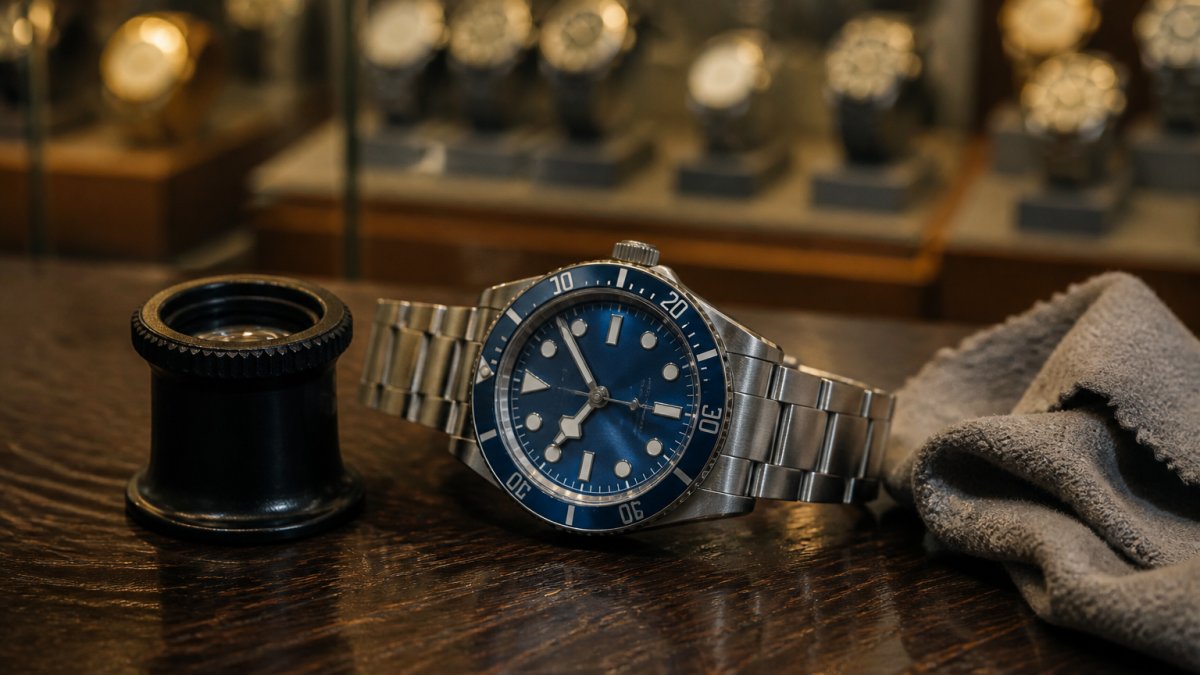
| Watch | Price | Movement | Best For | Value Case |
|---|---|---|---|---|
| Seiko PADI King Turtle | £650.00 | Automatic, 200m | Divers and collectors | Limited edition, strong fan base |
| Seiko Alpinist SPB121J1 | £650.00 | Automatic, 70hr reserve | Everyday wear | Cult following, timeless design |
| Seiko Glacier SPB297J1 | £1,110.00 | Automatic, 70hr reserve | Collectors | Special edition, charity tie-in |
| Seiko 1968 SPB187J1 | £1,060.00 | Automatic, 70hr reserve | Heritage buyers | Re-edition of an iconic diver |
| Maurin Valjoux 7750 | £995.00 | Automatic chronograph | Vintage collectors | Rare, discontinued maker |
Seiko Prospex PADI 60th Anniversary King Turtle
Limited editions with a genuine anniversary hold value better than generic releases.

The blue ceramic bezel and PADI logo dial give it a clear identity, while 200m water resistance and LumiBrite make it a working dive watch.
At £650.00, it is the lowest-risk entry point on this list. Limited numbers plus a defined anniversary usually mean a steady, if modest, secondhand market.
Seiko Prospex Alpinist SPB121J1
The Alpinist has one of the strongest cult followings in watchmaking.
The SPB121J1 runs the 6R35 automatic movement with a 70-hour power reserve, a green dial, sapphire crystal and a built-in compass.
At £650.00, this is the watch on our list we would point a first-time buyer toward. Wearability protects value.
Seiko Prospex Glacier Save the Ocean SPB297J1
Special editions tied to a cause attract a committed buyer base.
The textured blue dial and Super Hard Coated stainless steel case set it apart.
At £1,110.00, it is the priciest Seiko here, but the cause, the design and the limited run give it a firmer floor than a plain production model.
Seiko Prospex 1968 Re-Interpretation SPB187J1
Re-editions of iconic references are a reliable category for value retention.
The 2020 version shrinks the case from 44mm to 42mm, adds a high-visibility dial and lifts the power reserve to 70 hours with the 6R35 calibre.
At £1,060.00, it appeals to buyers who want heritage without paying vintage prices.
Maurin Automatic Chronograph Valjoux 7750
The rarest watch here is also the most interesting.
Inside sits the Valjoux 7750, the workhorse chronograph movement that powered a generation of Swiss watches.
At £995.00, it suits the collector who values scarcity over brand recognition. Small, discontinued makers are a genuine value pocket, though they demand patience when you sell.
Luxury Watch Resale Value: What Moves the Number
Luxury watch resale value comes down to a short list of factors, and condition sits at the top. A scratched case, missing bracelet link or replaced dial can knock a meaningful amount off what a buyer will pay.
Here is what actually moves the number:
- Box and papers: A full set with original documentation sells faster and for more than a loose watch.
- Originality: Unpolished cases and original parts are worth more to collectors than restored ones.
- Service history: A documented service reassures buyers and supports the asking price.
The lesson is simple. Buy the best-condition example you can find, keep everything that came with it, and resist the urge to polish.
Seiko Prospex Mechanical PADI 60th Anniversary Limited Edition “King Turtle →
Luxury Watch Authentication: Box, Papers and Provenance
Luxury watch authentication confirms a watch is genuine, unaltered and correctly described.
A common mistake is trusting a low price, if a deal looks too good, it usually is.
Every previously enjoyed watch we sell is inspected before display, and we will talk you through exactly what we checked.
Watch Investment Risks Nobody Warns You About
Watch investment risks are rarely discussed by the people selling watches. We would rather spell out the mechanisms than offer vague warnings.
Liquidity: how long does it actually take to sell?
A watch is not a savings account. Selling takes time, and the time depends on how many people want that specific reference.
- Mass-market references. A current-production Seiko Prospex in good condition might sell through a dealer within days to a few weeks, because there is a steady stream of buyers. A private sale may take longer because you are competing with every other seller of the same model.
- Limited editions with a defined fan base. A PADI anniversary or a Save the Ocean model can move reasonably quickly to the right buyer, but you may wait weeks or months for that buyer to appear.
- Discontinued small makers. The Maurin is the clearest example. There is no new supply, which supports scarcity, but there is also a very small pool of collectors who know the name. Selling could take months, and the price you achieve depends on finding one of those collectors rather than accepting a dealer's wholesale offer.
The practical lesson: the rarer the watch, the longer the exit. If you might need the money within a year, a rare watch is the wrong place for it.

Volatility: prices can fall, not just stall
Watch prices are not a one-way street. Demand can cool when a newer version is released, a trend moves on, or the wider economy tightens discretionary spending.
The fall is often quiet rather than dramatic: asking prices on dealer websites stay high while realised sale prices drift down, because sellers are reluctant to advertise a cut.
Cost drag: the risk that never sleeps
Servicing, insurance and storage continue whether the market rises or falls. On a lower-priced watch these costs can consume any modest gain, and chronograph servicing costs more than a simple three-hand model, a real drag on net return.
Fraud and authentication risk
Counterfeits are common, and so are "franken" watches assembled from a genuine movement and aftermarket or mismatched parts. Both destroy resale value, and the risk is highest in private sales and online marketplaces with no inspection and no comeback.
Model-specific demand risk
Two watches can cost the same and behave completely differently. A reference with a large, active collector community has a deep pool of buyers; a small following means a shallow pool, wider dealer spreads and a longer time to sell. Before buying, ask who the second buyer is likely to be.
The risk of buying the wrong watch for the wrong reason
A speculative purchase you never wear is the most expensive mistake of all. Worn watches get serviced and cared for; watches that sit in a safe are forgotten until they need an expensive overhaul. The best performers tend to be the ones their owners actually wanted.
The Real Cost of Owning an Investment Watch
The purchase price is only the start. A watch that sits in a safe still costs money, and those costs are predictable enough to model before you buy: sticker price plus servicing, insurance, storage and authentication, minus whatever a buyer eventually pays after commission.
Here is a practical ownership model you can run on any watch, using figures a UK high-street jeweller or specialist workshop would quote. Treat them as planning ranges, not guarantees, and confirm current rates before you commit.
The cost lines to model
- Servicing. A three-hand automatic typically needs a full service every five to seven years. A simple movement might cost £150-£300 at an independent workshop; a chronograph such as the Valjoux 7750 in the Maurin is more complex and can run £300-£500. Over a decade, budget for one to two services.
- Insurance. Specialist watch insurance is usually priced as a percentage of the insured value, commonly around 0.5%-1.5% a year depending on where you live, how you store it and whether it is worn outside the home. On a £1,000 watch that is roughly £5-£15 a year; on a £10,000 watch, £50-£150.
- Storage and security. A safe or bank deposit box, or a rider on your home contents policy, adds a small but real annual cost. A modest home safe is a one-off purchase; a deposit box is a recurring fee.
Asking price is not resale price
This is the point most guides skip. The number on a retailer's website is an asking price.
Record three numbers for any watch you are considering: the retail asking price, recent realised sale prices for the same reference in comparable condition, and the price a dealer would pay you today.
A worked example
Take a watch bought at £1,000 and held for ten years:
- Purchase: £1,000
- Servicing over ten years (one full service): £200
- Insurance at roughly 1% a year: £100
Sell through a dealer paying 65% of a £1,200 retail asking price and you receive £780, a net loss of £595, roughly 43% of your outlay, even though the asking price rose. Sell privately at £1,100 and you lose £275. The difference is not the watch; it is the exit route.
What this means for the watches on this list
The £650 Seiko references sit where servicing and insurance are proportionally significant, so value retention matters more than headline appreciation. The £995 Maurin is rarer, but rarity cuts both ways: fewer buyers means a longer sale and a wider dealer spread. Neither is a reason to avoid them, both are reasons to buy with your eyes open and keep the full set, since complete box and papers can add a meaningful percentage at resale and shorten the time to sell.
Conclusion: Buy the Watch You Would Wear Anyway
The uncomfortable truth about luxury watch investment is that the best-performing watches are the ones their owners love wearing.
If you want a piece that makes a genuine case for itself, our Seiko Prospex range starts at £650.00, and the Maurin chronograph offers something genuinely rare at £995.00.

Buying a watch you will actually wear is the only strategy that reliably works.
Frequently Asked Questions
Is a luxury watch a good investment?
It can be, but only for a narrow group of references bought at the right price. Most watches lose money once you factor in dealer commission, servicing and inflation. Treat any luxury watch investment as a minority holding alongside equities and cash, not a replacement for them. Buy because you want to wear it, and treat any capital appreciation as a bonus rather than the plan.
Do luxury watches go up in value?
Some do, most do not. Value growth tends to concentrate in discontinued references, limited editions and models with documented provenance. A watch bought at full retail rarely resells above that figure in the short term. Condition, originality and complete box and papers matter more to the final price than the brand name alone, so keep everything that came with the piece.
How do you tell whether a pre-owned luxury watch is authentic?
Check the movement, caseback engravings, dial printing and serial numbers against the reference, and confirm the numbers match the paperwork. Ask for service history and original box and papers. A reputable dealer will open the caseback for inspection and provide written confirmation of authenticity. If a price looks well below market, assume something is wrong until proven otherwise.
What affects a luxury watch's resale value?
Five things dominate: condition, originality, provenance, completeness of box and papers, and current market demand for that specific reference. A polished case or replaced dial can cut value significantly. Servicing records help, but only when done by an approved watchmaker. Rarity supports price, though rarity without demand simply means a watch nobody wants.
How should you maintain a luxury watch to protect its value?
Service it on the manufacturer's recommended interval, typically every five to seven years for a mechanical watch, and use an approved watchmaker. Keep the original box, papers, spare links and straps. Avoid unnecessary polishing, since it removes metal and reduces originality. Store it away from strong magnetic fields, and get it pressure-tested before any water exposure after a service.