
Table of Contents
- What Is an Eternity Ring vs a Wedding Band
- Full vs Half Eternity Ring: Pros and Cons
- How to Stack Engagement and Wedding Rings
- Choosing the Right Metal and Stone Security
- Eternity Rings from Specialist Goldsmiths
- Eternity Ring vs Wedding Band: Lifestyle and Cost Considerations
- Frequently Asked Questions
Last Updated: September 28, 2026
What Is an Eternity Ring vs a Wedding Band
When considering an eternity ring vs wedding band, it's important to understand the key differences: an eternity ring is a band of precious metal set with a continuous line of gemstones that extends all the way around the finger, symbolising eternal love and commitment, while a wedding band is a simple metal ring worn to mark marriage, typically plain or with minimal ornamentation. The key difference lies in both design and purpose: eternity rings are statement pieces celebrating enduring devotion, whilst wedding bands serve as traditional symbols of the marriage vow itself.

The distinction matters more than it might first appear. Wedding bands have been worn for centuries as straightforward markers of marital status. Eternity rings, by comparison, are a more recent tradition, often given as anniversary gifts or worn alongside an engagement ring to create a coordinated set. The decision often hinges on lifestyle, budget, and how you envision wearing your rings day to day.
The symbolism differs too. A wedding band represents the commitment made on your wedding day, a circle with no beginning or end. An eternity ring takes that concept further, suggesting a love that transcends time itself. For some couples, wearing both pieces together creates a powerful visual narrative of their relationship's evolution.
Full vs Half Eternity Ring: Pros and Cons
A full eternity band features gemstones running completely around the entire circumference of the ring. This creates an unbroken circle of sparkle and delivers maximum visual impact. A half eternity ring has stones set only on the top half of the band, leaving the underside plain metal.

The choice between these two styles involves real trade-offs. Full eternity bands are stunning and deliver that continuous-line symbolism perfectly. However, they present a significant resizing problem: because stones run all the way around, a jeweller must remove every single stone, resize the band, and reset each one individually. This process is expensive and time-consuming. Half eternity rings solve this problem elegantly. Resizing is straightforward, the plain underside can be cut and adjusted without touching any gemstones.
Daily wear comfort also differs. Full eternity bands create a higher profile on your finger because stones sit on all sides. This can catch on clothing, hair, or skin. Half eternity rings sit lower and feel less intrusive, making them better suited to active lifestyles or those who work with their hands regularly. The diamond coverage on a half eternity is typically 30-50%, compared to 100% on a full band.
Cost reflects these differences. A full eternity ring requires more gemstones, so it commands a higher price. Our 18ct White Gold 7 Stone Diamond Eternity Ring .72ct at £2,995 exemplifies the investment a full band demands. For those seeking similar elegance with greater practicality, the Diamond Platinum 7 Stone Eternity Ring HET1479, a half eternity option at £2,200, delivers comparable visual impact.
| Style | Stone Coverage | Resizing Ease | Daily Wear Comfort | Typical Price Range |
|---|---|---|---|---|
| Full Eternity | 100% around band | Difficult and costly | Catches on things | £2,200+ |
| Half Eternity | 30-50% on top | Simple and affordable | Lower profile | £1,600-£2,200 |
How to Stack Engagement and Wedding Rings
The traditional order, working from the base of your finger upward, places your wedding band closest to your hand, followed by your engagement ring, with an eternity ring sitting at the tip. This arrangement creates a visual flow that builds toward your engagement stone as the focal point.
However, many people reverse this order. Wearing your engagement ring closest to your hand and the wedding band above it is equally valid, it's entirely about personal preference. What matters more is ensuring your rings actually fit together comfortably. Rings with different widths or dramatically different profile heights can create gaps or sit at odd angles when stacked.
Comfort fit becomes crucial when stacking multiple rings. A comfort fit band has a gently curved interior that distributes pressure more evenly across your finger, reducing the sensation of tightness.
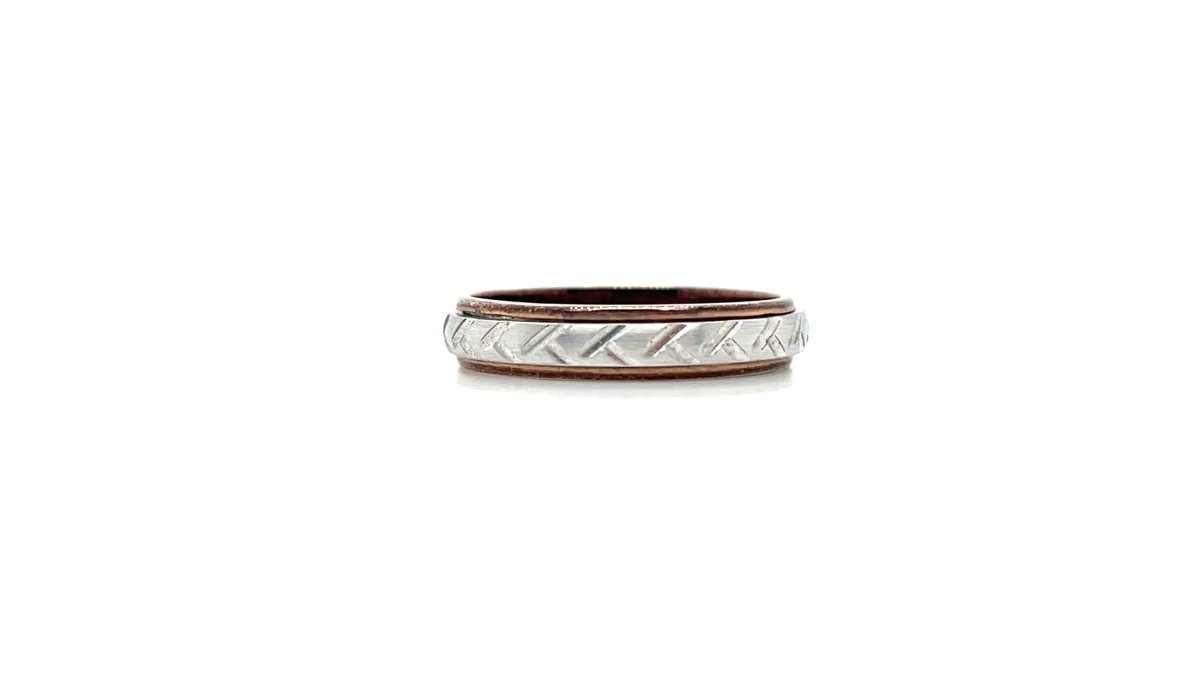
The metal choice affects how well rings stack visually. Mixing metals, say, white gold with yellow gold, can work beautifully if done intentionally, but it requires confidence. Most people find that matching metals (all platinum, all white gold, or all yellow gold) create a more cohesive, polished appearance. Our Wedding Band 9ct Rose/White Gold 4mm Size N AM0076 at £460 pairs seamlessly with either white or rose gold eternity rings, giving you flexibility in how you build your stack.
Choosing the Right Metal and Stone Security
Precious metals form the foundation of any ring's durability. Platinum is a durable option. White gold and yellow gold are also popular choices.
The setting type directly affects how well your gemstones stay put. A prong setting uses small metal claws to grip each stone individually. A channel setting holds stones in a groove along the band. A pavé setting features smaller stones densely packed across the surface.
Platinum Diamond Eternity 1/3 set .20ct →
For an eternity ring worn daily, security matters enormously. Our 18ct Yellow Gold Pavé Set 2 row curve Diamond Eternity Ring .31ct at £1,695 uses a pavé technique with 50% diamond coverage that catches light beautifully.
Gemstone durability also plays a role.
Eternity Rings from Specialist Goldsmiths
Bespoke design offers something mass-produced rings simply cannot: a piece that's genuinely yours. When you work with a specialist goldsmith, you're collaborating with someone who can translate your vision into reality. The process typically begins with a consultation where you discuss your lifestyle, preferences, and budget.
Morgan Banks has been crafting bespoke jewellery since 1935, and that heritage matters. Our team doesn't simply follow a template; we listen to what you actually need and design accordingly. The Platinum Diamond Eternity 1/3 set .20ct Band at £1,610 exemplifies our approach, a thoughtfully proportioned piece that balances elegance with wearability.

Custom design does cost more than off-the-shelf options, but you're paying for exclusivity and the ability to adjust details. A specialist goldsmith can discuss stone provenance.
Maintenance and professional care keep your eternity ring looking its best. Annual professional cleaning removes accumulated oils and dirt that dull the sparkle. Every few years, a jeweller should inspect the setting and tighten any loose prongs. If you're wearing your eternity ring daily, these check-ups prevent small problems from becoming expensive repairs.
Eternity Ring vs Wedding Band: Lifestyle and Cost Considerations
Your lifestyle fundamentally shapes which ring makes sense for you. If you work in an environment where your hands take a beating, gardening, construction, sports, or manual labour, a simple wedding band is more practical than a delicate eternity ring. The band is less likely to catch on something and sustain damage. An eternity ring with stones all around is vulnerable in these scenarios; a single impact could dislodge a stone or crack the band itself.
Conversely, if your work is office-based and your hands are relatively protected, an eternity ring becomes a beautiful daily-wear option. The key is honest self-assessment.
Frequently Asked Questions
Are eternity bands the same as wedding bands?
No. A wedding band is a simple metal ring worn to signify marriage, typically plain or with minimal decoration. An eternity ring features a continuous line of gemstones all the way around the band, symbolising eternal love and commitment. While both are worn on the ring finger, they serve different purposes and have distinct designs. Many couples choose to wear both together as part of a ring stack.
What is the difference between a full and half eternity ring?
A full eternity ring has gemstones covering the entire circumference of the band, whereas a half eternity ring features stones only on the top half. Full eternity rings offer continuous sparkle and symmetry but cannot be resized easily. Half eternity rings are more practical for daily wear and can be resized by a goldsmith, making them a popular choice for those seeking flexibility without sacrificing the symbol of eternal love.
How do I wear an eternity ring with my wedding band?
Traditionally, the wedding band is worn closest to the hand on the ring finger, followed by the eternity ring on top. Some couples prefer to stack the eternity ring first, then the wedding band, depending on personal preference and how the rings sit together. The key is ensuring both rings fit comfortably without excessive movement. A goldsmith can help you determine the best stacking order based on your specific ring designs and ensure they align properly for comfort and aesthetics.
Can an eternity ring be used as a wedding band?
Technically, yes, an eternity ring can serve as your primary wedding band if you prefer a more decorative option. Half eternity rings are more suitable as a standalone wedding band because they can be resized if needed. Many people choose to wear a simple wedding band alongside an eternity ring instead, combining practicality with symbolic meaning.