
Table of Contents
- Beaded Necklace Designs That Feel Personal
- Personalized Cuff Bracelets and Engraved Charms
- Gemstone and Crystal Jewellery with Meaning
- Bespoke Jewellery Design Ideas for a One-of-a-Kind Piece
- Macrame and Knotting Techniques for a Bohemian Look
- Caring for Handmade Jewellery So It Lasts
- Unique Diamond Jewellery Sets for Special Occasions
- Conclusion
- Frequently Asked Questions
Last Updated: September 18, 2026
Beaded Necklace Designs That Feel Personal
Beaded necklace designs are the fastest, most forgiving way into handmade jewellery. You need beads, a beading needle or fine wire, a clasp, and about an hour.
Choosing Beads and Colour Palettes
Pick a palette of three colours: one dominant shade, one contrasting accent, one metallic or neutral to separate them. Beginners who ignore this end up with a busy string that fights itself.
Personalized Cuff Bracelets and Engraved Charms
Personalized cuff bracelets are the strongest gift idea here, because the value sits in the name or date, not the metal. A plain silver cuff with a hand-stamped initial costs little and instantly reads as bespoke.
Free Engraving Options to Look For
Ask about free engraving directly, because many jewellers charge separately for it.
Gemstone and Crystal Jewellery with Meaning
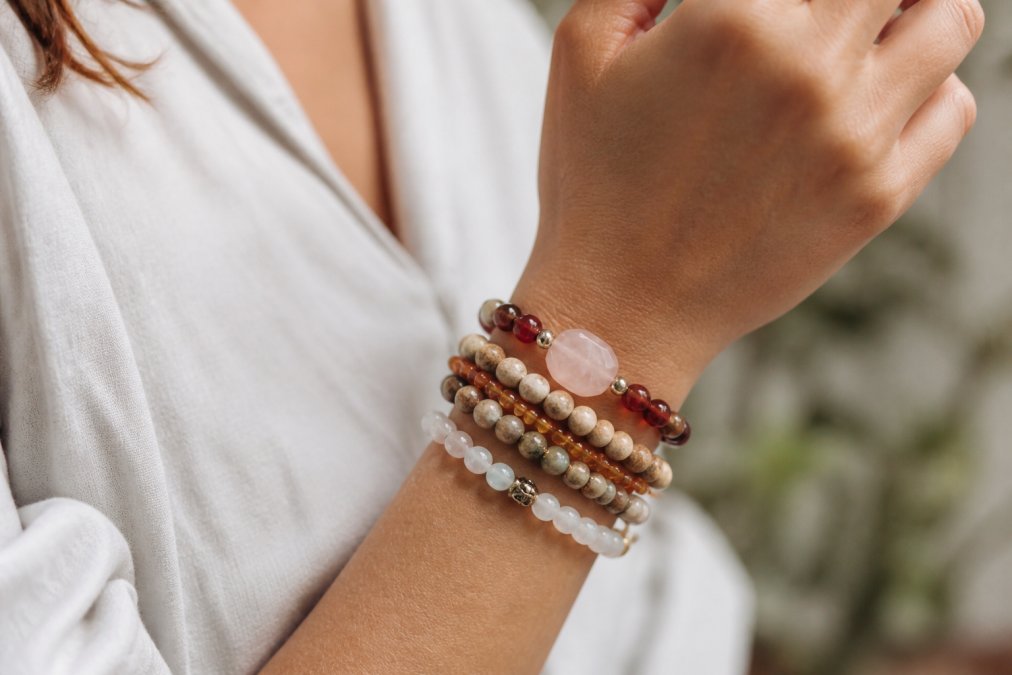
Gemstone and crystal jewellery sells on symbolism as much as appearance. Fire agate, rhodochrosite, pink tourmaline, and freshwater pearl all carry associations buyers respond to, and that meaning often turns a piece into a gift.
Bespoke Jewellery Design Ideas for a One-of-a-Kind Piece
Bespoke jewellery design ideas start with a story, not a sketch. The pieces people treasure most encode something specific: a birthstone, a wedding date, a place.
Macrame and Knotting Techniques for a Bohemian Look
Macrame and knotting give handmade jewellery its bohemian edge without soldering, and they are the cheapest entry point here. A square knot, a half-hitch, and a lark's head cover most designs. What separates shop-bought from craft-fair is cord choice, tension, and how you finish the ends.
Choosing Cord: Material, Diameter, and Trade-Offs
Waxed cotton cord in 1mm to 2mm works best for bracelets and pendants: it holds a knot well, softens with wear, and takes dye evenly. Nylon holds a knot more securely and resists water but feels stiffer and can slip if you do not melt the ends. Polyester sits between the two and is the most colour-fast.
The Four Knots You Actually Need
| Technique | Best For | Difficulty | Time Per Piece |
|---|---|---|---|
| Lark's head | Attaching cord to a ring or clasp | Beginner | 2-3 minutes |
| Square knot | Flat woven bands, bracelets | Beginner | 20-30 minutes |
| Half-hitch | Spiral and wrapped designs | Intermediate | 30-45 minutes |
| Macrame with beads | Pendants and statement pieces | Intermediate | 45-60 minutes |
Start with the lark's head and square knot: you will use both constantly, and both are learnable in an evening. The half-hitch creates the spiral effect on wrapped bracelets; keep every hitch at the same tension, which is easier if you pin the work to a cork board rather than holding it.
Sourcing Cord and Beads Ethically
This is where most macrame guides stop, and it matters if you are making pieces to sell or gift. Look for cord labelled OEKO-TEX Standard 100, which certifies it has been tested for harmful substances (OEKO-TEX® STANDARD 100). For beads, UK suppliers such as Kernowcraft and The Bead Shop Nottingham stock recycled glass and Fairtrade-certified wooden beads, and both publish material provenance.
Finishing Ends Like a Professional
The difference between a beginner's macrame bracelet and a professional one is almost always the ends. Three techniques close the gap:
- Adjustable sliding knot closure. Two square knots worked back over the main cords create a closure that fits any wrist. This is the single most useful finishing skill in macrame.
- Glue-and-tuck. Trim the cord tails to 2mm, tuck them under the last knot with a blunt needle, and secure with a dot of fabric glue rather than melting. Melting works on nylon but scorches cotton.
- End caps. For a more formal look, finish the band into a metal end cap and attach a lobster clasp. This converts a casual bracelet into something that sits alongside fine jewellery.
Caring for Handmade Jewellery So It Lasts
Caring for handmade jewellery comes down to three habits: keep it dry, keep it separate, and clean it gently. Handmade pieces often use softer wire and natural stones than mass-produced equivalents, so they need more consideration, and the detail is where pieces actually survive or fail.
Mixed Metal Curved Feather Bracelet →
Why Handmade Pieces Age Differently
Handmade jewellery usually uses 99.9% fine silver or 925 sterling silver wire rather than the harder alloys used in mass production. Fine silver is softer, which is why a handmade cuff adjusts to your wrist but can also deform in a handbag. Natural stones are porous to varying degrees and absorb oils from skin and cosmetics over time.
Cleaning by Material
Different materials need different methods, and the wrong one causes more damage than doing nothing.
- Sterling silver. Polish with a soft impregnated cloth. Avoid silver dip on pieces with oxidised (blackened) detail, because dip strips the oxidation that gives the piece its contrast. For heavy tarnish, a paste of bicarbonate of soda and water applied with a soft toothbrush works, but rinse and dry thoroughly afterwards.
- Gold-plated and gold-filled. Wipe with a dry soft cloth only. Plated pieces should never be dipped or ultrasonically cleaned, because the plating is measured in microns and abrasion removes it. Gold-filled pieces (which carry a thicker bonded layer) tolerate gentle polishing but still not dips.
- Pearls and porous stones such as turquoise, opal, and malachite. Wipe with a damp cloth and dry immediately. Never soak. Never use ultrasonic cleaners. Keep away from perfume, hairspray, and lotions, which is why the standard advice is to put jewellery on last when getting ready and take it off first at night.
- Beaded pieces on wire or cord. Clean the beads, not the stringing material. Dampen a cloth rather than immersing the piece, because water degrades nylon-coated wire over time and swells cotton cord.
Storage That Actually Prevents Damage
- Store each piece in its own pouch or compartment to prevent scratching. A fabric-lined jewellery roll is better than a box with loose compartments because pieces cannot slide into each other.
- Keep silver in an anti-tarnish pouch or a sealed bag with a tarnish-inhibiting strip. Silver tarnishes faster in humid air and in contact with wool, rubber, and latex.
- Hang necklaces rather than coiling them, or coil them around a padded roll. Coiling a beaded necklace tightly stresses the stringing wire at the clasp, which is where most beaded necklaces eventually break.
- Store pearls flat, not hanging, because the silk or nylon thread they are strung on stretches under the weight of the beads over years.
Repair and Longevity: What You Can Fix Yourself
Most handmade jewellery does not fail from poor craftsmanship but from being stored loose with harder metal, or from a single jump ring never closed properly.
- Tighten jump rings. A jump ring should be closed so the ends meet flush with no gap. If you can see daylight between the ends, it will work open. Use two pairs of flat-nose pliers to twist the ends towards each other rather than pulling them apart.
- Re-string beaded pieces. If a beaded necklace or bracelet has stretched, the stringing wire has likely fatigued. Restringing with fresh 0.4mm to 0.5mm nylon-coated stainless steel wire and crimp beads is a fifteen-minute job and extends the piece by years.
- Replace clasps. Lobster clasps are the most common failure point on handmade bracelets. A replacement sterling silver clasp costs a few pounds and takes minutes to fit.
- Re-tension macrame. If a sliding knot has loosened, work a new square knot over the existing one rather than untying the original.
When to Take a Piece to a Jeweller
Some jobs are not worth doing at home. Stone re-setting, re-plating, soldering a broken chain, and re-tipping claws on any piece with a diamond or gemstone should go to a jeweller. The British Hallmarking Council's guidance on hallmarking is worth checking before any repair on a precious metal piece, because a repair that removes or obscures a hallmark can affect both value and legal compliance when you come to sell.
Unique Diamond Jewellery Sets for Special Occasions
Unique diamond jewellery sets are where handmade craft meets serious investment, and the two do not always sit comfortably together. A handmade beaded piece might cost £70. A diamond set moves into four figures quickly.
Conclusion
Handmade jewellery rewards patience more than talent. Start with a beaded necklace or knotted bracelet, get the palette right, and the rest follows.
Frequently Asked Questions
What are the current trends in handmade jewellery?
Layered stacking bracelets, personalised engravable charms, and semi-precious gemstone pieces are among the most sought-after styles. Baroque freshwater pearls and mixed-metal designs also feature heavily in contemporary handmade collections. Many buyers now prioritise pieces with a story behind them, such as birthstone accents or meaningful symbols like dragonflies and hearts. Sustainable materials and upcycled components continue to gain traction as shoppers look for jewellery that aligns with their values.
How do I choose unique handmade jewellery as a gift?
Start by thinking about the recipient's personal style and the occasions she dresses for. A beaded bracelet with an engravable charm works well for everyday wear, while a gemstone piece suits someone who enjoys colour and symbolism. If you are unsure, a classic sterling silver design with a subtle personalised detail, such as initials or a meaningful date, tends to feel both thoughtful and wearable. Gift cards are a practical fallback when you want her to choose her own piece.
Is handmade jewellery worth the cost compared to mass-produced pieces?
Handmade jewellery often uses materials such as 925 sterling silver, 18ct gold plating, and genuine gemstones. The craftsmanship can mean fewer pieces are identical, offering something individual. For a piece worn regularly or given as a meaningful gift, the difference in personal significance can be a factor.
How should I care for handmade jewellery to keep it looking new?
Store each piece separately in a soft pouch or lined box to prevent scratches and tangling. Remove jewellery before swimming, showering, or applying perfume and lotions, as chemicals and moisture dull gemstones and accelerate tarnishing on plated finishes. Clean sterling silver with a soft polishing cloth and warm soapy water, then dry thoroughly. For beaded and pearl pieces, avoid ultrasonic cleaners and instead wipe gently with a damp cloth to preserve the surface.
Can I commission a bespoke piece remotely if I do not live nearby?
Yes, many jewellers now offer remote bespoke consultations using video calls, sketches, and 3D renders so you can approve the design before production begins. You would typically discuss your ideas, review a digital model, confirm materials and sizing, and then receive the finished piece by insured delivery. This approach works well for engagement rings and one-off gifts where you want a personal design without multiple in-person visits.