
Table of Contents
- What Affects Ring Resizing Cost
- Average Ring Resizing Prices in 2026
- How Long Does Ring Resizing Take
- Can Platinum Rings Be Resized
- The Ring Resizing Process Explained
- Finding a Reputable Goldsmith Near Me
- Resizing Rings with Intricate Settings
- Post-Resizing Care and Maintenance
- Frequently Asked Questions
Last Updated: September 26, 2026
What Affects Ring Resizing Cost
The ring resizing cost you'll pay depends on several interconnected factors. Understanding each one helps you anticipate costs and make informed decisions before visiting a goldsmith.
Metal type and thickness matters significantly. Precious metals behave differently during resizing. Platinum requires specialist equipment and expertise, it's denser than gold and demands precision handling. Nine-carat and 18-carat gold are more straightforward to work with, which typically translates to lower labour costs. Sterling silver sits at the budget end but still demands careful handling to avoid damage. The thickness of your ring shank affects how much material the goldsmith must manipulate. A delicate band costs less to resize than a chunky, reinforced shank.
Stone settings and complexity drive costs upward quickly. A simple solitaire diamond in a basic setting is straightforward, the stone sits secure during resizing. Pavé settings, where dozens of smaller stones cover the shank, require meticulous work. The jeweller must protect each stone individually, sometimes removing them entirely before resizing and resetting them afterwards. Tension settings, where the stone appears to float, held only by the metal's spring, demand specialist knowledge. Eternity bands studded with stones around the entire circumference are among the most expensive to resize because every stone needs attention.
Whether you're resizing up or down affects labour and materials. Resizing down is generally cheaper because the goldsmith simply removes metal and rejoins the shank. Resizing up requires adding metal, either stretching the existing shank (which has limits) or inserting a segment of matching metal. This insertion, called a shank insert, demands precise soldering or welding to ensure the joint is invisible and structurally sound. The further up you're sizing, the more material gets added, and the higher the cost climbs.
Average Ring Resizing Prices in 2026
Pricing varies considerably based on what you're resizing. Most goldsmiths charge between £40 and £150 for standard resizing work, though intricate pieces command premium rates.
Standard bands versus intricate designs show the clearest price division. A plain gold or silver band resizing typically falls in the £40 to £80 range. The work is straightforward: measure, cut, adjust, solder or weld, polish. A solitaire engagement ring with a simple setting sits around £60 to £100. The jeweller must protect the stone but doesn't face the complexity of multiple stones.
Intricate designs multiply costs. A pavé-set band with dozens of diamonds can reach £150 to £250 because each stone requires individual protection and the work demands heightened precision. Eternity rings, those with stones running all the way around, often cost £180 to £300 for resizing. Tension-set rings, where the stone's security depends entirely on metal tension, typically cost £120 to £200 because the jeweller must ensure the tension remains perfect after resizing.
Premium metals and bespoke work push prices higher still. Platinum resizing starts around £100 for simple work and escalates to £250 or more for complex pieces. Platinum's properties demand specialist equipment; not every jeweller can handle it. Bespoke or vintage rings, pieces with unusual designs or historical significance, often require custom solutions. A Victorian eternity ring or a contemporary bespoke design might cost £200 to £400 depending on the work required.

Our team can advise on realistic costs for your specific ring before work begins.
| Ring Type | Typical Cost Range | Key Cost Factors |
|---|---|---|
| Simple gold band | £40-£80 | Metal type, shank thickness |
| Solitaire engagement ring | £60-£100 | Stone size, setting type |
| Pavé or multi-stone band | £150-£250 | Number of stones, protection required |
| Eternity ring | £180-£300 | Full circumference stones, precision needed |
| Tension-set ring | £120-£200 | Tension maintenance, specialist skill |
| Platinum ring | £100-£300+ | Metal properties, specialist equipment |
How Long Does Ring Resizing Take
Turnaround time depends on the jeweller's workload and the ring's complexity. Most standard resizing takes between 5 and 14 days from drop-off to collection.
A straightforward band resize, one or two sizes up or down, no stones, typically completes within 5 to 7 working days. The goldsmith measures, cuts, adjusts, solders, polishes, and hallmarks. The process itself takes a few hours, but jewellers batch work and maintain quality control, so the calendar time stretches across a week.
Complex pieces take longer. A pavé-set ring requiring stone removal, resizing, and resetting might need 10 to 21 days. Each stone must be carefully extracted, the shank worked, and each stone reset and checked for security. Eternity bands follow a similar timeline because the work is meticulous and cannot be rushed.
Platinum work often extends the timeline by 3 to 5 days because specialist equipment and expertise are required. Some goldsmiths outsource platinum work, which adds time.
Seasonal demand affects turnaround too. During peak periods, summer months, pre-Christmas, and around Valentine's Day, jewellers may have longer queues. Booking early gives you realistic timelines and ensures your ring is prioritised.
Can Platinum Rings Be Resized
Yes, platinum rings can be resized, but the process demands specialist knowledge and equipment. Platinum is not like gold or silver, it's denser, harder, and requires different techniques.
Platinum's melting point sits around 1,768°C, far higher than gold's 1,064°C. Traditional soldering methods don't work reliably on platinum. Most specialist goldsmiths use laser welding instead, which fuses the metal without introducing solder.
The challenge isn't whether resizing is possible, it's finding a goldsmith with the right equipment and experience. Not every high street jeweller handles platinum. Attempting platinum resizing with inadequate equipment risks a weakened joint, visible scarring, or structural failure.
Platinum's properties also mean resizing costs more and takes longer than gold work. Budget for premium pricing and extended turnaround times. The investment is worthwhile because platinum rings are heirloom pieces, proper resizing preserves their integrity for generations.
Platinum Diamond Eternity 1/3 set .20ct →
The Ring Resizing Process Explained
Understanding the process clarifies why different rings cost different amounts and why specialist goldsmiths command premium fees.
Laser welding versus traditional soldering represents the fundamental divide in modern resizing. Traditional soldering melts solder, a softer metal alloy, into the joint between the two ends of the ring. The solder flows into the gap, cools, and bonds the pieces. This method works well for gold and silver.
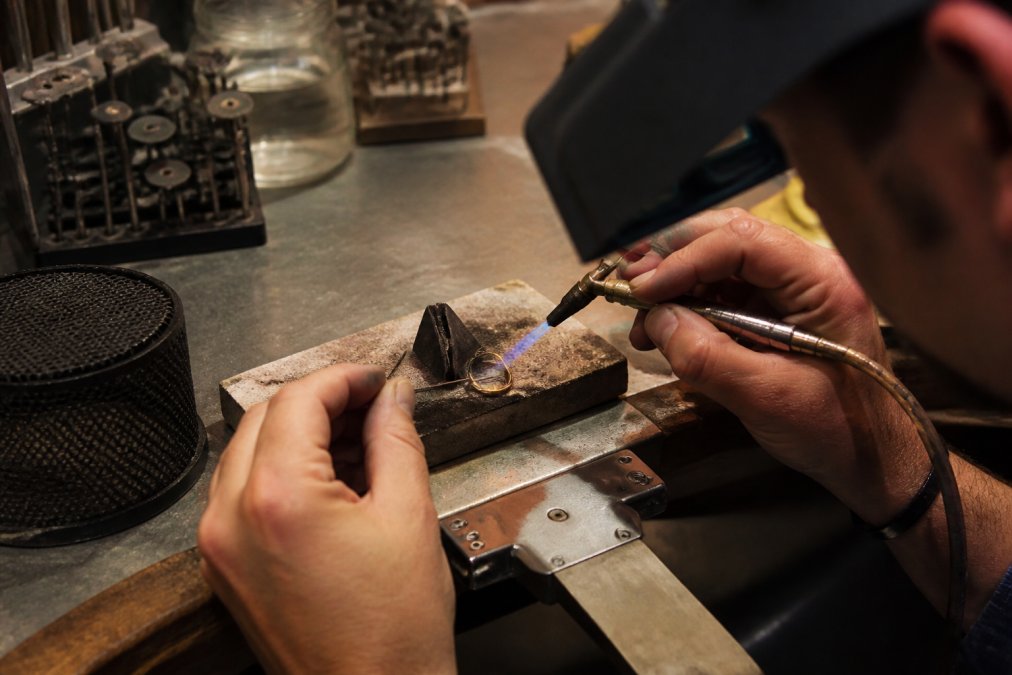
Laser welding uses a concentrated beam of light to fuse the metal itself without solder. The two ends of the ring melt together at the molecular level, creating an invisible joint. Laser welding costs more because the equipment is expensive and the operator requires specialist training.
Stone security and risk management occupy the goldsmith's mind throughout the process. For rings with stones, the first step is often stone removal. The jeweller carefully extracts each stone using specialised tools, documenting their position and orientation. This protects the stones from heat damage during resizing.
Once stones are removed, the goldsmith measures the ring and calculates how much metal to add or remove. For downsizing, they cut the shank, remove a segment, and rejoin the ends. For upsizing, they insert a segment of matching metal and fuse it seamlessly. The work demands precision, the new size must be exact, and the joint must be structurally sound.
After resizing, the ring is cleaned, polished, and hallmarked (for precious metals in the UK, hallmarking is a legal requirement (Hallmarking: practical guidance - summary)). Stones are then reset with meticulous care, checked for security, and polished again. The entire process is quality-controlled at multiple stages.
Finding a Reputable Goldsmith Near Me
Choosing the right goldsmith makes the difference between a successful resize and a costly mistake. Look for established workshops with verifiable experience and transparent processes.
Check credentials first. In the UK, goldsmiths should be members of professional bodies like the Association of British Jewellers or hold recognised qualifications. Ask whether they hallmark in-house or outsource the work. Request examples of previous resizing work, reputable goldsmiths maintain portfolios and can show you before-and-after photographs of similar pieces.
Ask specific questions about their process. Do they use laser welding or traditional soldering? How do they protect stones during resizing? What's their turnaround time, and do they offer a warranty on the work? A goldsmith who explains their methods confidently and answers detailed questions is worth trusting.
Local reputation matters. Search online reviews, ask for referrals from friends or family, and check how long the business has operated. Established goldsmiths with decades of history, like Morgan Banks, which has served the community since 1935, have built their reputation through consistent quality and customer care.
Request a written quote before work begins.
Resizing Rings with Intricate Settings
Pavé, tension, and eternity bands demand specialist handling. These settings are beautiful but complex, and resizing them requires expertise beyond standard work.
Post-Resizing Care and Maintenance
After resizing, your ring needs attention to ensure the work lasts. Proper care protects your investment and keeps the ring looking beautiful.
Frequently Asked Questions
How much should ring resizing cost in the UK?
Ring resizing costs vary based on metal type, ring complexity, and whether you're sizing up or down. Standard sterling silver or gold bands typically cost £40-£80, while precious metals like platinum can reach £150-£300. Intricate designs with pavé or tension settings cost significantly more due to stone removal and repositioning. Always request a quote from your chosen goldsmith before proceeding.
How long does ring resizing take?
Turnaround time depends on complexity and the jeweller's workload. Simple bands usually take 5-10 working days. Rings with intricate settings, pavé, or eternity bands may require 2-3 weeks to ensure stone security and structural integrity. Rush services are sometimes available at a premium. Confirm the timeframe with your goldsmith when you submit your ring.
Can platinum rings be resized?
Yes, platinum rings can be resized, though the process is more demanding than with gold or silver. Platinum requires specialised equipment and expertise due to its high melting point and density. Resizing platinum typically costs more and takes longer than other precious metals. Only work with experienced goldsmiths to ensure structural integrity and proper hallmarking.
Is it cheaper to resize a ring or buy a new one?
Resizing is almost always cheaper than purchasing a replacement, especially for bespoke or sentimental pieces. A standard resizing costs £40-£150, whereas a new ring of comparable quality starts at £200 or more. If your ring has sentimental value, intricate design, or precious stone settings, resizing preserves both the piece and its meaning while remaining cost-effective.