
Table of Contents
- Why Couples Are Choosing Diamond Alternatives in 2026
- Top Engagement Ring Alternatives to Diamonds 2026: A Comparison
- The Most Durable Gemstones for Engagement Rings
- Setting a Budget: How Alternative Stones Compare on Price
- The Bespoke Engagement Ring Design Process
- How to Care for Non-Diamond Engagement Rings
- Making Your Choice: Style, Ethics, and Practicality
- Frequently Asked Questions
Last Updated: September 9, 2026
Why Couples Are Choosing Diamond Alternatives in 2026
The shift toward engagement ring alternatives to diamonds 2026 is no longer niche. Modern buyers prioritise individuality, ethical sourcing, and budget over tradition. At Peter George banks trading as Morgan Banks, we have guided couples through bespoke commissions since 1935.
The most compelling reason is value: a coloured gemstone or lab-grown option typically allows a larger, higher-quality centre stone within the same budget as a smaller diamond. Below, we compare the leading options, examine durability, and explain how to design a ring you will treasure for decades.
Top Engagement Ring Alternatives to Diamonds 2026: A Comparison
Several gemstones have emerged as frontrunners for engagement ring alternatives, each offering a distinct balance of durability, brilliance, and colour. We assess sapphire, moissanite, and morganite against criteria that matter for everyday wear.
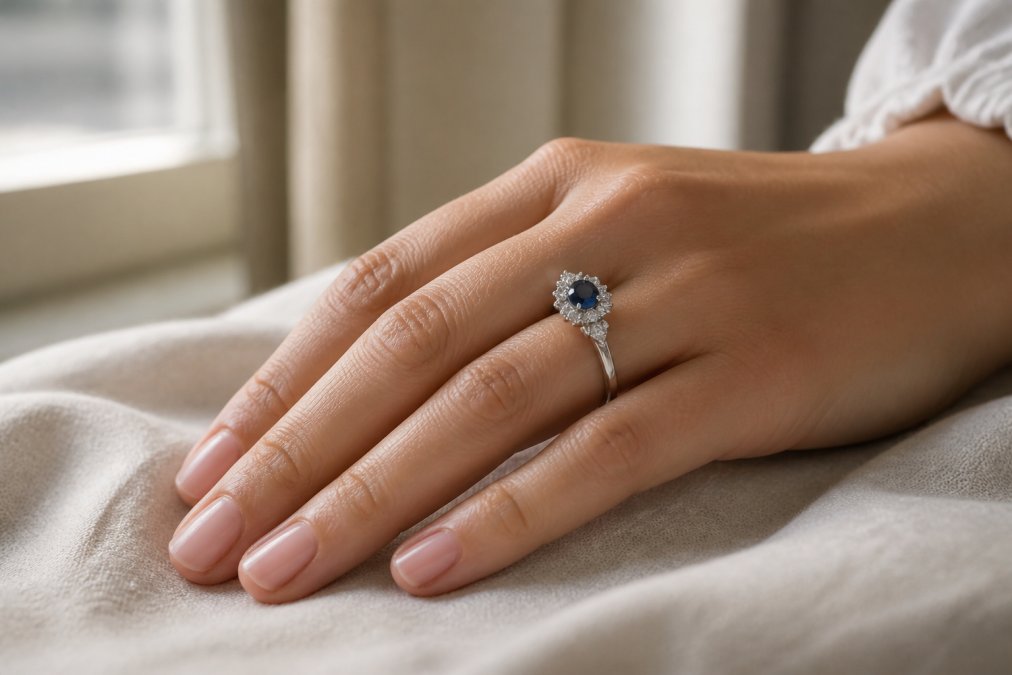
Sapphire: The Durable Classic
Sapphire is the most practical diamond alternative for daily wear. Ranking 9 on the Mohs hardness scale, it is second only to diamond in scratch resistance, holding a polished edge and resisting chips.
Beyond iconic blue, sapphires occur in pink, yellow, and rare padparadscha, allowing true personalisation. A high-quality natural sapphire costs considerably less per carat than a diamond of similar visual size.
Moissanite: The Brilliant Lookalike
For couples who love the look of a diamond but want a different story, moissanite is compelling. This lab-created gemstone has a higher refractive index than diamond, offering exceptional fire and brilliance, and scores 9.25 on the Mohs scale.
Moissanite is a simulant, created in a laboratory without the environmental impact of mining. The primary consideration is aesthetic: some buyers find its rainbow-like sparkle noticeably different from a diamond's subtle white flash.
Morganite: The Romantic Pastel Choice
Morganite offers a distinctly romantic aesthetic with soft pink to peach hues, often paired with rose gold. It has surged in popularity for engagement ring alternatives due to its feminine appeal and affordability.
However, at 7.5 to 8 on the Mohs scale, morganite is more susceptible to scratches and chips than sapphire or moissanite. It suits a less hands-on lifestyle and requires periodic professional cleaning.
| Stone | Mohs Hardness | Best For | Price Indicator |
|---|---|---|---|
| Sapphire | 9 | Everyday durability | Mid to high |
| Moissanite | 9.25 | Diamond lookalike, ethical choice | Lower |
| Morganite | 7.5-8 | Romantic pastel aesthetics | Lower to mid |
The Most Durable Gemstones for Engagement Rings
When selecting a stone for daily wear, hardness is primary, but toughness (resistance to breaking) and stability (resistance to heat and chemicals) matter equally.
Sapphire and ruby, both varieties of corundum, are the most durable non-diamond options, suitable for active lifestyles. Moissanite and lab-grown diamonds also offer excellent durability. Softer stones like morganite, opal, and emerald require more careful handling and are better reserved for protected settings like a bezel.

Setting a Budget: How Alternative Stones Compare on Price
Understanding the true cost of an alternative stone goes beyond the initial purchase price. While you can acquire a larger centre stone for a fraction of the cost of a diamond of equal carat weight, the long-term picture is more nuanced. Buyers often focus solely on the upfront saving without considering upgrading, selling, or insuring the ring.
The Upfront Price Landscape
To give you a realistic sense of the market, here is how typical retail prices for a 1-carat equivalent centre stone compare in the UK market today:
| Stone Type | Typical Price Range (1ct equivalent, good quality) | Notes |
|---|---|---|
| Natural Diamond | £4,000 - £12,000+ | Price varies wildly with cut, colour, clarity, and certification. |
| Lab-Grown Diamond | £800 - £2,500 | Prices have fallen steadily as production scales up. |
| Moissanite | £300 - £800 | Consistently the most affordable diamond lookalike. |
| Sapphire (natural) | £400 - £2,000 | Blue is most common; fancy colours like padparadscha command premiums. |
| Morganite | £150 - £500 | Generally the least expensive option per carat. |
These ranges reflect typical UK high-street and independent jeweller pricing. For the price of a single average-quality 1ct diamond, you could commission a bespoke ring with a high-quality sapphire centre stone, a platinum setting, and a matching wedding band.
The Resale Value Reality Check
Most engagement rings, diamond or otherwise, do not hold their retail value. The moment you purchase a ring, it becomes second-hand, and the resale market values it accordingly.
However, there are meaningful differences between stone types:
- Natural Diamonds: Retain the highest percentage of their value, typically 25-50% of the original retail price when sold privately or to a dealer. Certified stones (e.g., GIA or IGI) with excellent cut grades fare better. The secondary market is well-established, and a natural diamond is a globally recognised store of value, even if you will not recoup the retail markup.
- Lab-Grown Diamonds: The resale market is far weaker. Because lab-grown diamonds are chemically identical to natural ones but can be produced indefinitely, their wholesale value has dropped sharply. Most dealers will offer very little, often 10-20% of the retail price, and some will decline to buy them altogether. This is not a flaw in the stone; it is a function of supply.
- Moissanite: Similar to lab-grown diamonds, moissanite has negligible resale value. It is an affordable, beautiful stone, but it is not an investment. Expect offers of £50-£150 for a stone that cost £500 new.
- Natural Sapphire and Other Gemstones: Coloured gemstones occupy a middle ground. A high-quality, untreated natural sapphire will retain some value, perhaps 20-30% of retail, particularly if it is certified and has good colour saturation. Softer, more abundant stones like morganite or amethyst have very little resale demand.
Budget Allocation: Stone vs. Setting
A more productive approach is to think about total ring cost, not just the stone. A common mistake is spending most of the budget on the centre stone and compromising on the setting. Because you save on the stone, you can afford a higher-quality setting that will protect it for decades.
A sensible allocation for a bespoke ring with an alternative stone is:
- 40-50% on the setting and craftsmanship (platinum or 18ct gold, hand-finished)
- 30-40% on the centre stone
- 10-20% on side stones, certification, and hallmarking
For example, a platinum setting with a 0.75ct sapphire centre and two small diamond shoulders might cost £2,200-£2,800 in total. A comparable diamond ring would likely start at £4,500. That £1,700-£2,300 difference could fund your wedding bands, a honeymoon contribution, or a future anniversary upgrade.

The Hidden Cost: Insurance Premiums
Few buyers anticipate insurance. Most UK home contents policies require listing your engagement ring as a specified item if it exceeds a certain value (often £1,000-£2,000). The premium is typically 0.5% to 1% of the ring's worth per year.
Because alternative stones are less expensive to replace, your premium will be proportionally lower. A £2,500 sapphire ring might cost £15-£25 per year to insure, whereas a £6,000 diamond ring could cost £40-£60. However, some insurers are less familiar with alternative stones and may undervalue them. Always request a written valuation from your jeweller and check that your insurer will cover the full replacement cost.
A Budget Decision Matrix
To help you move from abstract comparison to a concrete choice, consider this simple decision matrix:
| If your priority is... | Choose... | And be prepared for... |
|---|---|---|
| Maximum visual size for under £1,000 | Moissanite or morganite | Minimal resale value; morganite needs gentle wear |
| A balance of durability, colour, and value | Natural sapphire | A smaller stone than moissanite for the same budget |
| The look of a diamond with a clear conscience | Lab-grown diamond | Weak resale market; prices may continue to fall |
| A stone that holds some financial value | Natural diamond | A significantly higher upfront cost |
Our team at Peter George banks trading as Morgan Banks can provide a written valuation for any ring we create, which will help you secure accurate insurance coverage. We are also transparent about the long-term value of every stone we sell, so you can make a fully informed decision.
The Bespoke Engagement Ring Design Process
Choosing an alternative stone often leads couples toward a bespoke engagement ring design process, seeking a setting that complements a unique centre stone. This collaborative journey results in a piece entirely your own, beginning with a consultation to discuss your vision, lifestyle, and budget.
Following the initial discussion, our designers create detailed sketches and, in many cases, a 3D model. This crucial step allows you to visualise the piece from every angle and make adjustments before any metal is cut.
Once the design is approved, skilled craftspeople set to work. The process can take several weeks depending on complexity. For those unable to visit our Kendal studio, we manage remote commissions through detailed consultations and digital proofs.
How to Care for Non-Diamond Engagement Rings
Caring for a non-diamond engagement ring requires a different approach than a diamond. The single most important factor is understanding your stone's hardness and toughness, not just its Mohs score, but how it responds to impact, heat, and everyday chemicals.
Understanding Hardness vs. Toughness
Most buyers only hear about the Mohs hardness scale, which measures scratch resistance. But for daily wear, toughness, resistance to breaking or chipping from impact, matters just as much. A diamond scores 10 on hardness and is very tough; a sapphire scores 9 and is similarly tough (usgs.gov). Emerald scores 7.5-8 and is notably brittle, chipping more easily.
Here is how the most popular alternative stones compare on both measures:
| Stone | Mohs Hardness | Toughness | Daily Wear Suitability |
|---|---|---|---|
| Sapphire (incl. ruby) | 9 | Excellent | Yes, with no special precautions |
| Moissanite | 9.25 | Excellent | Yes, with no special precautions |
| Lab-Grown Diamond | 10 | Excellent | Yes, with no special precautions |
| Morganite | 7.5-8 | Good | Yes, but remove for heavy work |
| Emerald | 7.5-8 | Poor (brittle) | Best in protective settings (e.g., bezel) |
| Opal | 5.5-6.5 | Poor | Not recommended for daily wear |
Daily and Weekly Care by Stone Type
Sapphire and Ruby (Corundum) These are the most forgiving of the alternative stones. A simple routine of warm water with a drop of mild washing-up liquid and a soft baby toothbrush will restore sparkle. You can safely use ultrasonic and steam cleaners for sapphires, provided the stone has no significant internal fractures that have been oiled or filled. Avoid harsh household bleach, which can dull the polish over time.

Moissanite Moissanite is nearly as hard as diamond and resistant to scratching. However, because it has a high refractive index, it shows smudges and grease more readily than a diamond. A weekly wipe with a soft lint-free cloth will keep it brilliant; for a deeper clean, the same warm soapy water method works well. Moissanite is stable in ultrasonic cleaners. One caution: avoid steam cleaning if your moissanite ring has a rhodium-plated white gold setting, as heat can accelerate wear on the plating.
Morganite Morganite is a beryl, the same mineral family as emerald and aquamarine. It is durable enough for daily wear, but it is porous and can be affected by heat and chemicals. Never use an ultrasonic cleaner, the vibration can loosen inclusions or cause internal fractures. Instead, use lukewarm water (not hot) with a mild soap and a very soft cloth. Rinse thoroughly and pat dry. Morganite can also be sensitive to sudden temperature changes, so avoid running it under hot water after being outside in winter.
Lab-Grown Diamonds Lab-grown diamonds are chemically and physically identical to natural diamonds. They can be cleaned with any method safe for natural diamonds, including ultrasonic and steam cleaners. The only care consideration is the setting, if your lab-grown diamond is set in a delicate pavé band, treat the setting with care regardless of the stone's hardness.
The Annual Professional Inspection: Why It Is Non-Negotiable
Regardless of the stone, an annual professional inspection is the single most important step in long-term care. A jeweller will examine the prongs under magnification to ensure they are not wearing thin or lifting away from the stone, and check for internal damage such as small fractures from an unnoticed knock.
For softer stones like morganite, this annual check is even more critical. A loose prong can lead to a chipped girdle within weeks of wear. Most jewellers offer a complimentary annual inspection and clean for rings purchased from them. Elsewhere, budget £30-£60 for a professional clean and inspection.
When to Remove Your Ring
A simple rule of thumb: if you would not wear a fine watch while doing it, do not wear your ring. Always remove your ring, regardless of stone type, for:
- Household cleaning: Bleach, ammonia, and abrasive cleaners can dull metal polish and, over time, affect softer stones.
- Gardening or DIY: Impact is the leading cause of chipped stones, not scratching.
- Swimming in chlorinated pools or the sea: Chlorine can weaken gold and platinum prongs over time, and salt water can leave a dull film.
- Applying lotions, perfumes, or hairspray: These can build up on the underside of the stone, reducing brilliance. Put your ring on last, after getting ready.
A Note on Protective Settings
If you have chosen a softer stone like morganite or emerald, or have an active lifestyle, consider a bezel setting rather than prongs. A bezel surrounds the stone with a thin rim of metal, protecting the edges from impact. A bezel-set morganite will survive daily wear far better than the same stone in a four-prong setting. A halo setting can also act as a bumper, absorbing impact before it reaches the main stone.
If you are unsure how to care for your specific stone, or if you would like to book an annual inspection, our team in Kendal is happy to advise. We can also recommend protective setting modifications if your current ring is not suited to your daily routine.
Making Your Choice: Style, Ethics, and Practicality
The decision balances personal style, ethical considerations, and practical durability. If you prioritise maximum resilience and timeless colour, sapphire is the clear winner. If you desire diamond brilliance with a clear conscience, moissanite is an excellent ethical choice. If romance and a unique pastel hue speak to you, morganite offers charm with a need for greater care.
Consider your daily activities and the metals that complement your chosen stone, such as platinum with sapphire or rose gold with morganite. The Platinum and Sapphire and Diamond Cluster Ring at £2,800 exemplifies a durable, classic choice, while the purple sapphire option offers a modern twist.
Choosing an engagement ring is a deeply personal decision, and the array of beautiful diamond alternatives available in 2026 makes it an exciting one. Our expert team at Peter George banks trading as Morgan Banks is here to guide you. With our heritage in fine jewellery since 1935 and our specialisation in bespoke design, we can help you create a ring that perfectly captures your commitment. Get started with Morgan Banks and discover the perfect alternative stone for your engagement ring.
Frequently Asked Questions
What is the best alternative to a diamond engagement ring?
Sapphire is the most popular alternative due to its exceptional durability (9 on the Mohs scale) and range of colours. Moissanite offers the closest visual match to a diamond's fire and brilliance at a lower price. For a unique, romantic look, morganite provides a soft pink hue. The best choice depends on your partner's style and how much daily wear the ring will see.
Are sapphire engagement rings still popular in 2026?
Yes, sapphire engagement rings remain a top trend for 2026. Couples are drawn to their durability, ethical sourcing, and the wide variety of colours beyond classic blue, including pink, purple, and orange. A sapphire centre stone, often flanked by diamonds, offers a distinctive and personal alternative that stands out from a traditional solitaire.
How do I care for non-diamond engagement rings?
Clean your ring weekly using warm water and a few drops of mild washing-up liquid, gently brushing with a soft toothbrush. Avoid harsh chemicals and ultrasonic cleaners for softer stones like morganite. Have the setting professionally checked every 6 to 12 months to ensure the stones are secure, and remove your ring during heavy manual tasks to prevent scratches.
Is it cheaper to choose an alternative gemstone for an engagement ring?
Generally, yes. A high-quality sapphire or morganite will cost less per carat than a diamond of similar size and clarity. This allows you to choose a larger centre stone or a more intricate platinum setting for the same budget. Our morganite ring, for example, offers a substantial 1.47ct centre stone at a lower price point than an equivalent diamond.